24/7 Emergency Water Damage Response
Need help now? (888) 502-0998

Tag: Crawl Space

  • Crawl Space Water Damage in Meridian, Idaho: Causes and Fixes
    Water Damage

    Crawl Space Water Damage in Meridian, Idaho: Causes and Fixes

    Why Meridian crawl spaces flood on an irrigation schedule rather than a rain schedule, how to spot it from inside, and what…

    Read more →

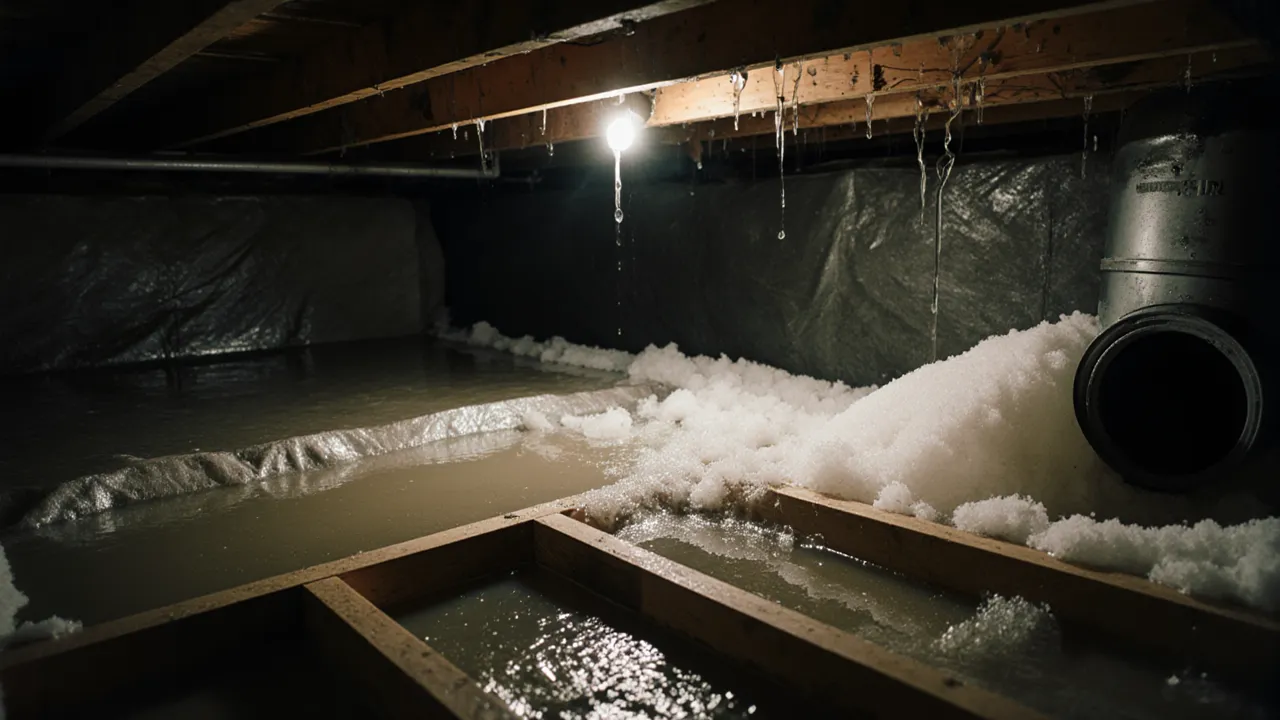
    Standing water and fallen insulation in a Meridian home crawl space with frost near a foundation vent

    Meridian has grown faster than almost any city in Idaho, and most of what has been built here sits on a crawl space rather than a basement. That single construction choice shapes the water damage picture across the Treasure Valley. A crawl space is a two to four foot void under your floor that nobody enters, nobody inspects, and nobody smells until the moisture has been working on the framing for months. It is also, in this valley, sitting on top of a water table that rises and falls on an irrigation schedule.

    This guide covers why Meridian crawl spaces take on water, how to tell from inside the house, what proper drying involves, how freeze events add a second failure path, and what Idaho insurance typically covers.

    Why Treasure Valley Crawl Spaces Get Wet

    Meridian averages roughly a foot of precipitation a year, which sounds like it should make water damage rare. It does not, because the water that reaches most crawl spaces here is not rain.

    The Treasure Valley runs on delivered water. A dense network of canals and laterals fed from the Boise River, including the Ridenbaugh Canal and the Five Mile and Nine Mile drainages, charges the shallow groundwater across the valley from roughly April through October. When the irrigation season starts, the water table under many Meridian subdivisions rises measurably. Homes that were bone dry in February can have standing water under the floor in June without a drop of rain falling. Add pressurized irrigation systems watering lawns on a timer, and a failed sprinkler line or a head aimed at the foundation can pump water against the stem wall for weeks before anyone notices.

    The second source is the ground itself. Much of the valley sits on silty loam and caliche layers that perch water rather than letting it drain. Water that gets into the backfill around a foundation sits there. If the crawl space vapor barrier is torn, poorly lapped, or was never installed properly during a fast build, that moisture evaporates directly into the space under your floor.

    The third is spring snowmelt off the Boise foothills combined with a rain-on-snow event, which can put more water into local drainage in a few days than the valley normally sees in months.

    How to Tell From Inside the House

    Because nobody looks in a crawl space, the symptoms show up upstairs first:

    • A musty smell that is strongest near floor vents or in a closet on an exterior wall. Crawl space air does not stay in the crawl space; the stack effect pulls a meaningful share of it up into your living space.
    • Floors that feel cold, soft or springy in one area, which points to a subfloor that has been damp long enough to lose stiffness.
    • Cupping or gapping hardwood over one part of the house.
    • Indoor humidity that will not come down in a climate this dry, or condensation on windows in winter.
    • Higher heating bills as wet insulation loses its R-value and falls out of the joist bays.
    • Rust on ductwork, pipes or foundation hardware visible at the access hatch.

    If you can open the access door safely, look for standing water, a vapor barrier floating or displaced, insulation hanging down, or dark staining on the underside of the subfloor. Any of those means the space has been wet for a while.

    The Freeze Path: A Second Way Meridian Homes Flood

    Idaho winters bring hard freezes, and a vented crawl space in a cold snap is effectively outdoor temperature with plumbing running through it. Supply lines in an unconditioned crawl space, hose bibs, and lines running through exterior stem walls are the usual failure points. A burst line under the floor can run for hours before anyone hears it, because the sound is muffled and the water goes down rather than into the room.

    Two habits prevent most of it: close the foundation vents before the first hard freeze and insulate the supply lines and hose bibs, and know where your main shutoff is before you need it in the dark. Our guide to what to do in the first hour of a burst pipe covers the immediate steps.

    Your First 60 Minutes

    • Shut the water main if the source is a broken supply line, and open a low fixture to relieve pressure.
    • Shut off the irrigation system if the water appeared during the watering season and you suspect a line or head near the foundation.
    • Cut power to any circuits serving the crawl space before anyone goes in.
    • Do not crawl into standing water. Between wiring, rodents and whatever the water carried in, it is not a DIY space once it is flooded.
    • Photograph the access hatch view and the affected rooms above before anything is moved or removed.
    • Call for extraction the same day. Water under a floor does not evaporate on its own in a closed space; it just keeps the wood above it wet.

    What Proper Crawl Space Restoration Involves

    Crawl space drying is a different job from drying a room, and it is done badly more often than any other water loss. Standing water is extracted or pumped out first. Saturated fiberglass insulation is removed rather than dried; once it has been wet it holds moisture against the joists and no longer insulates. The vapor barrier is pulled, the soil surface is treated where contamination is involved, and a new barrier is installed and properly lapped and sealed.

    Then the structure itself has to be dried. Joists, girders, sill plates and the underside of the subfloor are monitored with meters, and dehumidification is run in the enclosed space until documented dry standards are met. This normally takes longer than an above-grade room because airflow is restricted and the soil below keeps contributing moisture. Where growth has already started on the framing, mold remediation under the IICRC S520 standard means containment and HEPA filtration, mechanical removal from the wood, and correction of the moisture source, not a surface spray.

    The permanent fix is usually drainage and encapsulation: correcting grade and downspout discharge, adding a perimeter drain and a properly discharged sump if water collects, sealing the space with a heavy liner, and conditioning it. Our restoration process page walks through how each phase is documented.

    Prevention for a Meridian Home

    • Inspect the crawl space twice a year, once in late spring after irrigation starts and once before the first freeze.
    • Keep sprinkler heads and drip lines away from the foundation, and check for pooling against the stem wall during a watering cycle.
    • Extend downspouts well clear of the house and keep soil sloping away.
    • Repair or replace a torn vapor barrier before it becomes a moisture source.
    • Insulate crawl space plumbing and close vents before hard freezes.
    • Install a water alarm at the crawl space access and near the water heater. Under-floor leaks are the ones that run longest before discovery.
    • Consider encapsulation if the space has ever held standing water. In this valley it usually pays for itself in avoided losses and lower humidity.

    Insurance in Idaho: What Usually Applies

    A standard Idaho homeowners policy generally covers sudden, accidental discharge from inside the home, which is what a burst crawl space supply line is. It generally does not cover groundwater intrusion, seepage, or a rising water table, which are treated as maintenance and drainage issues rather than sudden losses. Surface flooding requires separate NFIP or private flood insurance.

    The gray area that catches Meridian homeowners is gradual damage. A supply line that failed suddenly is a covered event; the same line that had been weeping for eight months into the crawl space is frequently denied as long-term leakage. That is another argument for inspecting the space on a schedule, and it is why documenting the sudden nature and date of discovery matters. We document the source, category and extent of the water and provide adjuster-grade records, then bill carriers directly. See our insurance guide for more.

    Rentals, Vacant Homes and Multi-Unit Properties

    Meridian has grown fast enough that a large share of its housing is rented or recently built, and both conditions change the water damage picture. In a rental, nobody has ever opened the crawl space hatch, and the tenant has no reason to. The first report is usually a smell or a soft floor, which means the loss has been running for a while. Owners and property managers benefit from putting a crawl space inspection on the same annual schedule as furnace service.

    Vacant properties between tenants are the higher risk. A house with the water on and nobody in it can run a broken supply line for days. If a unit will sit empty through a freeze, shut off the water at the main and drain the lines rather than trusting a thermostat setting. For multi-unit buildings, a single failure on an upper floor can affect several units below, and the documentation burden multiplies accordingly.

    In every case the same principle applies: the earlier a loss is found, the smaller the scope. Water alarms at the crawl space access, the water heater and each laundry connection cost very little and repeatedly turn a five-figure loss into a four-figure one. Our restoration team works with owners, property managers and carriers on documentation for multi-unit and tenant-occupied losses.

    Frequently Asked Questions

    Why is there water in my crawl space when it has not rained?

    In the Treasure Valley this is usually irrigation related. Canal deliveries raise the shallow groundwater from spring through fall, and a sprinkler line or head near the foundation can add water directly. A plumbing leak under the floor is the other common cause.

    Can wet crawl space insulation just dry out?

    No. Once fiberglass batts are saturated they hold water against the joists, sag out of the bays and lose most of their insulating value. Standard practice is to remove them, dry the structure, and install new insulation after the space is verifiably dry.

    Does a wet crawl space affect the air in my house?

    Yes. A meaningful share of the air in your living space is drawn up from below through the stack effect, carrying humidity, odors and mold spores with it. That is why a musty smell upstairs is often a crawl space report rather than a room problem.

    Will homeowners insurance pay for crawl space water damage?

    It depends on the cause. A sudden burst pipe is typically covered. Groundwater seepage, a rising water table and long-term leaks are typically excluded. Surface flooding needs separate flood insurance. Documenting when and how the water appeared is what determines the outcome.

    How fast can a crew get to my Meridian home?

    We dispatch 24 hours a day and crews serve Meridian and the wider Treasure Valley. Arrival depends on your location and current demand rather than a fixed guarantee, so calling as soon as you find water gives you the best outcome.

    Get Help Now in Meridian

    Water damage in Meridian does not pause overnight or wait for business hours. Call our 24/7 dispatch line at (888) 502-0998 and we will get an IICRC-certified crew moving toward your property and coordinate directly with your insurance carrier.
    Related Resources

  • Storm and Flash Flood Water Damage in Fayetteville, Arkansas
    Storm Damage

    Storm and Flash Flood Water Damage in Fayetteville, Arkansas

    How Ozark terrain and severe storms drive flash flooding and hidden roof leaks in Fayetteville homes, plus first-hour steps and Arkansas insurance…

    Read more →

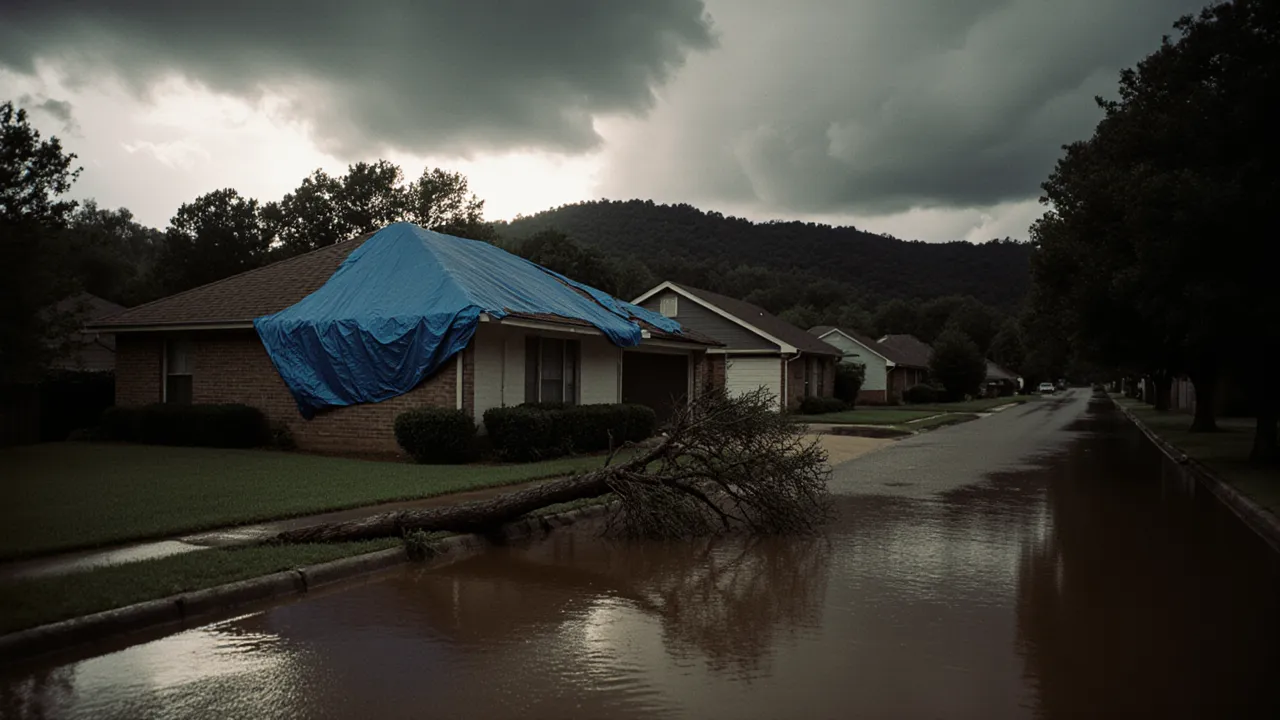
    Tarped storm-damaged roof and a downed limb across a flooded Fayetteville street below the Ozark hills

    Fayetteville sits in a landscape that is beautiful to live in and unforgiving when it rains hard. The city is built across the folded hills and hollows of the Ozark Plateau, where thin soils sit over fractured limestone and shale, and where a storm that stalls for two hours can turn a dry draw into a running creek. Add a spring severe-weather season that regularly produces damaging straight-line winds, hail and the occasional tornado, and you get a place where water damage arrives from several directions at once: through a compromised roof, up from an overwhelmed drainage swale, and sideways through a wall the wind just opened.

    This guide covers how storm and flash flood water damage actually happens in Fayetteville homes, what to do in the first hour, how professional drying works, what Arkansas insurance policies typically cover, and how to reduce your exposure before the next line of storms comes through.

    Why Fayetteville Terrain Turns Storms Into Water Damage

    Northwest Arkansas drains fast and unevenly. Neighborhoods around Mount Sequoyah, Mount Kessler and the ridges east of College Avenue shed runoff downhill in sheets, while homes in the low ground along Mud Creek, Clabber Creek, Town Branch and the West Fork of the White River take that water on. The result is a familiar local pattern: the house on the slope gets water pushed against its uphill foundation wall, and the house at the bottom of the hollow gets water rising at the door.

    Three things make it worse than the rainfall totals suggest. First, the region is heavily built out compared to a generation ago, and every new roof, driveway and parking lot in the Fayetteville and Springdale corridor sends water somewhere instead of absorbing it. Second, the shallow soil over bedrock has limited storage; once it saturates in a wet spring, additional rain runs off almost immediately. Third, many Fayetteville homes sit on crawl spaces rather than basements, and a crawl space is an efficient collector of water that nobody looks at until the smell reaches the living room.

    Storm damage compounds the problem. A hail-bruised or wind-lifted shingle does not leak the day it is damaged. It leaks three weeks later during the next heavy rain, into an attic nobody has opened since, and the first visible sign is a stain on a bedroom ceiling that is already well past its beginning.

    The Local Storm Patterns That Drive Losses

    Water damage calls in Washington County cluster around a handful of recognizable events:

    • Spring severe weather, roughly March through June. Supercells crossing the region bring hail, damaging winds and short bursts of very heavy rain. Roof and window envelope damage from this season produces leaks for months afterward.
    • Training thunderstorms. When storms repeatedly cross the same ground, three to five inches can fall in a few hours. Creeks in the hollows come up quickly, low-water crossings go under, and yards that have never flooded do.
    • Remnant tropical moisture in late summer and fall. The decayed remains of Gulf systems can park over the Ozarks and produce prolonged, soaking rain that saturates the ground and finds every drainage weakness.
    • Winter freeze events. Arkansas winters are milder than the Midwest but not mild. Hard freezes reach exposed crawl space plumbing, hose bibs and pipes in unheated garages and attics, and burst supply lines are a real part of the local loss mix.

    Your First 60 Minutes After Water Enters the House

    What you do in the first hour has more effect on the final cost than almost anything that follows. Move quickly, but do not take risks with electricity or contaminated water.

    • Stop the source if you safely can. For a burst supply line, shut the main valve and open a low faucet to relieve pressure. For storm water entering through the roof, do not climb up during or immediately after a storm; contain what you can indoors instead.
    • Cut power to affected areas at the breaker before stepping into standing water.
    • Treat floodwater as contaminated. Water that has crossed yards, streets or a crawl space carries soil bacteria, fertilizer and whatever the storm sewer was holding. Wear boots and gloves, and keep children and pets out.
    • Photograph and video everything before you move it. Wide shots of each room, then close-ups of damaged materials and the water line on the walls. Your claim depends on this documentation.
    • Lift and move what you can. Get furniture legs onto blocks, pull rugs off wood floors, and move boxes and electronics to a dry level.
    • Start extraction and drying now, not after the adjuster visits. Waiting for an inspection does not strengthen your claim; it just gives the water more time to spread.

    What Professional Water Damage Restoration Actually Involves

    Restoration is a documented process, not a cleanup crew with fans. A crew working to the IICRC S500 standard will locate and stop the source, then extract standing water with truck-mounted or portable equipment before it wicks further into building materials. Moisture meters and, where useful, thermal imaging are used to map how far the water actually traveled, because the visible wet area is almost never the full footprint. Water routinely runs under baseboards, along the underside of subfloor, into wall cavities and down into a crawl space where nothing looks wrong from above.

    Materials that cannot be dried in place are removed. Saturated carpet pad, wet insulation and drywall that has been soaked with contaminated water generally come out. Where contamination is involved, an antimicrobial is applied. Then commercial air movers and low-grain refrigerant dehumidifiers run continuously, with daily moisture readings logged, until the structure reaches a documented dry standard. That normally takes three to five days, occasionally longer for dense materials or a wet crawl space. Only after the structure is verifiably dry does reconstruction begin.

    You can read a fuller walkthrough of each phase on our process page and in our guide to how professional water damage restoration works.

    Mold and the 24-to-48-Hour Clock

    Arkansas summers are humid, and that humidity is the reason speed matters so much here. Given wet organic material and warm still air, mold can begin colonizing within 24 to 48 hours. A crawl space that took two inches of storm water and was never properly dried will produce a musty smell in the house above within a week or two, and visible growth on joists and subfloor not long after.

    The defense is not spraying something on the surface. It is removing the water fast, pulling the moisture out of the air and the materials, and correcting whatever let the water in. Where growth is already established, mold remediation under the IICRC S520 standard means containment, HEPA filtration, removal of affected porous materials and correction of the moisture source, not fogging and hoping. Our article on how fast mold grows after water damage covers the timeline in more detail.

    Preventing Storm Water Damage in a Fayetteville Home

    Most of what protects an Ozark house is drainage and envelope maintenance, done before the season rather than during it.

    • Get the roof inspected after any hail or high-wind event, even if nothing is leaking. Damage found in June is a repair; damage found in November is a claim.
    • Keep gutters and downspouts clear and extended. Oak and hickory litter fills gutters fast here. Discharge water at least six feet from the foundation, further on a slope.
    • Grade soil away from the house. Settled backfill against a foundation is one of the most common causes of chronic wet crawl spaces in the area.
    • Encapsulate or at least vapor-barrier the crawl space, and add a properly discharged sump if water collects there. Check it before storm season, not after.
    • Clear the swale. Many Fayetteville subdivisions rely on drainage easements between lots. A fence, a shed or a few years of landscaping fill can redirect that water straight into a neighbor structure.
    • Insulate vulnerable plumbing in crawl spaces, garages and exterior walls before the first hard freeze.
    • Install water alarms near the water heater, washing machine and any crawl space access. They are inexpensive and they buy hours.

    Insurance in Arkansas: What Is Usually Covered

    The distinction that decides most Arkansas claims is sudden internal water versus rising surface water. A standard homeowners policy generally covers sudden, accidental discharge from inside the home, such as a burst supply line, a failed water heater or an appliance hose letting go. It also generally covers wind-driven rain that enters through an opening the storm created, which is why documenting storm damage to the roof or windows matters so much.

    What a standard policy does not cover is rising surface water. Creek and flash flooding, water that sheets across the yard and comes in at the door, and water backing up from an overwhelmed storm drain are excluded and require separate NFIP or private flood insurance. A meaningful share of flood losses nationally occur outside mapped high-risk zones, and in a flash-flood landscape like Northwest Arkansas that gap catches people every year. Sewer and sump-pump backup usually requires its own endorsement as well.

    Because the cause of loss determines which policy responds, precise documentation is not paperwork; it is the claim. We document the source and category of the water, log daily moisture readings, and provide adjuster-grade photo and equipment records, then bill carriers directly. Our insurance guide and our post on what homeowners insurance covers go deeper.

    Frequently Asked Questions

    Does homeowners insurance cover flash flooding in Fayetteville?

    No. Rising surface water from creeks, hollows or overwhelmed drainage is excluded from standard homeowners policies and requires separate flood insurance. Sudden internal leaks and wind-driven rain through storm-created openings are generally covered. Many Fayetteville flash flood losses happen outside mapped high-risk flood zones.

    How quickly do I need to act after storm water gets into my house?

    Immediately. Extraction and drying should begin within hours. Mold can start on wet organic materials within 24 to 48 hours, and in Arkansas humidity that window is not generous. Waiting for an adjuster before drying begins usually increases the loss rather than protecting the claim.

    My crawl space took on water. Is that actually a problem?

    Yes, and it is the most commonly underestimated loss in this area. Standing water in a crawl space keeps the joists, subfloor and insulation above it damp, drives humidity up into the living space, and produces mold growth and eventually structural decay. It needs extraction, removal of saturated insulation and documented drying.

    Can wet drywall and flooring be saved?

    It depends on the water category and how long the material stayed wet. Clean water caught quickly can sometimes be dried in place. Materials soaked by flood or storm runoff are treated as contaminated and porous materials are removed under IICRC protocols rather than dried and reused.

    How fast can a crew get to my property?

    We dispatch 24 hours a day, every day, and crews serve the Fayetteville and Northwest Arkansas area. Actual arrival time depends on your location and current demand, which rises sharply during a widespread storm event, so calling early in an event matters.

    Get Help Now in Fayetteville

    Water damage in Fayetteville does not pause overnight or wait for business hours. Call our 24/7 dispatch line at (888) 502-0998 and we will get an IICRC-certified crew moving toward your property and coordinate directly with your insurance carrier.

    Related Resources

☎ Call (888) 502-0998 — 24/7