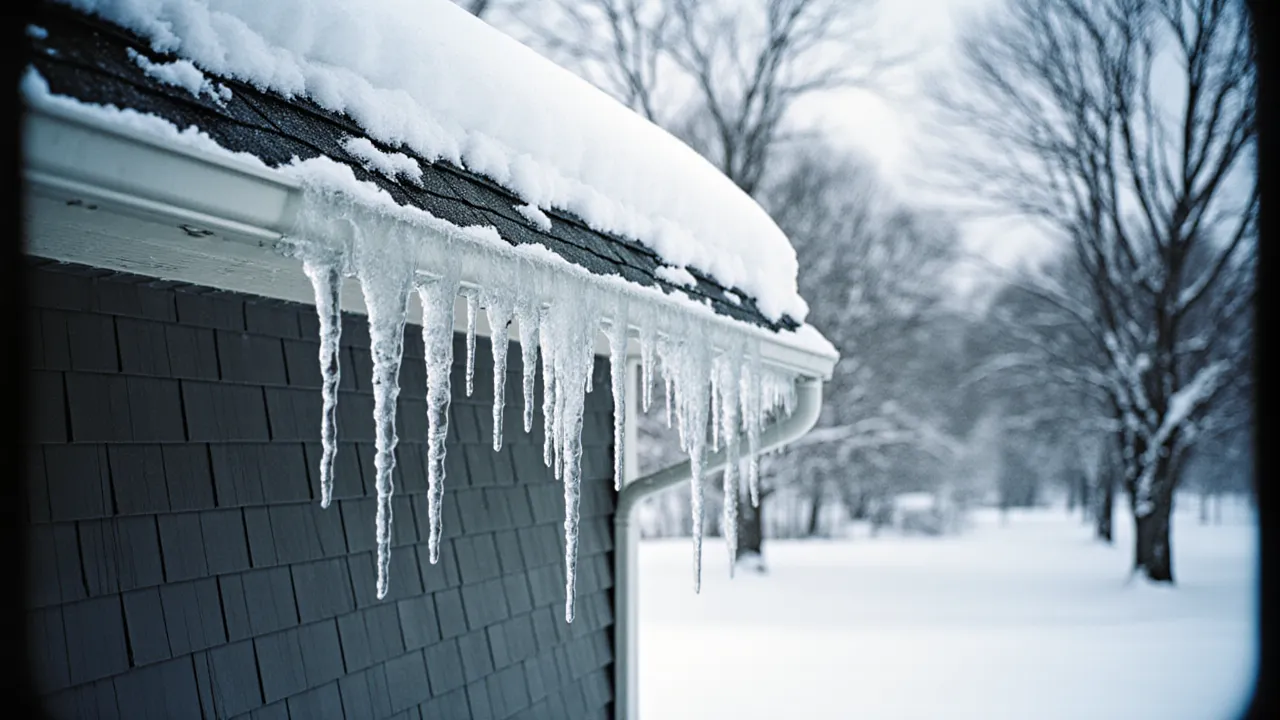
In the snowbelt that runs from Buffalo through Rochester and Syracuse, lake-effect storms can bury a roof in feet of snow in a single day. When that snow melts and refreezes at the eaves, it forms ice dams that push water back under the shingles and into the home. From Niagara Falls to Jamestown, ice-dam and snow-load water damage is a defining upstate New York winter risk.
How Lake-Effect Snow Creates Ice Dams
Lake-effect snow forms when cold air sweeps across the relatively warm Great Lakes, dumping heavy, persistent snow on the downwind cities of western and central New York. As that snow accumulates on a roof, heat escaping from the attic melts the underside; the meltwater runs down to the cold eaves and refreezes into an ice dam. Water then backs up behind the dam, finds its way under the shingles, and drips into ceilings, walls, and insulation. Heavy snow load and repeated freeze-thaw cycles make Buffalo, Rochester, Syracuse, and Niagara Falls especially prone to this damage.
Your First Hour: Emergency Checklist
The first sixty minutes decide whether you face a quick dry-out or a multi-room rebuild. Move fast, but safely:
- Stop the source: shut the main water valve for a burst pipe, or tarp roof and storm damage once it is safe.
- Cut power to wet areas at the breaker before stepping into standing water.
- Move furniture, electronics, and valuables to a dry area, and lift what you can off the floor.
- Photograph and video everything before you touch it; your claim depends on that documentation.
- Start extraction and drying immediately rather than waiting for an adjuster.
- Call a 24/7 IICRC-certified crew the same hour the loss is discovered.
Insurance & Coverage in New York
New York homeowners insurance generally covers sudden burst-pipe damage provided the home was reasonably heated; claims can be disputed if a property was left unheated during a winter trip or shows long-term, gradual leakage. Ice-dam interior damage is often covered, but sewer and sump-pump backup usually requires a separate endorsement. We document the freeze event and your winterization steps to strengthen the claim, and bill carriers directly.
What Professional Restoration Actually Involves
A professional response is methodical, not improvised. Crews first locate and stop the source, then extract standing water with truck-mounted or portable equipment. They use moisture meters and sometimes thermal cameras to map the true footprint of the water, because the visible wet area is almost never the full extent. Unsalvageable saturated materials are removed, antimicrobial treatment is applied where contamination is involved, and commercial air movers and dehumidifiers run until the structure reaches a documented dry standard, usually over three to five days. Only then does the rebuild phase begin. Throughout, a reputable crew documents the loss and works directly with your insurance carrier so the claim moves quickly.
Choosing the Right Crew Fast
When you are choosing under pressure, four things matter most: genuine 24/7 availability with a live person who answers, IICRC certification proving the crew follows the S500 standard, direct insurance billing so you are not fronting thousands of dollars, and a real response time you can verify. Be wary of anyone who pressures you to sign over your insurance claim before inspecting the damage, and remember that the lowest bid often skips proper structural drying and moisture monitoring, which is exactly what prevents hidden mold and a second, larger claim months later.
Frequently Asked Questions
What causes ice dams and is the damage covered in New York?
Ice dams form when attic heat melts roof snow that refreezes at the cold eaves, backing water under shingles. Resulting interior damage is often covered, though improving attic insulation prevents recurrence.
Need help right now?
Live dispatcher 24/7. IICRC-certified crews. Direct insurance billing.
Call (888) 502-0998How do I prevent ice dams on my upstate New York home?
Improve attic insulation and ventilation to keep the roof deck cold, rake heavy snow off the lower roof, and keep gutters clear. These steps stop the melt-refreeze cycle that forms dams.
Is it safe to remove an ice dam myself?
Roof work in winter is hazardous. A roof rake from the ground helps, but chipping at ice can damage shingles and risks falls. Address the interior water damage promptly and consult professionals for the dam.
How fast should I act on ice-dam water inside my home?
Quickly. Water entering through the roof spreads through ceilings, walls, and insulation within hours, and even in winter it feeds mold. Same-day extraction and drying limits the loss.
Do you serve the New York snowbelt?
Yes. Our IICRC-certified crews respond 24/7 across Buffalo, Rochester, Syracuse, Niagara Falls, and the surrounding lake-effect region.
Local Help Across New York
Our IICRC-certified crews serve communities across New York, including Buffalo Rochester Syracuse . For an active emergency, see our 24-hour water damage response.
Related services: water damage restoration mold remediation . See all New York cities we serve.
Water damage in New York will not wait. Call our 24/7 line at (888) 502-0998 for immediate dispatch and direct insurance coordination.
Leave a Reply