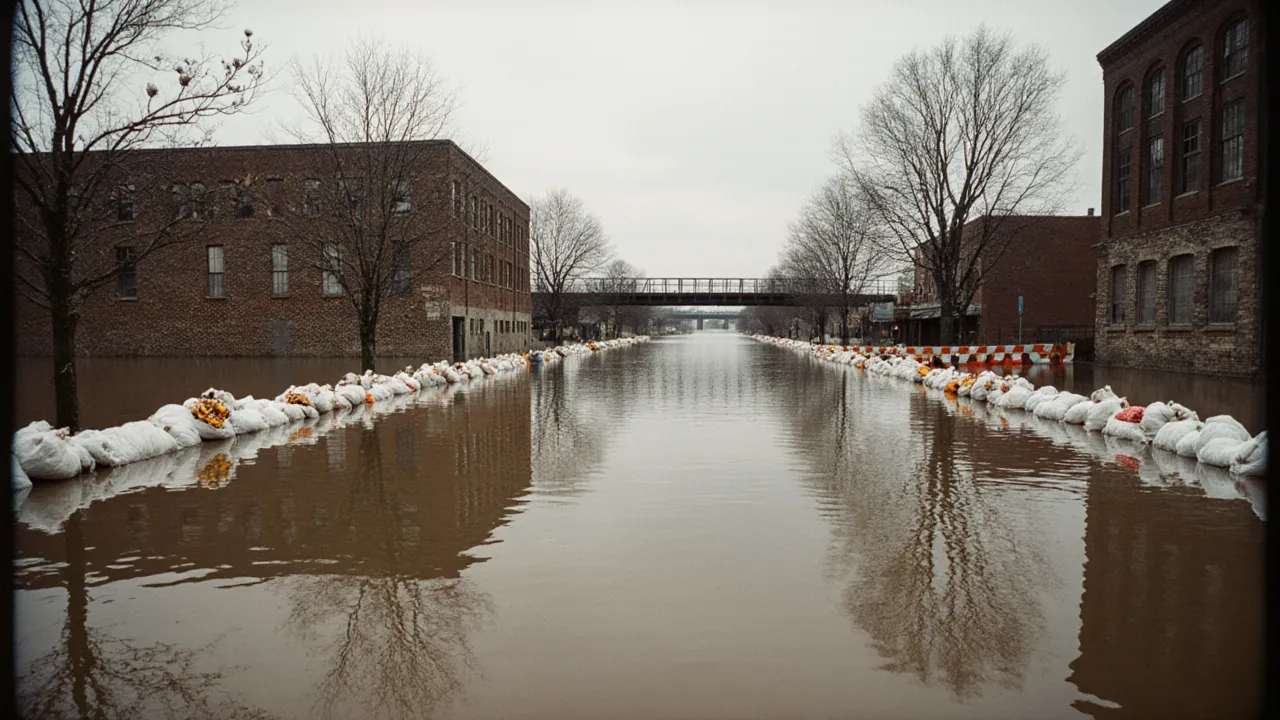
Davenport has a relationship with the Mississippi that most river cities do not. Rather than walling the river off permanently downtown, the city has historically kept its riverfront open and met high water with temporary barriers. That choice preserves one of the best riverfronts on the upper Mississippi and it also means flood response here is an active operation rather than a passive defense, with the outcomes to match.
But the flooding that reaches most Davenport homes is not the river coming over the bank. It is river water and heavy rain arriving through the sewer system, into basements blocks from the water, and it can happen to properties well outside any mapped flood zone. This guide covers both, and what to do about each.
Two Different Floods, Two Different Responses
River flooding is slow. A Mississippi crest is forecast days and sometimes weeks ahead, driven by snowmelt and rain across a drainage basin that reaches far upstream. That warning time is the single biggest advantage Davenport property owners have, and it is routinely underused. It is enough time to move contents, protect utilities, document the property and place barriers.
Duck Creek and urban flash flooding is fast. Duck Creek runs across the city and responds within hours to a heavy local rain. Properties near the creek corridor and in low-lying pockets can take water quickly with essentially no warning, and this flooding is entirely independent of what the Mississippi is doing.
The two can also stack. When the river is high, the storm sewer outfalls that normally drain the city are submerged or under back pressure. A heavy rain then has nowhere to go, and water backs up into streets and basements far from the riverbank. This is the mechanism that surprises people most, and it is why a home a mile inland can flood during a river event.
The Basement Backup Problem
When river stage rises or a storm overwhelms the system, water can push back through floor drains and sanitary connections into a basement. Two features of Davenport housing make this consequential. The first is that basements here are deep and full, because the frost line runs well past three feet. The second is that much of the housing stock is old, with older lateral connections and, in some areas, combined or interconnected drainage.
Water arriving this way is Category 3, which means it is treated as contaminated regardless of how clear it looks. That changes the entire scope of work: porous materials that contacted it are removed rather than dried, containment and antimicrobial treatment are required, and personal protective equipment is not optional. Our guide to what Category 3 cleanup actually means covers the standards in detail.
A backwater valve is the specific fix. Properly installed and maintained, it prevents flow back through the lateral into your basement. It is one of the highest-value investments available to an older Davenport home, and it needs periodic inspection to keep working.
Use the Warning Time: A River Flood Checklist
When a crest is forecast for your area, the days before matter more than the days after:
- Photograph and video the entire property now, inside and out, including finished basement spaces, mechanical equipment and stored contents. Pre-loss documentation is the strongest evidence you can have.
- Move contents up. Anything on a basement floor should move to a higher level, not to a shelf a foot higher.
- Protect mechanicals. Where possible, elevate or protect the furnace, water heater and electrical panel, and know how to shut off gas and power safely.
- Check the sump and add a battery backup. Power failures and flooding arrive together.
- Confirm your flood policy is in force. NFIP policies generally carry a 30-day waiting period, so coverage bought when the crest is forecast will not respond to that event.
- Do not plan to shelter in a flooding basement or drive through standing water on a flooded street.
After the Water Recedes
- Do not restore power until the electrical system has been evaluated by a qualified professional.
- Treat everything the water touched as contaminated. River and backup water carries fuel, agricultural runoff, sewage and bacteria.
- Do not pump a flooded basement out too quickly while the surrounding ground is still saturated. Rapid removal can leave the walls without balancing pressure and cause structural damage. Pumping in stages is the accepted practice.
- Photograph the high-water line and every damaged item before removal, and keep a written inventory of what is discarded.
- Discard porous materials that absorbed contaminated water, including carpet and pad, mattresses, upholstered furniture and wet insulation.
- Call for professional extraction and drying immediately. Flood mud dries into a hard contaminated layer that is far harder to remove later.
What Professional Flood Restoration Involves
Flood work is a scope of its own. Crews extract standing water and remove sediment before it sets, then remove contaminated porous materials. Drywall is typically cut well above the water line so the cavity can be cleaned, treated and dried, and wet insulation comes out. Surfaces are cleaned and treated with EPA-registered antimicrobials under containment, and HEPA air scrubbers run during the work.
Only then does structural drying begin, with air movers and low-grain refrigerant dehumidifiers running continuously and daily moisture readings logged until documented dry standards are met. Deep basements with masonry walls and saturated surrounding soil dry more slowly than a comparable above-grade space, and the drying log is what proves the structure is actually dry rather than merely dry to the touch. Our flood damage restoration page and our post on why fast structural drying matters explain the standards.
Mold begins on wet organic material within 24 to 48 hours, and after a flood the combination of contamination, humidity and saturated material makes it close to inevitable if drying is delayed. That is the reason to start before the adjuster arrives rather than after.
Insurance: This Is Where Davenport Owners Get Caught
A standard Iowa homeowners policy does not cover flood. River flooding, surface water and mud are excluded and require a separate NFIP or private flood policy. Two details cause most of the disappointment here.
Need help right now?
Live dispatcher 24/7. IICRC-certified crews. Direct insurance billing.
Call (888) 502-0998First, NFIP coverage of basements is sharply limited. Building coverage below the lowest floor is generally restricted to structural elements and certain mechanical items such as furnaces, water heaters and electrical panels. Finished basement walls, flooring, and most personal property stored in a basement are generally not covered, no matter how the basement is used. Many owners discover this after the loss.
Second, sewer and drain backup is a homeowners endorsement, not flood coverage. If river stage or a heavy rain pushes water back through your floor drain, the coverage that responds is water backup on your homeowners policy, and it is not included by default. Given how common this mechanism is in Davenport, it is arguably the most important line item on the policy for an older home away from the riverbank.
It is also worth knowing that a significant share of flood losses nationally occur outside mapped high-risk zones, and that flood insurance is available whether or not you are in one. Our insurance guide covers the distinctions.
Renters, Landlords and Small Businesses
Flood exposure in Davenport is not only a homeowner question, and the coverage gaps differ by role.
Renters are frequently surprised to learn that a landlord policy covers the building, not their belongings. Contents in a flood require a renter flood policy, which is available through the NFIP and is generally inexpensive. A renter storing furniture, tools or equipment in a basement has essentially no coverage without it.
Landlords carry the building exposure and the vacancy risk. A unit that floods between tenants can sit wet for days, which turns a drying job into a demolition job. Where a property has flooded before, the practical answers are a backwater valve, a battery backup sump and keeping finished space and stored contents out of the basement entirely.
Small businesses face the largest gap, because the loss is rarely just the building. Commercial flood policies cover structure and contents but not lost income, and business interruption coverage typically follows the underlying policy exclusions, meaning flood-related downtime is often uncovered. Given the days of warning a river crest provides, a written plan for moving inventory, records and equipment above the expected stage is one of the highest-return preparations a riverfront business can make.
We handle both residential and commercial losses and provide the documentation carriers expect for each.
Frequently Asked Questions
Does homeowners insurance cover Mississippi River flooding in Davenport?
No. River and surface flooding is excluded from standard homeowners policies and requires separate NFIP or private flood insurance. NFIP policies generally have a 30-day waiting period, so buying coverage once a crest is forecast will not cover that event.
My house is a mile from the river. Why did my basement flood?
Almost certainly backup rather than overland flooding. When the river is high the storm sewer outfalls are submerged or under back pressure, so a heavy rain has nowhere to drain and water pushes back through floor drains and laterals into basements well away from the bank.
Should I pump my flooded basement out right away?
Not all at once. With the surrounding ground still saturated, removing all the water quickly can leave foundation walls without balancing pressure and cause structural damage. Standard practice is to lower the water in stages over time.
Can anything in a flooded basement be saved?
Hard, non-porous items can usually be cleaned and disinfected. Porous materials that absorbed contaminated water, including carpet and pad, upholstered furniture, mattresses and wet insulation, are removed under IICRC protocols rather than dried and reused.
How fast can a crew reach my Davenport home?
We dispatch 24 hours a day and crews serve Davenport and the Quad Cities area. Arrival depends on your location and current demand, and during a regional flood demand is extremely high, so calling early in the event matters more than usual.
Get Help Now in Davenport
Water damage in Davenport does not pause overnight or wait for business hours. Call our 24/7 dispatch line at (888) 502-0998 and we will get an IICRC-certified crew moving toward your property and coordinate directly with your insurance carrier.
Leave a Reply