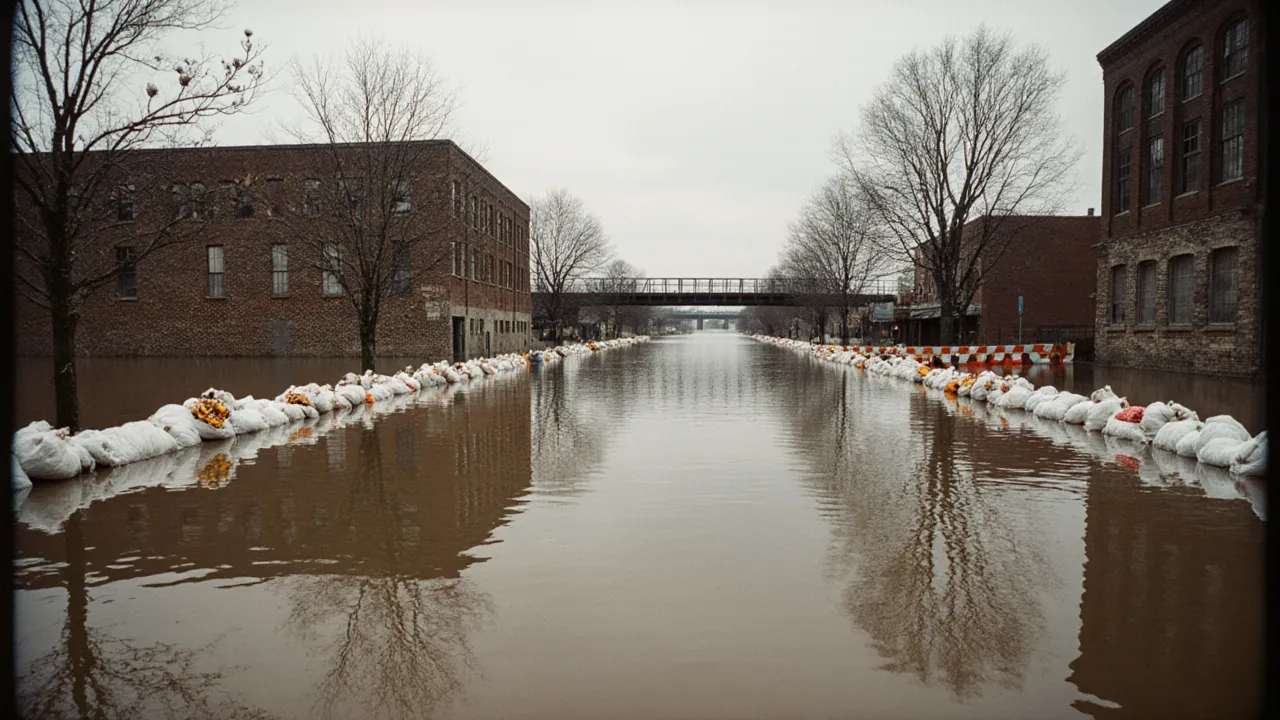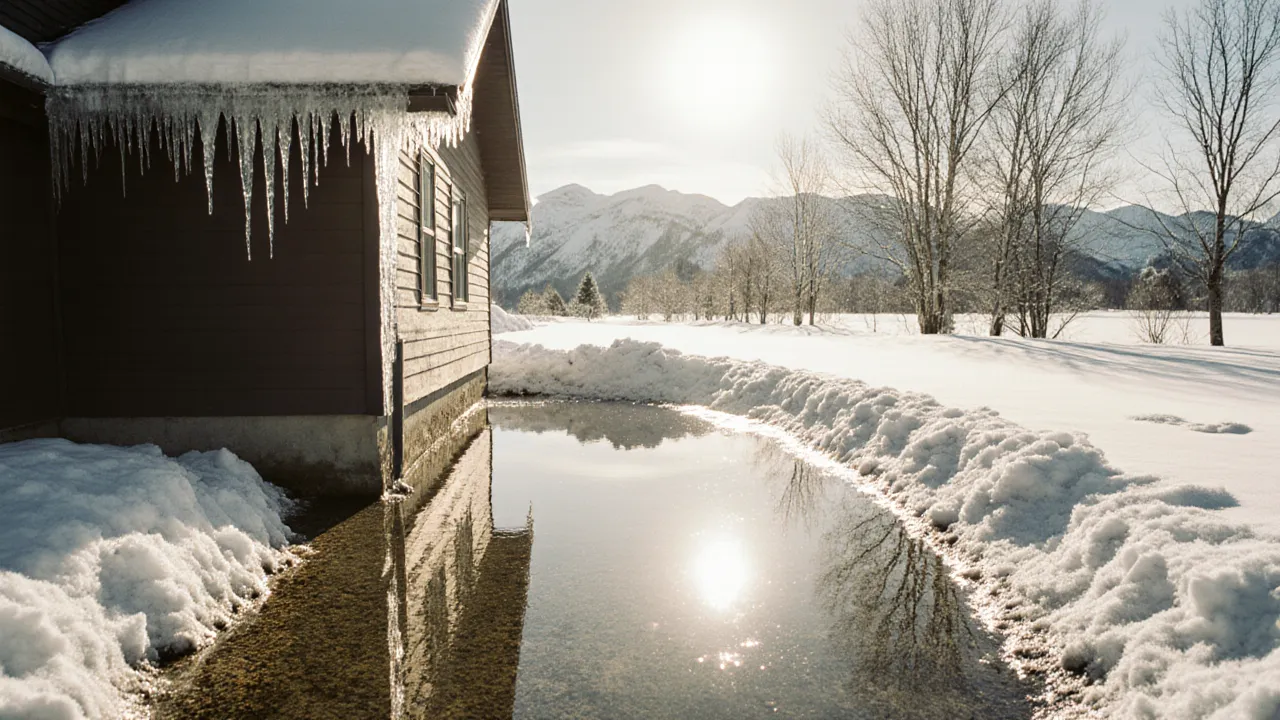
Idaho Falls sits at about 4,700 feet on the Snake River Plain, which gives it a winter that is genuinely cold, genuinely long, and unusually good at producing two specific kinds of water damage. The first arrives at the roofline in January as an ice dam. The second arrives at the foundation in March, when a season of accumulated snow melts onto ground that is still frozen solid and cannot absorb a drop of it.
Neither of these is a plumbing failure, which is why homeowners often do not see them coming. This guide covers how both develop in Idaho Falls homes, what to do about them, and what Idaho insurance typically covers.
Ice Dams: A Heat Problem, Not a Weather Problem
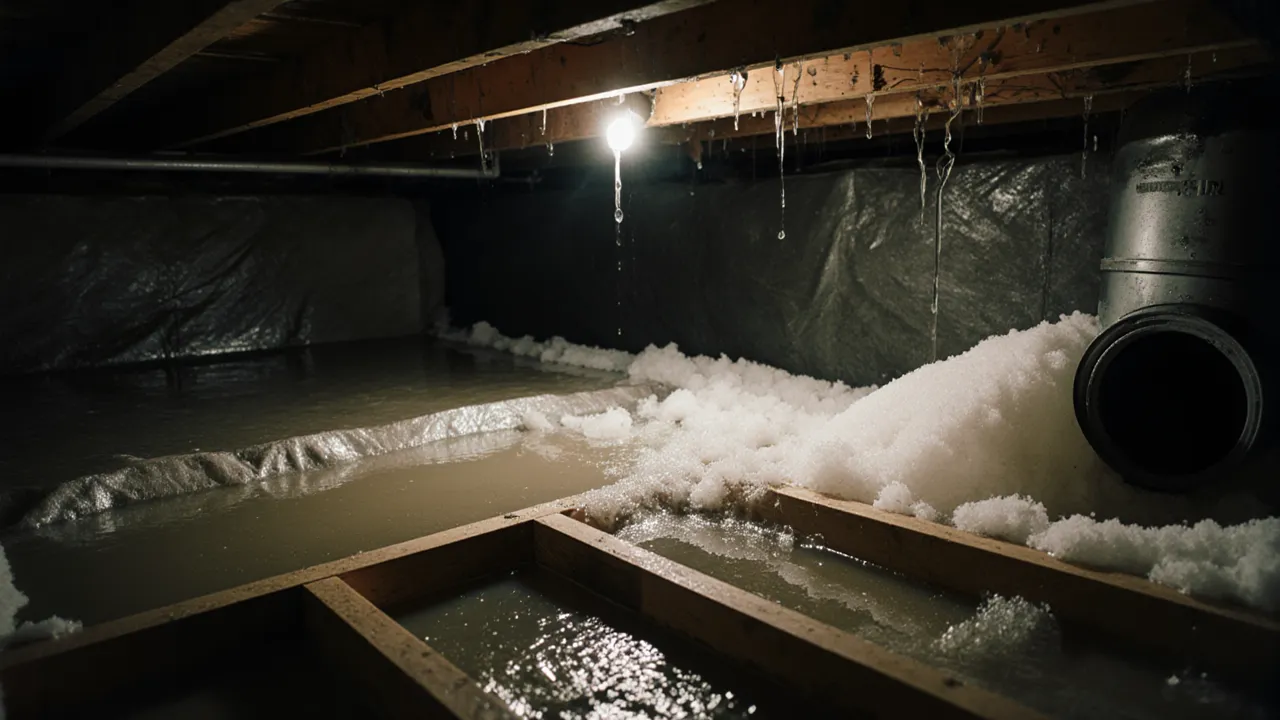
An ice dam forms because your roof is warm where it should be cold. Heat escaping from the living space into the attic warms the roof deck, snow on that warm section melts from underneath, and the meltwater runs down until it reaches the eave, which overhangs unheated space and stays below freezing. There it refreezes into a ridge of ice. Each cycle adds to the ridge, and eventually meltwater pools behind it.
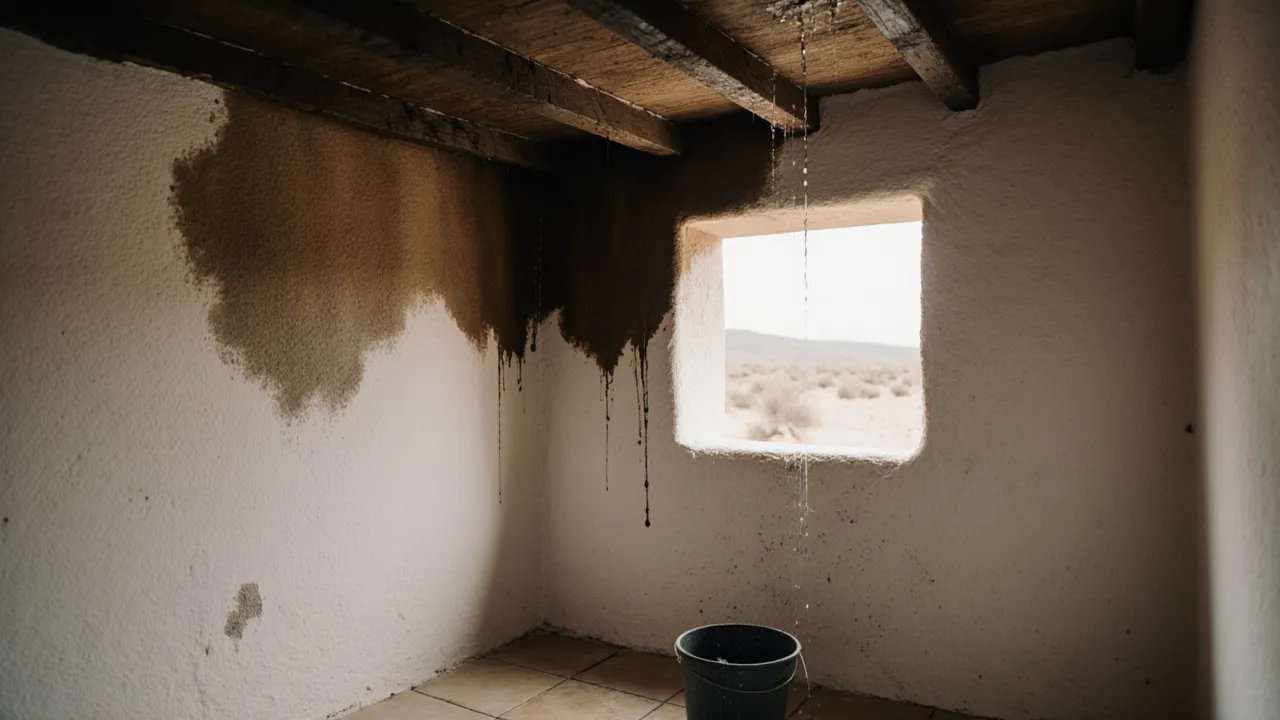
Standing water on a roof does not behave like running water. Shingles are designed to shed water flowing downhill, not to hold back a pond. The pooled water works backward under the shingle laps and into the sheathing, and from there into the attic insulation, the ceiling and the wall below. The first visible sign is usually a stain on a bedroom ceiling or water appearing at the top of an exterior wall, often days after the cold snap that caused it.
The important point is that a big icicle display is a symptom of heat loss, not of a hard winter. Two houses side by side in the same weather will produce very different amounts of ice depending on their attic insulation and air sealing. The real causes are almost always inside:
- Insufficient attic insulation, so heat reaches the roof deck.
- Air leaks at can lights, bath fans, the attic hatch, and where interior walls meet the ceiling plane.
- Bath or dryer vents terminating in the attic instead of outside, adding both heat and moisture.
- Blocked soffit vents or inadequate ridge ventilation, so the attic cannot stay cold.
- Complex roof geometry with valleys and dormers that trap snow.
Spring Snowmelt Over Frozen Ground
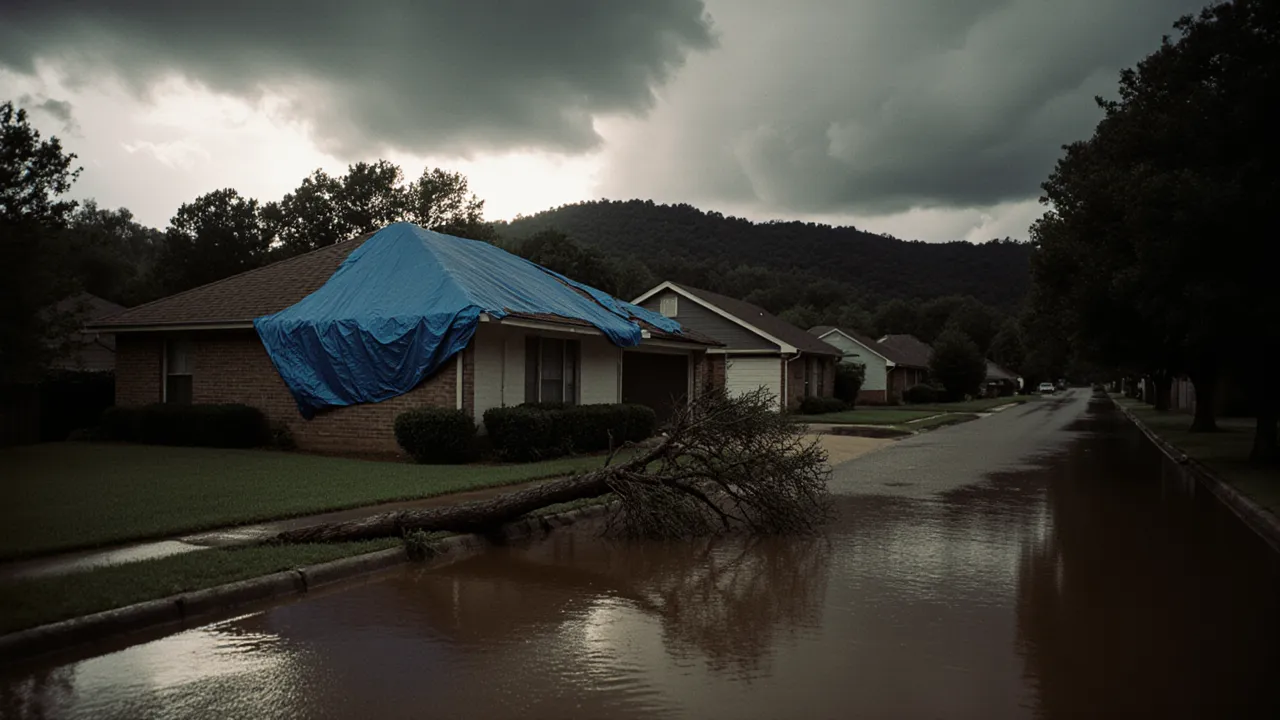
The second failure is a matter of timing. In a normal rain, soil absorbs a share of the water. In an Idaho Falls March, the ground is frozen to depth and absorbs essentially nothing, so a warm stretch, or worse a rain-on-snow event, converts the entire snowpack to runoff at once with nowhere for it to go.
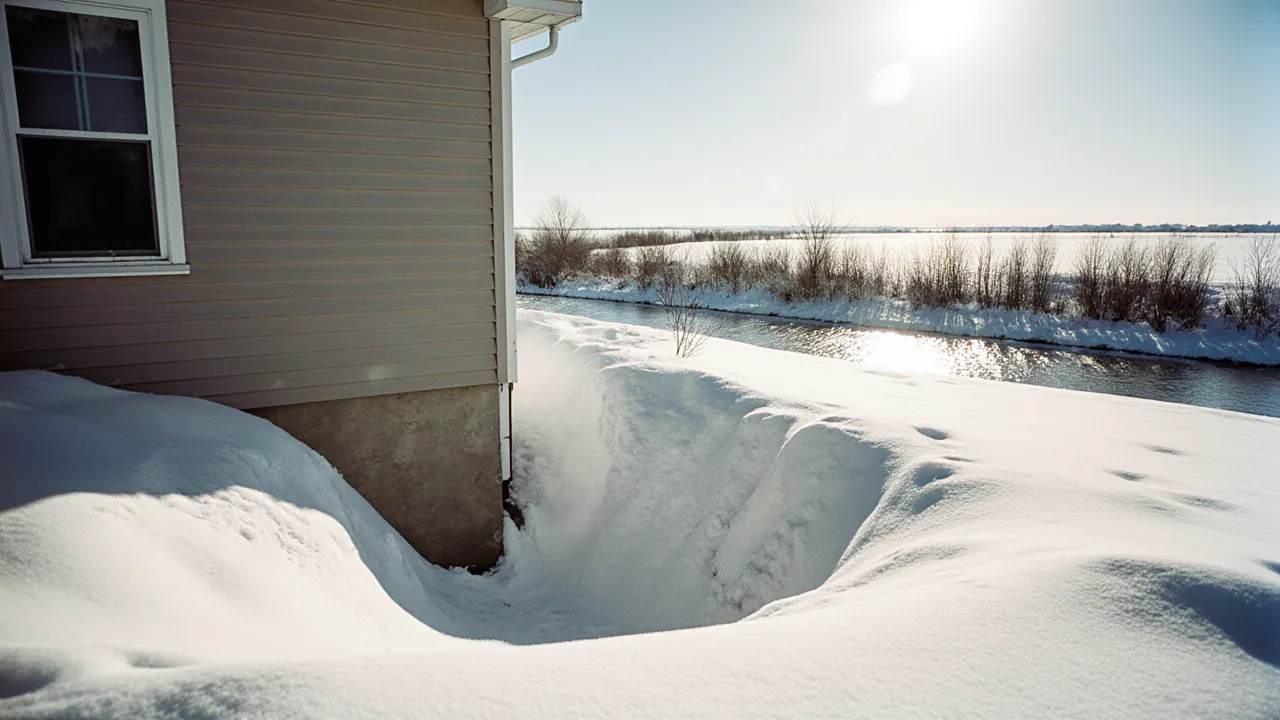
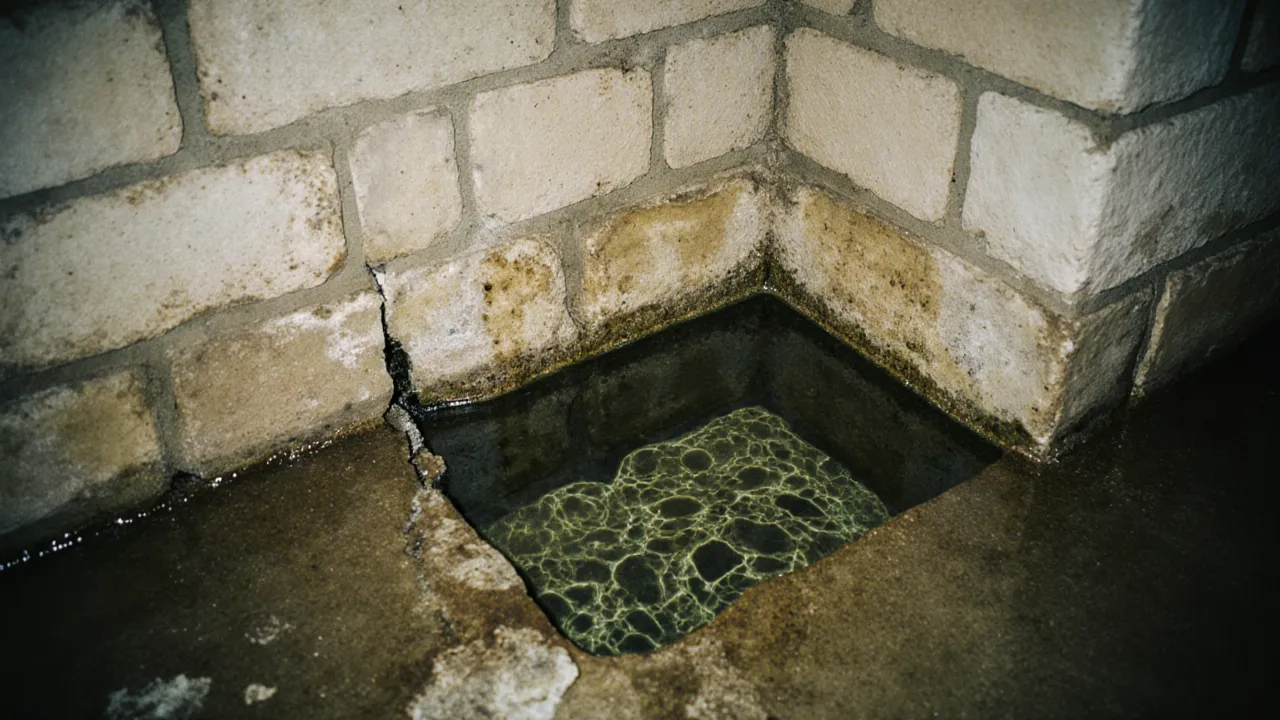
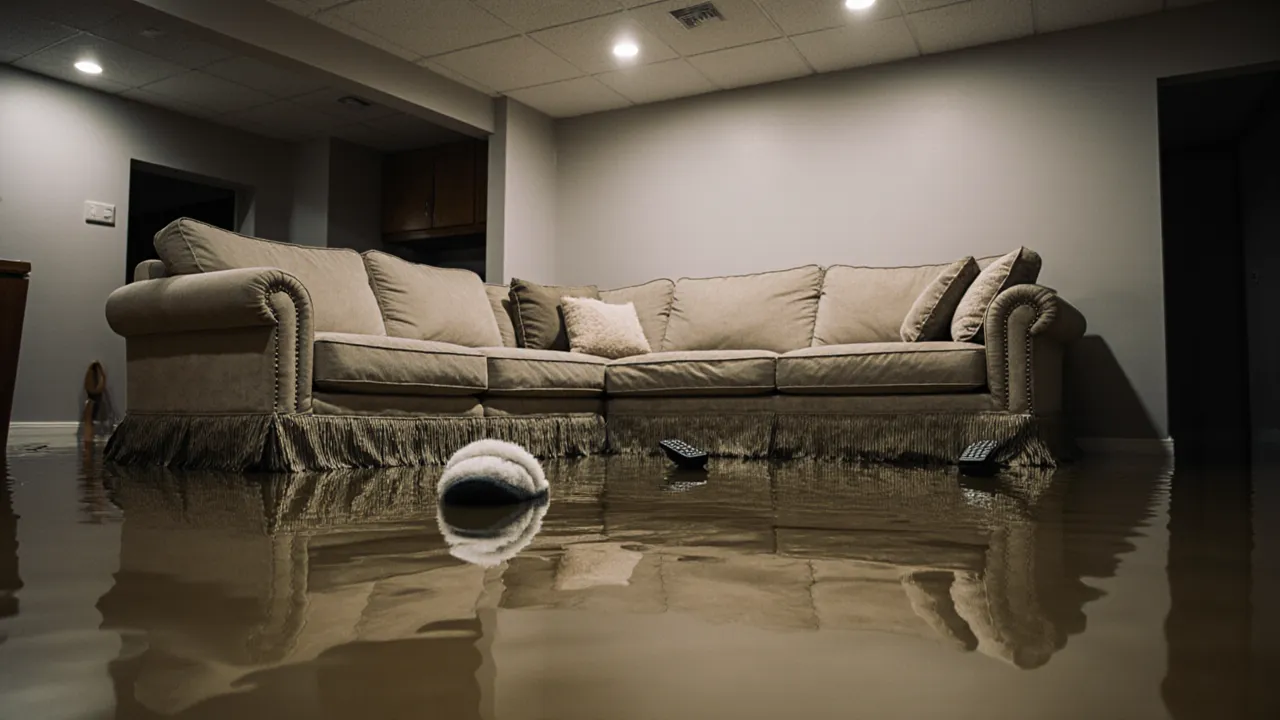
For most homes this concentrates at the foundation. Snow that has been piled against the house all winter, from shoveling and from roof shedding, melts straight down into the backfill immediately beside the wall. Window wells buried in drifted snow fill and overflow into the basement. Sump pits fill faster than the pump clears them, and if the sump discharge line froze shut in January, the pump runs while the water goes nowhere.
The Snake River Plain adds its own character. Thin soils over fractured basalt drain unpredictably, and the regional canal system begins delivering water in spring, so shallow groundwater is rising at the same time the snowpack is releasing.
Your First 60 Minutes
- Contain active dripping indoors and move furniture, rugs and electronics clear of the area.
- Cut power to affected circuits at the breaker, especially where water is near ceiling fixtures or can lights.
- Relieve a bulging ceiling carefully from a safe position, or wait for the crew. A saturated ceiling holds a lot of weight and can fail all at once.
- Do not get on an icy roof and do not attack an ice dam with an axe, a hammer or a torch. You will damage the roof and risk a fall.
- Clear snow from window wells and away from the foundation if it is safe to do so, and check whether the sump discharge is frozen.
- Photograph everything before moving it, including the exterior ice conditions.
- Call for extraction the same day. Wet attic insulation and a saturated ceiling assembly will not dry on their own in a heated house.
What Restoration Involves
Ice dam damage is deceptive because the water enters high and travels. Water in the roof assembly runs along the top plate and down inside wall cavities, and the stain on the ceiling is frequently well away from the point of entry. Crews working to the IICRC S500 standard map the actual moisture footprint with meters and, where useful, thermal imaging, rather than working from the visible stain.
Saturated attic insulation is removed, because wet blown-in or batt insulation holds water against the framing and no longer insulates. Affected ceiling and wall materials are cut back so cavities can be dried and inspected, and air movers and low-grain refrigerant dehumidifiers run with logged daily readings until documented dry standards are met. Snowmelt intrusion at the basement is handled the same way, with carpet pad removed, drywall cut above the wick line, and drying documented rather than assumed. Our process page covers each phase, and our post on why fast structural drying matters explains the standards.
Mold is a genuine risk despite the cold, because the interior of the house is warm. Growth can begin on wet organic material within 24 to 48 hours, and attic sheathing and insulation are ideal for it. Where growth is established, mold remediation under IICRC S520 means containment, HEPA filtration and removal of affected porous materials, with the moisture source corrected.
Prevention: Fix It From the Inside
- Air seal the attic floor before adding insulation. Stopping warm air leakage does more than any amount of roof work.
- Bring attic insulation up to current recommended levels for this climate zone.
- Make sure soffit and ridge ventilation are open and working so the attic stays cold.
- Vent bath fans and dryers to the exterior, never into the attic.
- Rake snow off the lower few feet of the roof after heavy storms, from the ground with a roof rake.
- Keep gutters and downspouts clear in fall so meltwater has somewhere to go.
- Shovel snow away from the foundation and window wells instead of piling it against the house.
- Test the sump and add a battery backup before the melt, and keep the discharge line clear of ice.
- Consider heat cable at chronic problem eaves as a stopgap, understanding it manages the symptom rather than the cause.
Insurance in Idaho: What Usually Applies
A standard Idaho homeowners policy generally covers interior water damage caused by an ice dam, because the ice is treated as the sudden cause of loss. Coverage typically applies to the damaged ceilings, walls, insulation and contents. What is usually not covered is the cost of removing the ice itself, and damage to the roof surface may be handled differently depending on the policy and whether wear is a factor. Repeated ice dam claims can also affect renewal, which is another reason to fix the attic rather than to keep claiming.
Snowmelt is treated differently. Water that melts, flows across the ground and enters at or below grade is rising surface water, which standard homeowners policies exclude and which requires separate NFIP or private flood insurance. Sump pump failure and sewer or drain backup are also excluded unless you carry the specific endorsements, and given how Idaho Falls springs behave, those endorsements are worth confirming before March. Frozen pipe damage is generally covered provided the home was reasonably heated. Our insurance guide covers these distinctions in more detail.
Commercial Buildings and Multi-Unit Properties
Ice dams are harder on commercial and multi-family buildings than on houses, and for a specific reason: the roof areas are larger, the interior heat sources are more varied, and the interstitial spaces where warm air collects are more complex. A single warm spot over a stairwell, a mechanical chase or a poorly insulated corridor ceiling can produce a dam that floods several units below it.
Multi-unit losses also multiply the documentation. Each affected unit is effectively its own scope, with its own contents inventory and its own tenant, and carriers expect that separation. Getting a moisture map and a per-unit record from the start avoids weeks of reconstruction later.
Two practical steps make the biggest difference for owners and property managers in eastern Idaho. The first is a pre-winter attic and roof assessment focused on air sealing and ventilation rather than on the roof surface, since heat loss is what creates the dam. The second is a written response plan that identifies who has access to each unit after hours, because in a multi-family building the delay between the leak starting and someone entering the affected unit is usually the largest controllable factor in the size of the loss.
We handle residential, multi-family and commercial losses, with after-hours scheduling and per-unit documentation for carriers.
Frequently Asked Questions
Does homeowners insurance cover ice dam damage in Idaho Falls?
Interior damage from water backing up under shingles because of an ice dam is generally covered as a sudden loss, including ceilings, walls, insulation and contents. The cost of removing the ice is typically not covered, and roof surface damage depends on the policy and the roof condition.
Are big icicles a sign of a problem?
Usually yes. Heavy icicles and ice ridges at the eave indicate heat escaping into the attic and melting snow on the roof deck. It is an insulation and air-sealing signal rather than simply a sign of a cold winter, and it predicts interior water damage.
Can I break the ice dam off myself?
Do not chip, hammer or torch it. You will damage shingles and flashing, and working on an icy roof is genuinely dangerous. Raking snow off the lower roof from the ground is the safe homeowner action; established dams should be steamed off by a professional.
Is snowmelt in my basement covered?
Generally not by a standard homeowners policy, because it is rising surface water. Separate flood insurance covers it, and sump pump failure or water backup endorsements cover the related basement scenarios. None of these is included by default.
How fast can a crew reach my Idaho Falls home?
We dispatch 24 hours a day and crews serve Idaho Falls and eastern Idaho. Arrival depends on your location and current demand, which climbs sharply during a regional thaw or a hard freeze when many properties are affected at once.
Get Help Now in Idaho Falls
Water damage in Idaho Falls does not pause overnight or wait for business hours. Call our 24/7 dispatch line at (888) 502-0998 and we will get an IICRC-certified crew moving toward your property and coordinate directly with your insurance carrier.