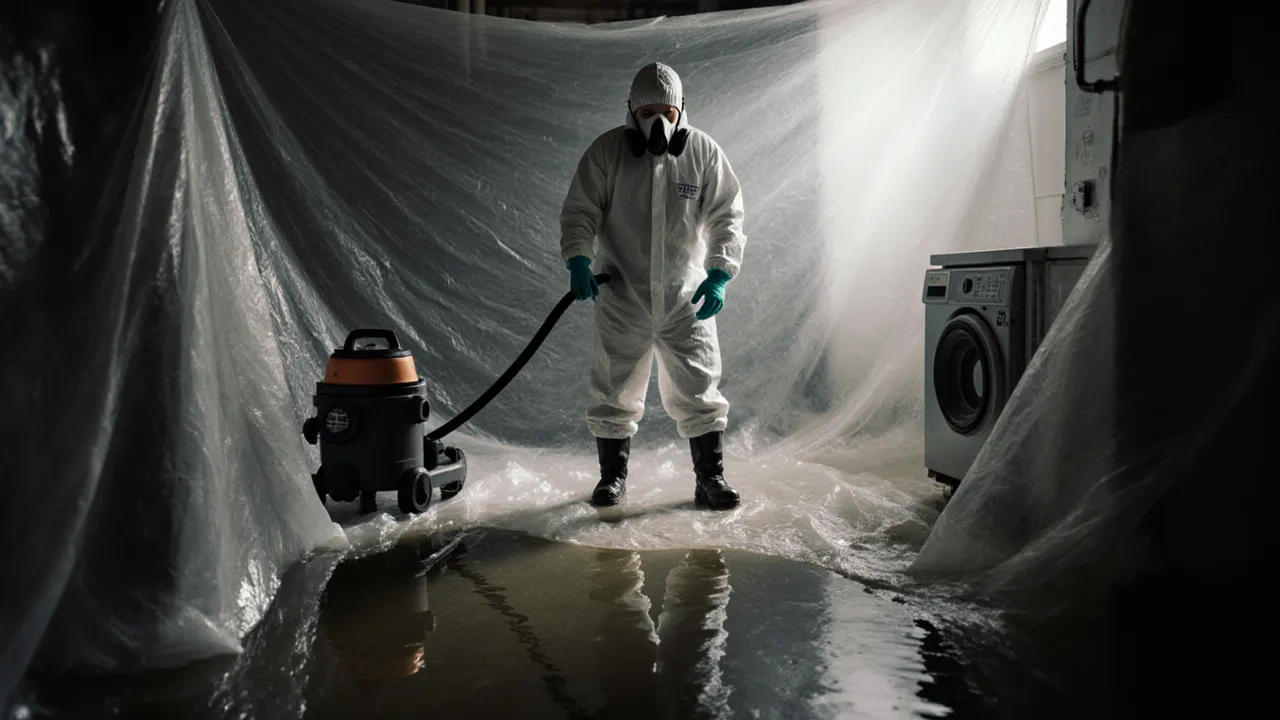
The IICRC S500 standard classifies all water losses by contamination level. Category 3 is the most dangerous — water that contains grossly contaminated material capable of causing illness or death if ingested. The cleanup scope and the insurance treatment are different from any other water loss.
Here is what Category 3 means in practice.
What qualifies as Category 3
By definition, Category 3 (also called “black water”) includes:
- Sewage backups — toilet backups originating from the sewer side, drain stack failures, septic backups
- Combined sewer overflow (CSO) events — common in older cities like Detroit, Cincinnati, and Pittsburgh during heavy rain
- Rising flood water from outside — street flooding, river overflow, storm surge. Even visually clear flood water carries street contaminants and is Cat 3 by default.
- Water that has been sitting more than 48 hours and supported microbial growth — a Cat 1 or Cat 2 loss escalates to Cat 3 over time if not mitigated
- Toxic chemical intrusion — rare in residential settings
What containment looks like
The first thing on a Cat 3 job is containment, not extraction. Crews build physical barriers around the affected area using 6-mil polyethylene sheeting and zipper doors. Negative-pressure HEPA filtration units run continuously to keep contaminated air from migrating to clean parts of the property. Workers wear full PPE: Tyvek suits, respirators with P100 filters, nitrile gloves, rubber boots.
Adjacent rooms and the HVAC system get isolated. Forced-air HVAC is shut down completely until the loss is mitigated; running it would spread contaminants throughout the house.
What gets removed (almost everything porous)
The S500 standard requires removal of porous materials contacted by Cat 3 water. That typically includes:
- Drywall (often to 24″ above the water line, sometimes higher)
- Insulation
- Carpet and carpet pad
- Subfloor if affected (often)
- Cabinetry that contacted the water (kick-plates, base cabinets)
- Upholstered furniture and most soft contents (mattresses, sofa cushions, pillows, rugs)
Sealed concrete, tile, hardwood floors with intact finish, glass, and metal can usually be cleaned and disinfected rather than removed. Personal contents are evaluated individually — many cannot be effectively decontaminated.
Antimicrobial treatment
After porous materials are removed, the remaining surfaces and structural framing get EPA-registered antimicrobial application. We use products specifically registered for Cat 3 water damage and sewage contamination. Application protocol follows the product label exactly — contact time, dilution, surface preparation.
Then structural drying begins under continued containment. Daily moisture readings verify the framing dries to standard. Mold remediation protocols run in parallel because Cat 3 events almost always create Condition 2 or Condition 3 environments.
Need help right now?
Live dispatcher 24/7. IICRC-certified crews. Direct insurance billing.
Call (888) 502-0998Verified clearance
Before containment comes down, we verify clearance. This includes visual inspection per IICRC S500/S520 protocols, moisture content verification on all framing, and (in some scopes) third-party industrial hygienist clearance testing. Reconstruction starts only after clearance is documented.
What insurance pays
Coverage depends on what triggered the Cat 3 event:
- Sewer or drain backup originating from the building — requires a sewer backup endorsement on your homeowners policy. Most carriers offer this for $50–$200/year. Without the endorsement, the carrier denies. With it, the full sewage cleanup scope is covered up to the endorsement limit.
- CSO event flooding into basement — usually requires the sewer backup endorsement; some carriers exclude even with the endorsement during declared emergency events.
- Rising surface water flooding — not covered by homeowners. Requires NFIP or private flood policy. The Cat 3 cleanup scope is covered against the flood policy up to its limits.
- Toilet backup from supply side (clean water) — covered under standard homeowners. Not Cat 3 unless the water sat long enough to escalate.
Health concerns — not abstract
Cat 3 water carries pathogens including E. coli, Hepatitis A, norovirus, Giardia, and various bacteria. The CDC and EPA both recommend professional remediation for any sewage-contaminated event of more than minimal scope.
Symptoms after exposure can include gastrointestinal illness, skin infections, respiratory symptoms, and (in immunocompromised individuals) more serious infection. Children, elderly residents, and anyone with respiratory or immune conditions should leave the property until containment is established and remediation is underway.
Climate amplifies the risk
Cities with combined sewer systems — Detroit, Cincinnati, Pittsburgh, parts of Columbus and Kansas City — experience CSO events whenever rainfall exceeds drainage capacity. Hundreds of basements can flood simultaneously. Water damage cleanup crews stage extra capacity when major storms are forecast in these markets.
FAQ
Can I just bleach a sewage backup?
No. Surface bleaching does not address contaminants in porous materials. Affected drywall, carpet, and subfloor must be removed. Bleach also does not provide the residual antimicrobial protection that EPA-registered restoration products do.
How long does Cat 3 cleanup take?
Mitigation and drying: 5–10 days. Reconstruction: 3–8 weeks depending on scope. Larger basement floods can run 8–12 weeks.
Will my home be safe to live in during the work?
Containment isolates the affected area from the rest of the home. Most customers can continue living in the unaffected portions. Crews coordinate around your schedule. We discuss displacement on the initial scope visit if conditions warrant it.
Do you handle Cat 3 calls 24/7?
Yes. Call (888) 502-0998 for emergency dispatch.
People also ask
How fast can a crew reach my address?
Typical metro dispatch is 30 to 75 minutes off-peak. Severe-weather events extend windows; we pre-stage crews when major storms are forecast.
Do you bill insurance directly?
Yes. We bill homeowners and commercial property carriers directly using Xactimate-compatible scopes plus moisture maps, photos, and IICRC S500/S520 documentation.
Will my homeowners policy cover this?
Sudden-and-accidental water damage from covered perils is usually covered. Rising-water flooding requires a separate flood policy. Long-term seepage is typically excluded as maintenance.
What is a Category 3 water loss?
Cat 3 is contaminated water (sewage backups, storm surge, combined sewer overflow). It requires containment, EPA-registered antimicrobials, and verified clearance before reconstruction.