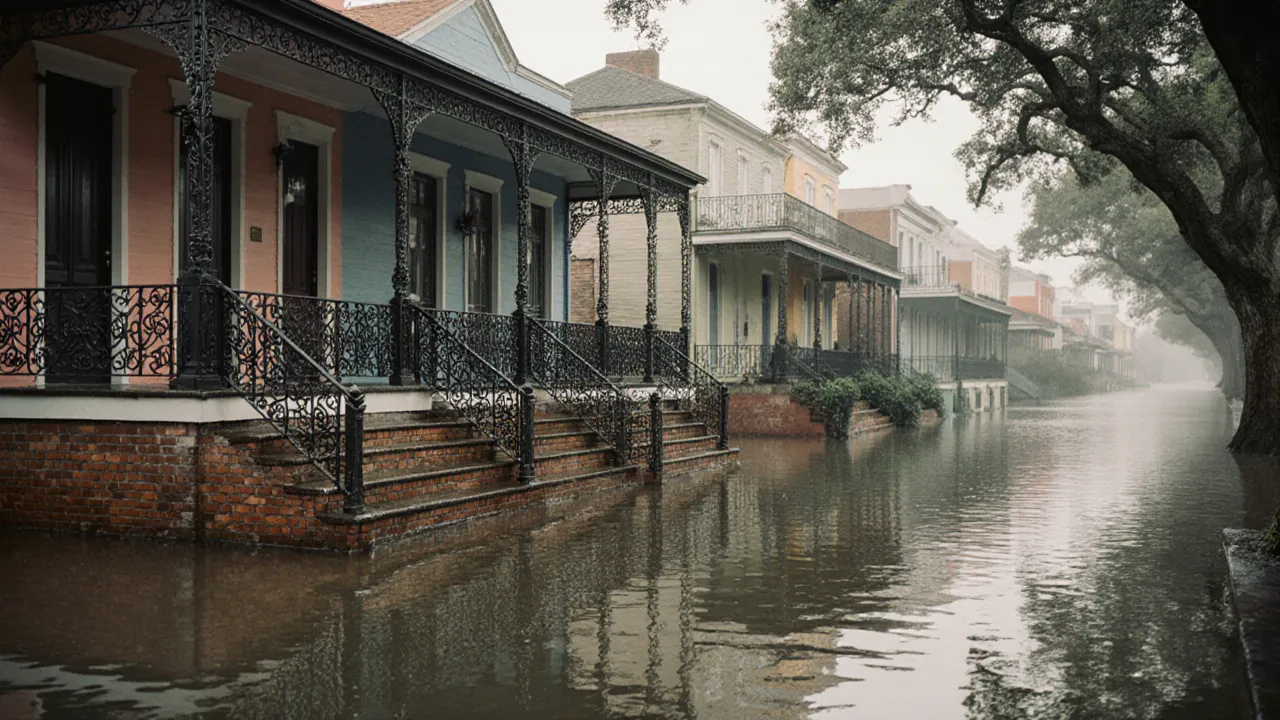
No American city lives with water quite like New Orleans. Below-sea-level elevation, a high water table, hurricane storm surge, and intense subtropical downpours mean flood risk is a year-round reality from the Garden District to Gentilly. But what makes New Orleans flooding uniquely dangerous is not just how often water enters homes, it is how fast that water turns into a much larger problem. In the city’s heat and humidity, the window between a wet floor and a mold-infested structure is measured in hours, not days. Fast, professional flood cleanup is the single most important factor in whether a flooded New Orleans home recovers cleanly or becomes a gut renovation.
Quick answer: In New Orleans humidity, mold can begin colonizing wet materials within 24 to 48 hours, faster than the national 72-hour guideline. The faster floodwater is extracted and the structure is dried, the more of your home and belongings can be saved. If your home is flooding, stop the inflow if safe, cut power to wet areas, document everything, and get a restoration crew on site immediately.
Why Speed Matters More in New Orleans
Indoor relative humidity in New Orleans frequently sits at 60 to 70 percent before any water event. Add standing floodwater and the air inside wall cavities reaches saturation almost immediately, creating ideal conditions for mold. The IICRC industry standard cites a roughly 72-hour mold-growth window on porous materials, but in the Gulf South that window compresses to 24 to 48 hours. Every hour standing water sits against drywall, subfloor, and framing increases the share of your home that must be removed rather than dried.
Floodwater also carries a second danger: contamination. Storm surge, street flooding, and sewer backup are Category 3 black water, which carries bacteria and requires antimicrobial protocols, protective equipment, and disposal of porous materials. Treating contaminated water like a clean spill is both ineffective and a health hazard.
The First Steps When Water Enters
When water appears, act in this order:
- Stop the inflow if you can do so safely. For roof leaks, tarp the area; for surface flooding, redirect downspouts and place barriers.
- Cut power to affected circuits at the breaker before entering standing water.
- Document with time-stamped photos and video before moving anything.
- Move salvageable contents to a dry, higher level.
- Call a restoration crew immediately for truck-mounted extraction and drying.
Do not attempt to live in or dry out a Category 3 flood yourself. Contaminated water requires professional handling.
How Professional Flood Cleanup Works
Professional flood restoration follows a defined sequence: extraction of standing water, removal of unsalvageable porous materials, antimicrobial treatment for contaminated losses, and multi-day structural drying with commercial dehumidifiers sized above the textbook calculation to account for marine-layer humidity. Crews verify dryness with moisture meters and thermal imaging before pulling equipment, and generate a moisture map for your insurance file. This documentation matters enormously in New Orleans, where coverage often hinges on proving the source and category of water.
The Insurance Reality in Louisiana
Here is the trap that catches New Orleans homeowners: a standard Louisiana homeowners policy covers sudden interior discharge, like a burst pipe, and wind-driven rain through storm damage, but it does not cover rising surface floodwater or storm surge. Those require separate NFIP or private flood insurance. After a flood, documenting the precise source of water determines which policy responds. We carefully document each loss and bill carriers directly so the correct coverage applies.
Protecting Your Home Between Events
You cannot stop a hurricane, but you can reduce flood losses. Confirm you carry flood insurance; homeowners coverage alone is not enough in New Orleans. Maintain and test your sump pump and any sewage ejector before hurricane season. Keep drainage paths clear so rain moves away from the foundation. Run dehumidification in summer to keep indoor humidity below 60 percent. And establish a relationship with a restoration company before the storm, so you have priority when the whole metro is calling at once.
Need help right now?
Live dispatcher 24/7. IICRC-certified crews. Direct insurance billing.
Call (888) 502-0998People Also Ask
Does New Orleans homeowners insurance cover flood cleanup?
Not for rising floodwater or storm surge, which are excluded and require separate NFIP or private flood insurance. Sudden internal leaks like burst pipes are covered under homeowners policies.
How fast does mold grow after flooding in New Orleans?
In the city’s humidity, mold can begin within 24 to 48 hours on wet porous materials. Extraction and commercial drying within the first day is the best defense.
Can I clean up flood water myself?
Clean-water spills caught immediately can sometimes be handled DIY, but storm surge, street flooding, and sewer backup are contaminated Category 3 water that requires professional protocols and protective equipment.
What gets thrown away after a flood?
Porous materials saturated by contaminated water, such as carpet, pad, soaked drywall, and insulation, are typically removed under IICRC protocols. Hard, non-porous surfaces can often be cleaned and sanitized.
How long does flood restoration take in New Orleans?
Structural drying typically runs 5 to 10 days depending on water category and humidity, with contaminated-water and mold scopes extending the timeline. Reconstruction adds additional weeks.
Get Help Now
If your New Orleans or Baton Rouge home has flooded, every hour counts in this climate. Our IICRC-certified crews dispatch 24/7, follow full antimicrobial protocols for contaminated water, and document everything for your insurance file.
Call (888) 502-0998 for 24/7 emergency dispatch. See our New Orleans water damage restoration and Baton Rouge pages, or learn about flood damage restoration, emergency water removal, and mold remediation.
{“@context”: “https://schema.org”, “@type”: “FAQPage”, “mainEntity”: [{“@type”: “Question”, “name”: “Does New Orleans homeowners insurance cover flood cleanup?”, “acceptedAnswer”: {“@type”: “Answer”, “text”: “Not for rising floodwater or storm surge, which are excluded and require separate NFIP or private flood insurance. Sudden internal leaks like burst pipes are covered under homeowners policies.”}}, {“@type”: “Question”, “name”: “How fast does mold grow after flooding in New Orleans?”, “acceptedAnswer”: {“@type”: “Answer”, “text”: “In the city’s humidity, mold can begin within 24 to 48 hours on wet porous materials. Extraction and commercial drying within the first day is the best defense.”}}, {“@type”: “Question”, “name”: “Can I clean up flood water myself?”, “acceptedAnswer”: {“@type”: “Answer”, “text”: “Clean-water spills caught immediately can sometimes be handled DIY, but storm surge, street flooding, and sewer backup are contaminated Category 3 water that requires professional protocols and protective equipment.”}}, {“@type”: “Question”, “name”: “What gets thrown away after a flood?”, “acceptedAnswer”: {“@type”: “Answer”, “text”: “Porous materials saturated by contaminated water, such as carpet, pad, soaked drywall, and insulation, are typically removed under IICRC protocols. Hard, non-porous surfaces can often be cleaned and sanitized.”}}, {“@type”: “Question”, “name”: “How long does flood restoration take in New Orleans?”, “acceptedAnswer”: {“@type”: “Answer”, “text”: “Structural drying typically runs 5 to 10 days depending on water category and humidity, with contaminated-water and mold scopes extending the timeline. Reconstruction adds additional weeks.”}}]}
Leave a Reply