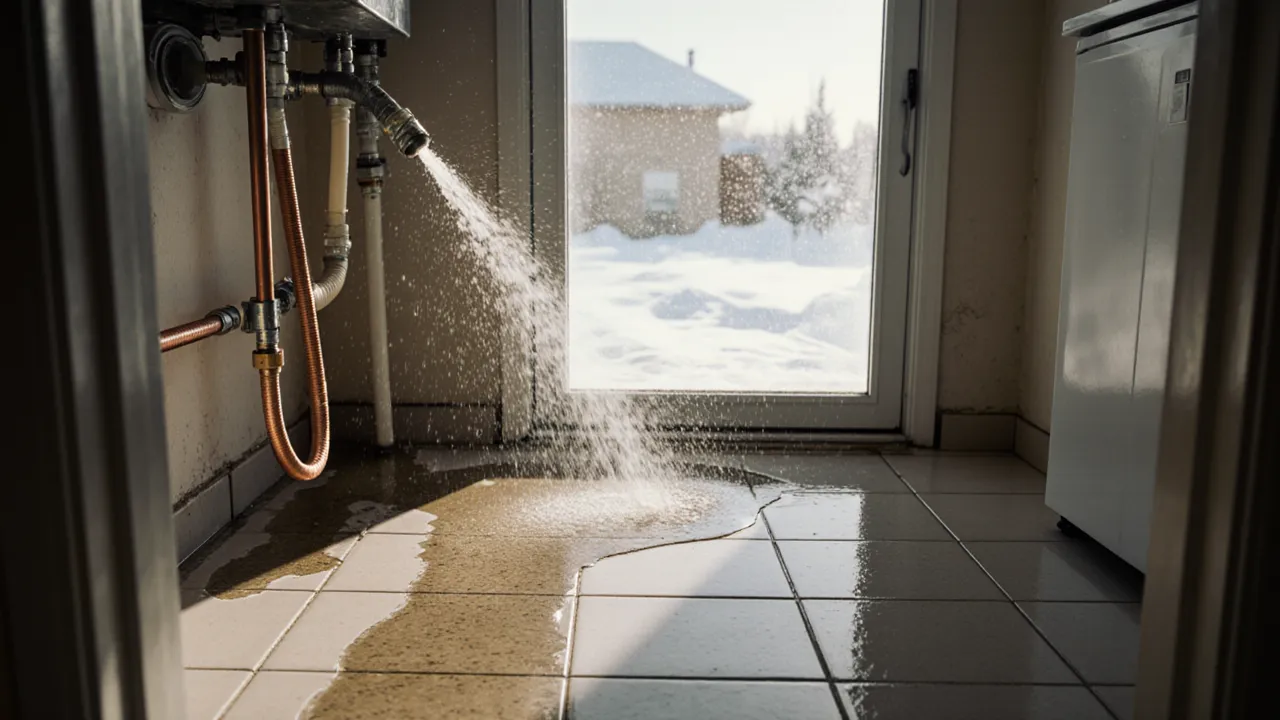
Every winter, Denver homeowners face one of the most preventable yet most destructive water-damage events: the burst pipe. The combination of mile-high altitude, dramatic temperature swings, and a deep stock of older homes with plumbing in uninsulated walls makes the Front Range a hot spot for freeze-related plumbing failures. A single burst pipe can release hundreds of gallons of water per hour, and when it happens behind a wall or in an empty home, the damage compounds quickly. Understanding why Denver pipes freeze, and how to respond in the first minutes, is the difference between a quick fix and a five-figure restoration.
Quick answer: Denver pipes burst when water inside them freezes, expands, and ruptures the pipe wall, usually during sub-freezing cold snaps in unheated or poorly insulated areas. If a pipe bursts, shut off your main water valve immediately, open faucets to relieve pressure, cut power to wet areas, document the damage with photos, and call a restoration crew before mold can begin forming within 24 to 72 hours.
Why Denver Pipes Freeze and Burst
Water expands by roughly 9 percent when it freezes. Inside a closed pipe, that expansion generates enormous pressure, not at the ice blockage itself, but in the trapped water between the ice and a closed faucet downstream. When that pressure exceeds what the pipe can hold, the pipe ruptures. The break may not leak until the ice thaws and water begins flowing again, which is why many Denver burst-pipe discoveries happen the morning after a cold snap breaks.
Denver’s specific risk factors stack up fast. The metro sees rapid temperature swings, where a 60-degree afternoon can drop below 10 degrees overnight. Many homes in neighborhoods like Capitol Hill, Wash Park, and Berkeley have original plumbing routed through exterior walls, crawlspaces, and unheated basements. Pipes serving outdoor spigots, garages, and rooms above unheated garages are especially vulnerable. Add a winter vacation with the thermostat turned down, and the conditions for a burst are complete.
The First Hour: Your Emergency Checklist
What you do in the first hour determines how bad the loss gets. Follow this sequence:
- Shut off the main water valve. It is usually in the basement on the wall facing the street. Every adult in the home should know its location before winter.
- Open faucets to drain remaining water from the lines and relieve pressure.
- Cut power to affected circuits at the breaker before stepping into standing water.
- Move belongings up and away from the water.
- Photograph and video everything before you move or discard anything, for your insurance claim.
- Call a restoration crew for extraction and structural drying. Do not wait days for an adjuster; mitigation is your responsibility under most policies.
How Professionals Dry a Burst-Pipe Loss
Extraction is only the first step. Water wicks into drywall, subfloor, framing, and insulation, where it is invisible to the eye but perfect for mold. Restoration crews use commercial air movers and low-grain refrigerant dehumidifiers running continuously for several days, with daily moisture-meter readings compared against dry control areas to confirm the structure is back to baseline. Skipping or rushing this phase is what produces warped floors, stained ceilings, and hidden mold months later. A professional dry-down also generates the moisture documentation your insurer expects.
Preventing the Next Burst
Denver’s burst-pipe season is predictable, which makes it preventable. Insulate pipes in exterior walls, crawlspaces, and garages with foam sleeves. During deep cold, let a faucet drip on the most exposed line; moving water freezes more slowly. Open cabinet doors under sinks on exterior walls so indoor heat reaches the plumbing. Keep your thermostat at 55 degrees or higher even when traveling, and have a neighbor check the home. Disconnect and drain outdoor hoses before the first freeze. These small steps prevent the overwhelming majority of freeze losses we see across the Front Range.
Insurance and Coverage in Colorado
Colorado homeowners insurance generally covers sudden burst-pipe damage, provided the home was reasonably heated. Carriers can dispute claims when a property was left unheated during a winter trip or shows long-term, gradual leakage. Documenting the freeze event and your winterization steps strengthens the claim. We bill major carriers directly and document every job to support the right scope of repair.
Need help right now?
Live dispatcher 24/7. IICRC-certified crews. Direct insurance billing.
Call (888) 502-0998People Also Ask
At what temperature do pipes freeze in Denver?
Pipes begin risking freeze damage at sustained outdoor temperatures around 20 degrees Fahrenheit, lower for well-insulated interior pipes and higher for exposed pipes in garages, crawlspaces, and exterior walls.
Does Colorado homeowners insurance cover burst pipes?
Yes, sudden burst-pipe damage is typically covered when the home was reasonably heated. Claims may be denied for homes left unheated during winter absences or showing gradual, long-term leakage.
How much water does a burst pipe release?
A burst pipe at typical household pressure can release 200 to 400 gallons per hour. Overnight, that can mean thousands of gallons through floors and into the level below.
Should I shut off my water before leaving Denver for winter?
If leaving for more than a long weekend in cold weather, yes, or at minimum keep heat at 55 degrees and have someone check the home. Draining the lines adds further protection for extended absences.
How fast does mold grow after a burst pipe?
Mold can begin forming within 24 to 72 hours on wet porous materials. Fast extraction and professional drying within the first day is the best way to avoid mold becoming part of the loss.
Get Help Now
If a pipe has burst in your Denver or Colorado Springs home, time matters. Our IICRC-certified crews dispatch 24/7 across the Front Range, handle extraction and structural drying correctly the first time, and bill your insurance directly.
Call (888) 502-0998 for 24/7 emergency dispatch. See our Denver water damage restoration and Colorado Springs service pages, or learn about water damage restoration, emergency water removal, and water damage repair.
{“@context”: “https://schema.org”, “@type”: “FAQPage”, “mainEntity”: [{“@type”: “Question”, “name”: “At what temperature do pipes freeze in Denver?”, “acceptedAnswer”: {“@type”: “Answer”, “text”: “Pipes begin risking freeze damage at sustained outdoor temperatures around 20 degrees Fahrenheit, lower for well-insulated interior pipes and higher for exposed pipes in garages, crawlspaces, and exterior walls.”}}, {“@type”: “Question”, “name”: “Does Colorado homeowners insurance cover burst pipes?”, “acceptedAnswer”: {“@type”: “Answer”, “text”: “Yes, sudden burst-pipe damage is typically covered when the home was reasonably heated. Claims may be denied for homes left unheated during winter absences or showing gradual, long-term leakage.”}}, {“@type”: “Question”, “name”: “How much water does a burst pipe release?”, “acceptedAnswer”: {“@type”: “Answer”, “text”: “A burst pipe at typical household pressure can release 200 to 400 gallons per hour. Overnight, that can mean thousands of gallons through floors and into the level below.”}}, {“@type”: “Question”, “name”: “Should I shut off my water before leaving Denver for winter?”, “acceptedAnswer”: {“@type”: “Answer”, “text”: “If leaving for more than a long weekend in cold weather, yes, or at minimum keep heat at 55 degrees and have someone check the home. Draining the lines adds further protection for extended absences.”}}, {“@type”: “Question”, “name”: “How fast does mold grow after a burst pipe?”, “acceptedAnswer”: {“@type”: “Answer”, “text”: “Mold can begin forming within 24 to 72 hours on wet porous materials. Fast extraction and professional drying within the first day is the best way to avoid mold becoming part of the loss.”}}]}
Leave a Reply