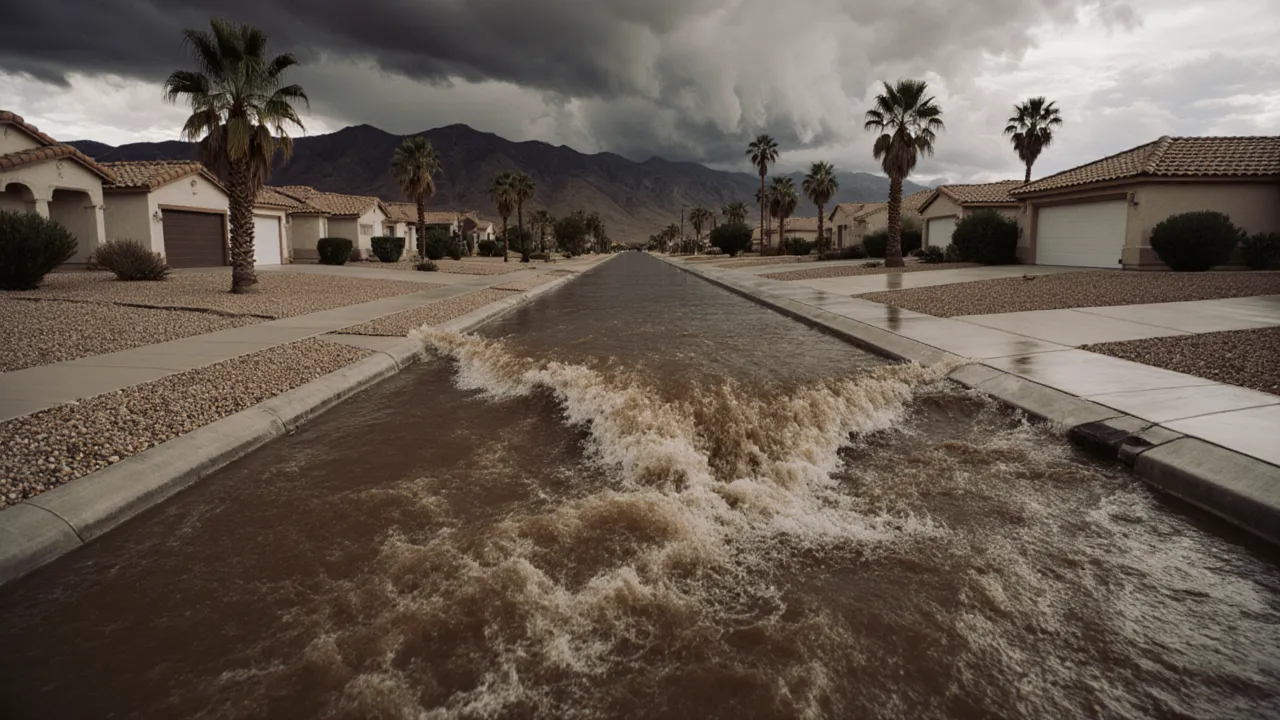
Las Vegas averages just a few inches of rain a year, which is exactly why flash flooding here is so dangerous. The valley’s hardened desert ground and drainage system, built for a dry climate, cannot absorb sudden monsoon downpours. When summer storms hit between July and September, water surges through washes and streets and into homes and businesses across the valley, from the Strip-area neighborhoods to Henderson’s master-planned communities. Many Las Vegas homeowners assume flooding is not their concern in the desert. That assumption is exactly what turns a flash flood into an expensive, mold-prone water-damage event.
Quick answer: Las Vegas flash floods happen fast during monsoon season when intense rain overwhelms desert drainage. If water enters your home, move to safety first, then cut power to wet areas, document the damage, and call a restoration crew for extraction. Even in dry desert air, standing water must be removed quickly to prevent secondary damage and mold.
Why the Desert Floods
Desert soil and pavement shed water rather than absorb it. During a monsoon cell, an inch of rain in an hour produces enormous runoff that channels into washes and low-lying streets. Las Vegas has invested heavily in flood-control channels, but localized flooding still overwhelms neighborhoods, underpasses, and properties downslope of washes. Homes take on water through doors, garages, and foundation gaps. Because these storms are brief and infrequent, many residents are caught completely unprepared.
Beyond flash floods, Las Vegas homes face year-round water risks from plumbing and water-heater failures, accelerated by hard-water mineral buildup, and from slab leaks under foundations. The response principles are the same: stop the source, remove the water fast, and dry thoroughly.
What to Do During a Flash Flood
Personal safety comes first; never walk or drive through moving floodwater. Once you are safe and water has receded enough to act:
- Cut power to flooded areas at the breaker.
- Document all damage with time-stamped photos and video before cleanup.
- Remove standing water with a wet-vac for small volumes, or call a crew with truck-mounted extractors for larger events.
- Pull wet contents up and away from dry materials.
- Start drying immediately; even in dry air, trapped moisture in walls and subfloor causes hidden damage and mold.
Why Drying Still Matters in a Dry Climate
It is a myth that desert air dries a flooded home on its own. Surface materials may feel dry while moisture stays trapped in wall cavities, under flooring, and in subfloor materials. That hidden moisture warps floors, delaminates engineered subfloors, and supports mold even in Las Vegas. Professional crews use moisture meters and thermal imaging to find hidden water and commercial dehumidifiers to bring materials back to baseline, then verify with readings before declaring the job done.
Insurance and Flood Coverage in Nevada
This is critical: Nevada homeowners insurance covers sudden internal water discharge, such as burst pipes, slab leaks, and water-heater failures, but it does not cover rising floodwater. Flash flooding and wash overflow are surface water, which require separate NFIP flood insurance. Given the valley’s genuine flash-flood risk, flood insurance is wise even though it is not legally required for most Las Vegas homes. We document loss source carefully so the right policy responds and bill carriers directly.
Preparing Before Monsoon Season
Before July, clear roof drains and gutters, and grade desert landscaping so runoff channels away from the home. Know whether your property sits downslope of a wash. Treat hard water and inspect water heaters and supply lines to prevent the year-round plumbing failures that are actually the most common Las Vegas water-damage cause. And strongly consider flood insurance; the cost is modest against the price of a flooded home.
Need help right now?
Live dispatcher 24/7. IICRC-certified crews. Direct insurance billing.
Call (888) 502-0998People Also Ask
Does homeowners insurance cover flash flood damage in Las Vegas?
No. Flash flooding is rising surface water, which homeowners policies exclude. You need separate NFIP flood insurance, which is recommended given valley flood risk.
When is flash flood season in Las Vegas?
The North American monsoon typically brings the highest flash-flood risk from July through September, when intense, localized downpours overwhelm desert drainage.
Does water damage really cause mold in the desert?
Yes. Surface air may be dry, but moisture trapped in walls and subfloor supports mold. Professional drying and moisture verification are still essential in Las Vegas.
What is the most common water damage cause in Las Vegas?
Year-round, plumbing and water-heater failures and slab leaks are the most common causes, accelerated by hard water. Flash flooding is the most severe seasonal cause.
How fast should I act after a flash flood?
Immediately once it is safe. Standing water spreads into materials by the hour, so extraction and drying within the first day limits the damage and mold risk.
Get Help Now
If a flash flood or plumbing failure has flooded your Las Vegas or Henderson property, our IICRC-certified crews dispatch 24/7 across the valley, find hidden moisture, and dry your home correctly.
Call (888) 502-0998 for 24/7 emergency dispatch. See our Las Vegas water damage restoration and Henderson pages, or learn about flood damage restoration, water damage restoration, and emergency water removal.
{“@context”: “https://schema.org”, “@type”: “FAQPage”, “mainEntity”: [{“@type”: “Question”, “name”: “Does homeowners insurance cover flash flood damage in Las Vegas?”, “acceptedAnswer”: {“@type”: “Answer”, “text”: “No. Flash flooding is rising surface water, which homeowners policies exclude. You need separate NFIP flood insurance, which is recommended given valley flood risk.”}}, {“@type”: “Question”, “name”: “When is flash flood season in Las Vegas?”, “acceptedAnswer”: {“@type”: “Answer”, “text”: “The North American monsoon typically brings the highest flash-flood risk from July through September, when intense, localized downpours overwhelm desert drainage.”}}, {“@type”: “Question”, “name”: “Does water damage really cause mold in the desert?”, “acceptedAnswer”: {“@type”: “Answer”, “text”: “Yes. Surface air may be dry, but moisture trapped in walls and subfloor supports mold. Professional drying and moisture verification are still essential in Las Vegas.”}}, {“@type”: “Question”, “name”: “What is the most common water damage cause in Las Vegas?”, “acceptedAnswer”: {“@type”: “Answer”, “text”: “Year-round, plumbing and water-heater failures and slab leaks are the most common causes, accelerated by hard water. Flash flooding is the most severe seasonal cause.”}}, {“@type”: “Question”, “name”: “How fast should I act after a flash flood?”, “acceptedAnswer”: {“@type”: “Answer”, “text”: “Immediately once it is safe. Standing water spreads into materials by the hour, so extraction and drying within the first day limits the damage and mold risk.”}}]}
Leave a Reply