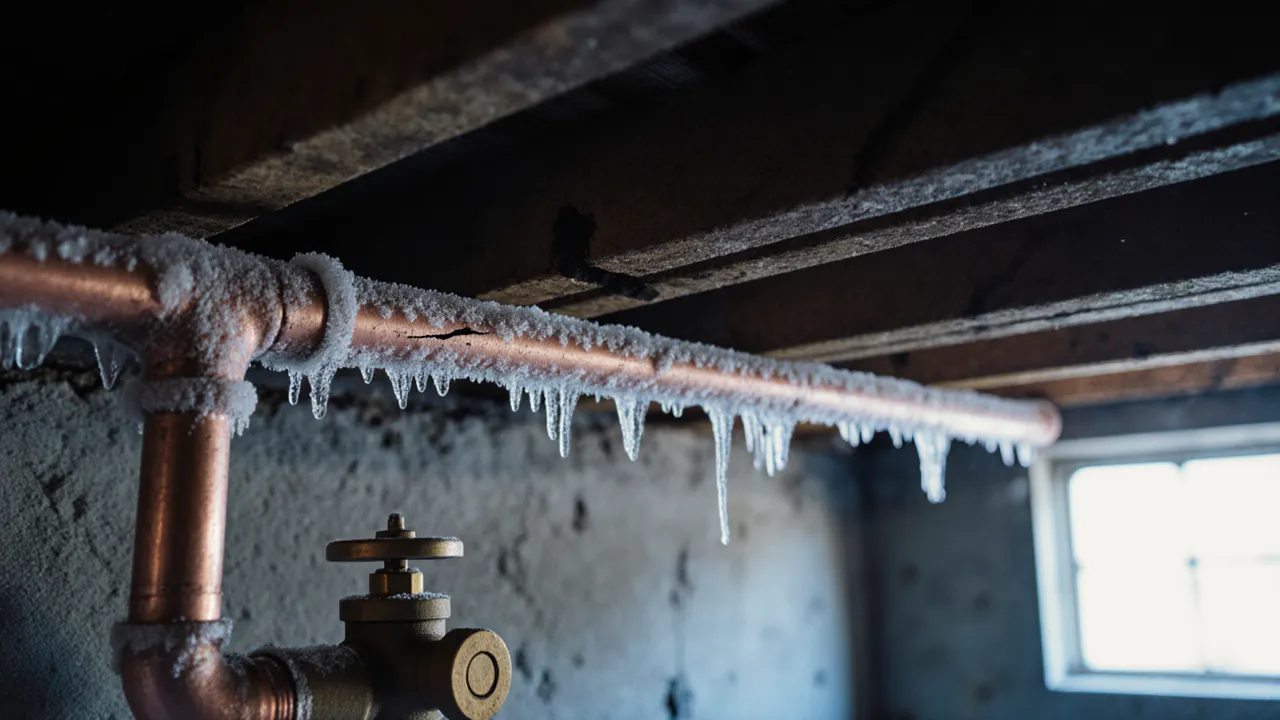
Minneapolis winters are among the harshest in the country, and they drive a predictable water-damage season built around frozen and burst pipes. Polar-vortex cold can push exterior-wall and basement plumbing well below freezing, and the city’s deep stock of older homes means many pipes run through uninsulated spaces. The good news is that frozen-pipe damage is largely preventable, and when a pipe does freeze or burst, a calm, fast response keeps a contained problem from becoming a whole-home loss. This checklist walks through prevention, safe thawing, and emergency response so you are ready before the next deep freeze.
Quick answer: To prevent frozen pipes in Minneapolis, keep heat at 55 degrees or higher, insulate exposed pipes, let faucets drip during extreme cold, and open cabinet doors on exterior walls. If a pipe bursts, shut off your main water valve immediately, open faucets, cut power to wet areas, document the damage, and call a restoration crew.
Before the Freeze: Prevention Checklist
Most frozen-pipe losses are prevented with a few habits:
- Hold your thermostat at 55 degrees or higher, even when traveling.
- Insulate pipes in exterior walls, basements, crawlspaces, and garages with foam sleeves.
- During deep cold, let the most exposed faucet drip; moving water freezes more slowly.
- Open cabinet doors under sinks on exterior walls so indoor heat reaches the plumbing.
- Disconnect and drain outdoor hoses and shut off exterior spigots before winter.
- Know where your main water shutoff is, and make sure every adult in the home does too.
- If you travel, have a neighbor check the home daily and keep the heat on.
If a Pipe Freezes (But Has Not Burst)
A frozen pipe with no leak yet is a chance to prevent the burst. Open the faucet served by the frozen pipe so water can flow as it thaws. Apply gentle heat to the frozen section with a hair dryer, heat lamp, or towels soaked in warm water, working from the faucet end toward the blockage. Never use an open flame or torch. If you cannot locate the frozen section, cannot reach it, or the pipe has already burst, shut off the main water and call a professional.
If a Pipe Bursts: Emergency Response
When a pipe bursts, act immediately:
- Shut off the main water valve to stop the flow.
- Open faucets to drain the lines and relieve pressure.
- Cut power to affected circuits at the breaker before entering standing water.
- Move belongings off wet floors and away from wet walls.
- Photograph and video everything before cleanup for your insurance claim.
- Call a restoration crew for extraction and structural drying. Do not wait days for the adjuster.
Why Fast Drying Prevents Bigger Problems
A burst pipe can release hundreds of gallons per hour into floors, walls, and the level below. Even after extraction, water hides in drywall, subfloor, framing, and insulation. Restoration crews run commercial air movers and low-grain refrigerant dehumidifiers continuously for several days, taking daily moisture readings against dry control areas. This is what prevents the warped hardwood, stained ceilings, and hidden mold that show up months after a rushed cleanup, and it produces the documentation your insurer expects.
Insurance and Ice Dams in Minnesota
Minnesota homeowners insurance generally covers sudden burst-pipe damage when the home was reasonably heated. Claims may be disputed for homes left unheated during winter trips or showing gradual leakage. Ice-dam interior damage is often covered too, though the underlying attic-insulation fix is the homeowner’s responsibility. Sewer and sump backup usually requires a separate endorsement. We document the freeze cause and your winterization steps and bill carriers directly.
People Also Ask
How do I keep my pipes from freezing in Minneapolis?
Keep heat at 55 degrees or higher, insulate exposed pipes, let faucets drip during extreme cold, open cabinet doors on exterior walls, and never leave the home unheated in winter.
Need help right now?
Live dispatcher 24/7. IICRC-certified crews. Direct insurance billing.
Call (888) 502-0998Can I thaw a frozen pipe myself?
Yes, gently. Open the faucet and apply low heat with a hair dryer or warm towels, working from the faucet toward the blockage. Never use an open flame. If the pipe has burst, shut off the main water and call a professional.
Does Minnesota insurance cover frozen pipe damage?
Yes for sudden bursts in a reasonably heated home. Homes left unheated during winter absences or showing gradual leakage risk denial.
What is the first thing to do when a pipe bursts?
Shut off the main water valve, then open faucets to relieve pressure, cut power to wet areas, and call for extraction immediately.
Are ice dams covered by insurance?
Resulting interior water damage from an ice dam is often covered. Preventing future ice dams by improving attic insulation and ventilation is the homeowner’s responsibility.
Get Help Now
If a pipe has frozen or burst in your Minneapolis or Saint Paul home, our IICRC-certified crews dispatch 24/7, extract and dry correctly the first time, and bill your insurance directly.
Call (888) 502-0998 for 24/7 emergency dispatch. See our Minneapolis water damage restoration and Saint Paul pages, or learn about water damage restoration, emergency water removal, and water damage repair.
{“@context”: “https://schema.org”, “@type”: “FAQPage”, “mainEntity”: [{“@type”: “Question”, “name”: “How do I keep my pipes from freezing in Minneapolis?”, “acceptedAnswer”: {“@type”: “Answer”, “text”: “Keep heat at 55 degrees or higher, insulate exposed pipes, let faucets drip during extreme cold, open cabinet doors on exterior walls, and never leave the home unheated in winter.”}}, {“@type”: “Question”, “name”: “Can I thaw a frozen pipe myself?”, “acceptedAnswer”: {“@type”: “Answer”, “text”: “Yes, gently. Open the faucet and apply low heat with a hair dryer or warm towels, working from the faucet toward the blockage. Never use an open flame. If the pipe has burst, shut off the main water and call a professional.”}}, {“@type”: “Question”, “name”: “Does Minnesota insurance cover frozen pipe damage?”, “acceptedAnswer”: {“@type”: “Answer”, “text”: “Yes for sudden bursts in a reasonably heated home. Homes left unheated during winter absences or showing gradual leakage risk denial.”}}, {“@type”: “Question”, “name”: “What is the first thing to do when a pipe bursts?”, “acceptedAnswer”: {“@type”: “Answer”, “text”: “Shut off the main water valve, then open faucets to relieve pressure, cut power to wet areas, and call for extraction immediately.”}}, {“@type”: “Question”, “name”: “Are ice dams covered by insurance?”, “acceptedAnswer”: {“@type”: “Answer”, “text”: “Resulting interior water damage from an ice dam is often covered. Preventing future ice dams by improving attic insulation and ventilation is the homeowner’s responsibility.”}}]}
Leave a Reply