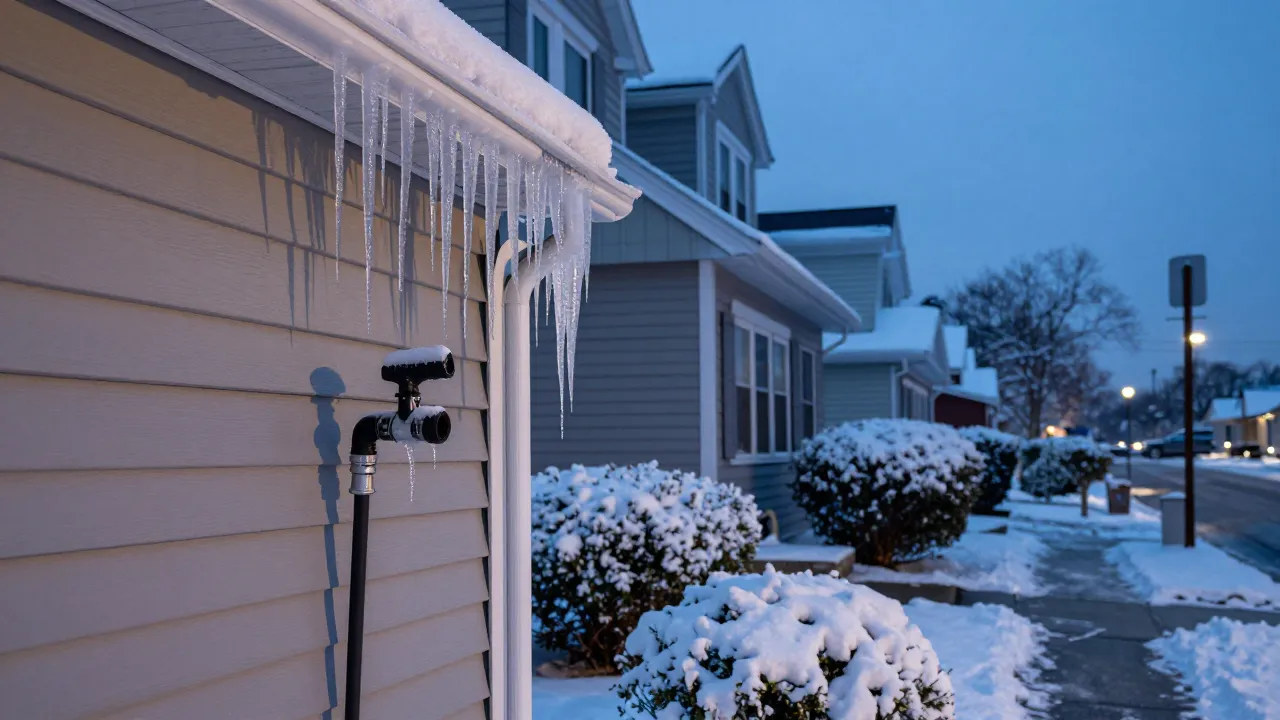
North Jersey winters are cold enough to freeze and burst the plumbing in homes and apartments across the region, and a single burst pipe can flood several units before anyone is home to notice. From Hackensack and Clifton to Morristown, frozen-pipe water damage is a predictable winter emergency, and the homes most at risk are exactly the ones built before modern insulation.
Why North Jersey Pipes Freeze and Burst
When a hard freeze settles over northern New Jersey, water in poorly insulated pipes freezes and expands, building pressure until the pipe ruptures, usually in an exterior wall, unheated basement, attic, or crawlspace. The region’s mix of older single-family homes and dense multi-family buildings raises the stakes: in attached homes and apartments, a burst pipe on an upper floor can flood several units below. Hackensack, Clifton, and Morristown all see this pattern during cold snaps, and ice dams on snow-loaded roofs add a second path for water to enter.
Your First Hour: Emergency Checklist
The first sixty minutes decide whether you face a quick dry-out or a multi-room rebuild. Move fast, but safely:
- Stop the source: shut the main water valve for a burst pipe, or tarp roof and storm damage once it is safe.
- Cut power to wet areas at the breaker before stepping into standing water.
- Move furniture, electronics, and valuables to a dry area, and lift what you can off the floor.
- Photograph and video everything before you touch it; your claim depends on that documentation.
- Start extraction and drying immediately rather than waiting for an adjuster.
- Call a 24/7 IICRC-certified crew the same hour the loss is discovered.
Insurance & Coverage in New Jersey
New Jersey homeowners insurance generally covers sudden burst-pipe damage provided the home was reasonably heated; claims can be disputed if a property was left unheated during a winter trip or shows long-term, gradual leakage. Ice-dam interior damage is often covered, but sewer and sump-pump backup usually requires a separate endorsement. We document the freeze event and your winterization steps to strengthen the claim, and bill carriers directly.
What Professional Restoration Actually Involves
A professional response is methodical, not improvised. Crews first locate and stop the source, then extract standing water with truck-mounted or portable equipment. They use moisture meters and sometimes thermal cameras to map the true footprint of the water, because the visible wet area is almost never the full extent. Unsalvageable saturated materials are removed, antimicrobial treatment is applied where contamination is involved, and commercial air movers and dehumidifiers run until the structure reaches a documented dry standard, usually over three to five days. Only then does the rebuild phase begin. Throughout, a reputable crew documents the loss and works directly with your insurance carrier so the claim moves quickly.
Choosing the Right Crew Fast
When you are choosing under pressure, four things matter most: genuine 24/7 availability with a live person who answers, IICRC certification proving the crew follows the S500 standard, direct insurance billing so you are not fronting thousands of dollars, and a real response time you can verify. Be wary of anyone who pressures you to sign over your insurance claim before inspecting the damage, and remember that the lowest bid often skips proper structural drying and moisture monitoring, which is exactly what prevents hidden mold and a second, larger claim months later.
Frequently Asked Questions
Does New Jersey insurance cover frozen pipe damage?
Yes for sudden bursts in a reasonably heated home. Homes left unheated during a winter trip risk denial, and gradual leakage is excluded. Documenting reasonable heat strengthens the claim.
Need help right now?
Live dispatcher 24/7. IICRC-certified crews. Direct insurance billing.
Call (888) 502-0998How do I prevent frozen pipes in North Jersey?
Insulate pipes in unheated spaces, keep heat at 55F or higher even when away, let faucets drip in deep cold, and open under-sink cabinets on exterior walls. Locate your main shut-off valve in advance.
What do I do when a pipe bursts in my apartment or home?
Shut the main water valve, open faucets to relieve pressure, cut power to wet areas, alert neighboring units if water is spreading, photograph the damage, and call a 24/7 crew immediately.
How does water spread between apartment units?
Through shared floors, walls, and ceilings. Crews locate the source, extract quickly, and dry the shared assemblies to stop migration between units, coordinating access and documentation.
How fast does frozen-pipe damage spread?
A burst line releases hundreds of gallons per hour into walls and floors, and mold can begin within 24 to 48 hours. Same-hour response keeps a contained leak from becoming a multi-room loss.
Local Help Across New Jersey
Our IICRC-certified crews serve communities across New Jersey, including Hackensack Clifton Morristown . For an active emergency, see our burst pipe emergency response.
Related services: water damage restoration water damage repair . See all New Jersey cities we serve.
Water damage in New Jersey will not wait. Call our 24/7 line at (888) 502-0998 for immediate dispatch and direct insurance coordination.
Leave a Reply