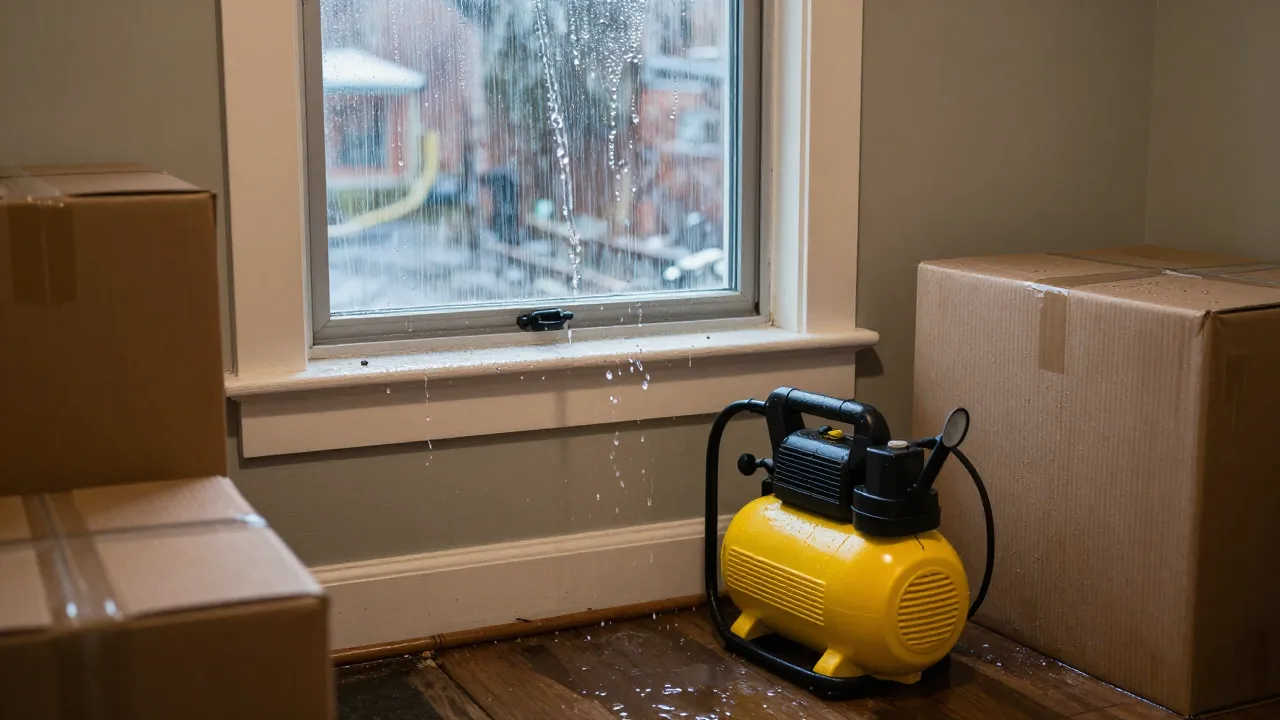
New Jersey’s nor’easters do not need to make landfall like a hurricane to flood your basement. Days of heavy rain and storm runoff overwhelm aging drainage and sewers, back up into low levels, and find every foundation crack. From Paterson and Passaic to New Brunswick, basement flooding during nor’easters is one of the state’s most common and most preventable water-damage losses.
Why Nor easters Flood New Jersey Basements
A stalled nor’easter can drop heavy rain for two or three days straight. Overwhelmed storm drains and aging combined sewers back water up into basements and lower units, especially in older river cities. Rising rivers such as the Passaic and Raritan push into low-lying neighborhoods, and sump-pump failure during the storm, often when the power goes out, lets groundwater rise unchecked. New Jersey’s dense, older housing stock means a single nor’easter can flood thousands of basements at once across Paterson, Passaic, and New Brunswick.
Your First Hour: Emergency Checklist
The first sixty minutes decide whether you face a quick dry-out or a multi-room rebuild. Move fast, but safely:
- Stop the source: shut the main water valve for a burst pipe, or tarp roof and storm damage once it is safe.
- Cut power to wet areas at the breaker before stepping into standing water.
- Move furniture, electronics, and valuables to a dry area, and lift what you can off the floor.
- Photograph and video everything before you touch it; your claim depends on that documentation.
- Start extraction and drying immediately rather than waiting for an adjuster.
- Call a 24/7 IICRC-certified crew the same hour the loss is discovered.
Insurance & Coverage in New Jersey
This is the trap that catches homeowners: a standard New Jersey homeowners policy covers sudden internal discharge, such as a burst pipe or appliance failure, and wind-driven rain through storm damage, but it does not cover rising surface or flood water. That requires separate NFIP or private flood insurance, and a large share of flood losses occur outside mapped high-risk zones. We document the precise source of loss so the correct policy responds, and we bill carriers directly.
What Professional Restoration Actually Involves
A professional response is methodical, not improvised. Crews first locate and stop the source, then extract standing water with truck-mounted or portable equipment. They use moisture meters and sometimes thermal cameras to map the true footprint of the water, because the visible wet area is almost never the full extent. Unsalvageable saturated materials are removed, antimicrobial treatment is applied where contamination is involved, and commercial air movers and dehumidifiers run until the structure reaches a documented dry standard, usually over three to five days. Only then does the rebuild phase begin. Throughout, a reputable crew documents the loss and works directly with your insurance carrier so the claim moves quickly.
Choosing the Right Crew Fast
When you are choosing under pressure, four things matter most: genuine 24/7 availability with a live person who answers, IICRC certification proving the crew follows the S500 standard, direct insurance billing so you are not fronting thousands of dollars, and a real response time you can verify. Be wary of anyone who pressures you to sign over your insurance claim before inspecting the damage, and remember that the lowest bid often skips proper structural drying and moisture monitoring, which is exactly what prevents hidden mold and a second, larger claim months later.
Frequently Asked Questions
Is basement flooding from a nor easter covered by insurance in New Jersey?
Rising surface and river floodwater is excluded and needs separate flood insurance, and sewer or sump backup needs a separate endorsement. Sudden internal leaks are covered by a standard policy.
Need help right now?
Live dispatcher 24/7. IICRC-certified crews. Direct insurance billing.
Call (888) 502-0998How do I protect my New Jersey basement from nor easters?
Install a battery-backup sump pump, add a sewer-and-sump backup endorsement and backwater valve, seal foundation cracks, and grade soil and downspouts away from the foundation.
Why does the power going out make basement flooding worse?
The same storm that floods your basement often knocks out power, disabling a standard electric sump pump exactly when it is needed. A battery or water-powered backup keeps working.
How fast should I respond to a flooded basement?
Immediately. Standing water spreads, wicks up walls, and feeds mold within 24 to 48 hours. Same-day extraction and drying saves the most material and lowers the total cost.
Do you handle sewer-backup contamination?
Yes. Sewer-contaminated water is handled under IICRC protocols with removal of affected porous materials, antimicrobial treatment, and verified drying.
Local Help Across New Jersey
Our IICRC-certified crews serve communities across New Jersey, including Paterson Passaic New Brunswick . For an active emergency, see our flooded basement cleanup response.
Related services: emergency water removal water damage restoration . See all New Jersey cities we serve.
Water damage in New Jersey will not wait. Call our 24/7 line at (888) 502-0998 for immediate dispatch and direct insurance coordination.
Leave a Reply