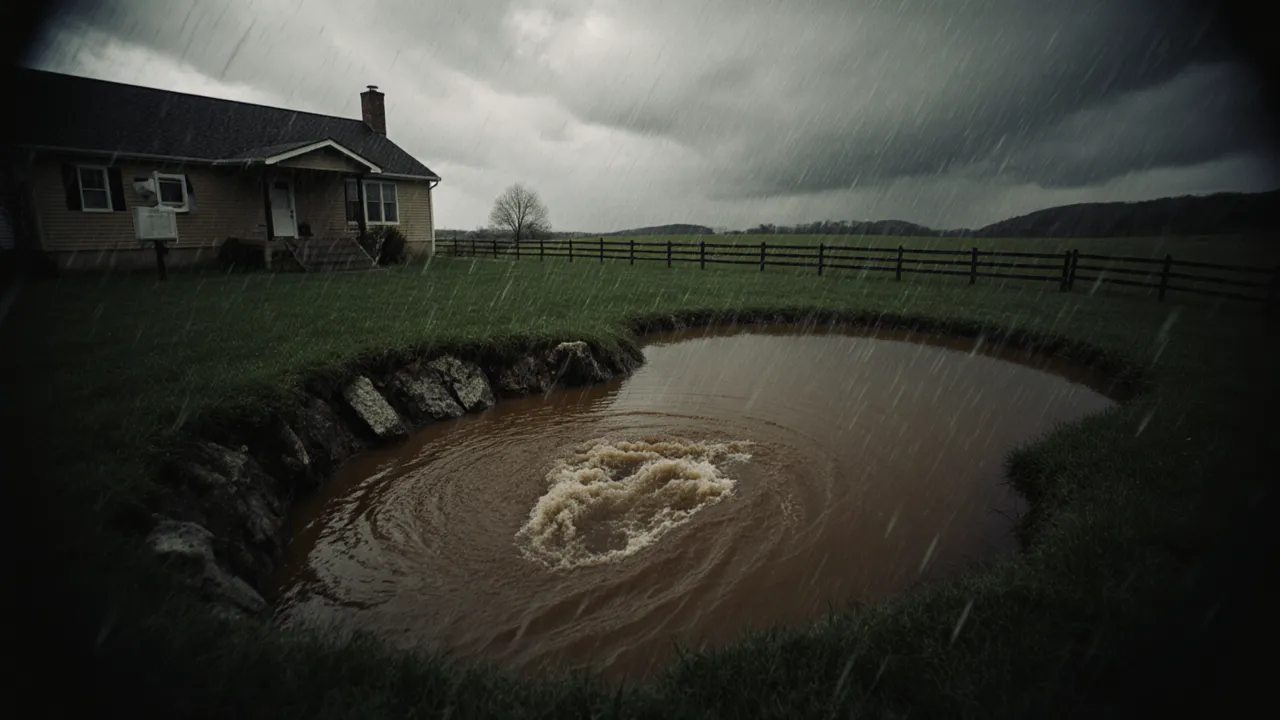
Most American cities drain their storm water to a river. Bowling Green largely drains it into the ground. The city sits in one of the most intensely developed karst landscapes in the country, on the northern edge of the Mammoth Cave region, and a great deal of its runoff goes down into sinkholes, swallets and karst windows and travels through cave conduits, including the underground course of the Lost River, before it surfaces again.
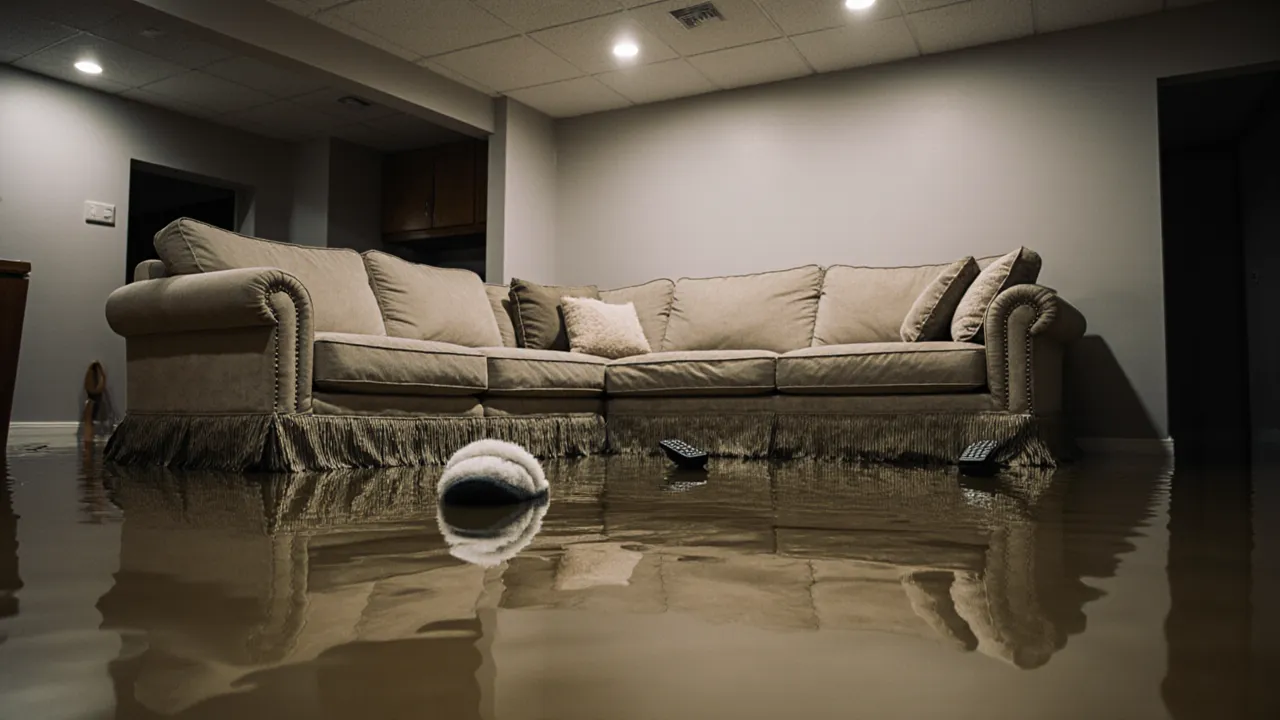
That system works remarkably well until it does not. When the conduits fill faster than they can carry water away, the flow reverses. Sinkholes that normally swallow water start to fill and become ponds, streets pond in the low spots, and basements take on water from beneath. This guide covers how sinkhole flooding damages Bowling Green property, what to do about it, and what insurance will and will not pay for.
How a City Drained by Sinkholes Floods
In a normal rain, water enters the karst system through thousands of surface openings and moves underground. The system has a finite capacity, set by the size of the conduits, and that capacity is fixed regardless of how hard it rains.
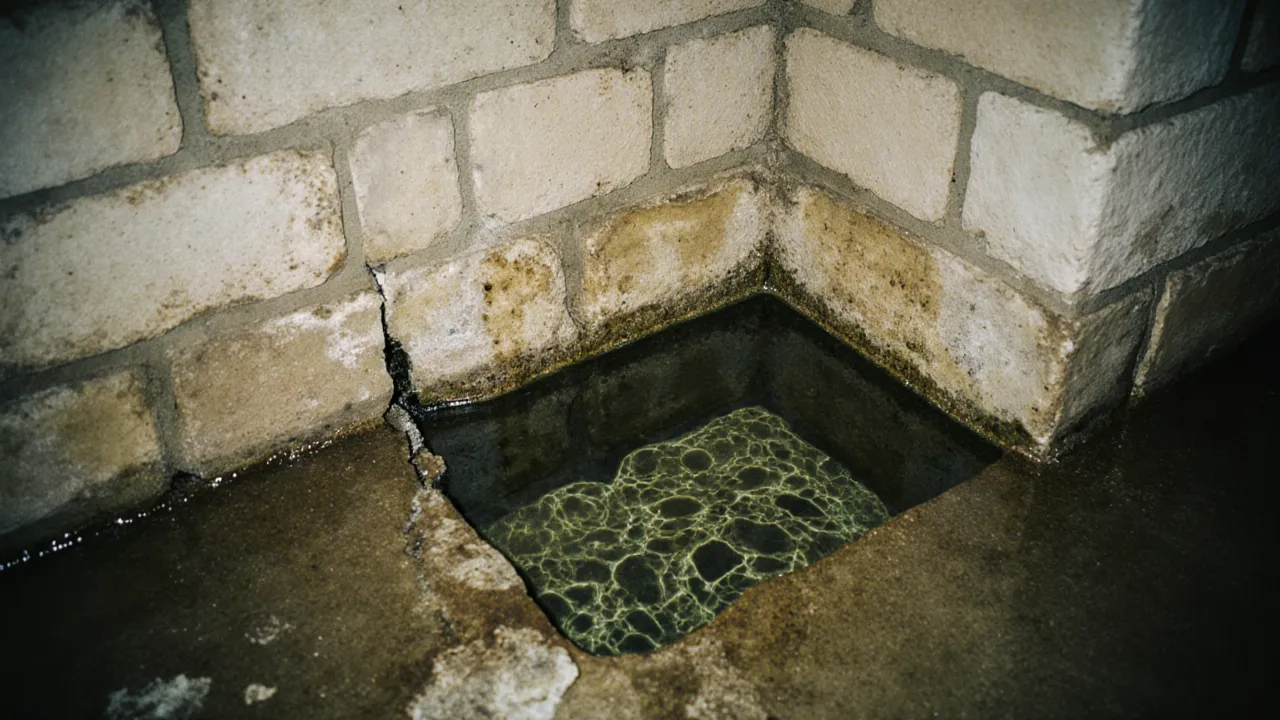
When a heavy or prolonged rain exceeds it, the underground conduits surcharge. Because everything is connected, the effects show up in places with no obvious relationship to one another. A sinkhole that has been a dry grassy depression for years fills within an hour and becomes a temporary lake. Water backs up through the same openings it usually drains through. And a house sitting over one of these pathways gets pressurized groundwater arriving under its slab, coming up through the basement floor, the wall-floor joint and floor drains.
Two consequences matter for homeowners. First, the response time is fast: karst flooding follows the rain by hours, not days. Second, the flooding is highly localized and does not follow surface topography. Your neighbor may be dry while you are pumping, because the two of you sit over different parts of the same underground network. Development compounds this, since every new roof and parking lot sends more water into a system whose underground capacity has not changed.
The Sinkhole Collapse Question
Alongside flooding, Warren County property owners face the collapse risk that comes with the same geology. Cover-collapse sinkholes form when soil gradually washes down into a void in the limestone until the remaining soil bridge fails, sometimes suddenly. The region has produced dramatic examples of it.
Most residential collapses are far less spectacular and are triggered or accelerated by water. A broken water line, a leaking sewer lateral or a downspout dumping concentrated flow in one spot can wash soil into a void for months, which is why what looks like a plumbing problem can become a structural one. Warning signs worth taking seriously include a new or deepening depression in the yard, a section of ground that stays soggy, doors and windows that suddenly stick, fresh stair-step cracking in foundation walls, and a pattern of unexplained water loss on your bill.
The right response is investigation rather than fill dirt. Filling a depression without understanding what is draining beneath it hides the symptom and can make the eventual failure larger.
Your First 60 Minutes
- Cut power to the basement at the breaker before entering standing water.
- Assume karst floodwater is contaminated. It has moved through soil, agricultural ground and, in older areas, past septic and sewer infrastructure. If a floor drain is backing up at the same time, treat it as Category 3 and keep people and pets out.
- Photograph and video before moving anything, including the entry point, the high-water line and the condition of the yard.
- Get contents off the floor and out of the basement.
- Do not run HVAC if basement ductwork or the return took on water.
- Call for extraction even if the water is already receding. Karst floods drain themselves, which fools people into thinking the problem resolved. The structure is still saturated and the clock on mold has already started.
Drying and Mold in a Karst Basement
Because this flooding recurs with each significant rain, the same materials get wet repeatedly. That repetition is what turns an annual nuisance into an established mold problem behind finished walls, and it is why proper drying after each event matters more here than in a place where flooding is a once-a-decade event.
A crew working to the IICRC S500 standard extracts standing water, then maps the true moisture footprint with meters rather than by eye, because water that arrives under a slab spreads outward beneath flooring and wicks up into drywall and framing well past the visible line. Carpet pad is removed, drywall is typically cut above the wick line so cavities can be cleaned and dried, and saturated insulation comes out. Contaminated water means containment, HEPA filtration and antimicrobial treatment before drying begins. Air movers and low-grain refrigerant dehumidifiers then run continuously with logged daily readings until documented dry standards are met.
Mold can begin within 24 to 48 hours. Where growth is established, mold remediation under IICRC S520 means containment, HEPA filtration, removal of affected porous materials, and correcting the moisture source, which in Bowling Green means the drainage system rather than the drywall.
Prevention That Matches the Geology
- Install an interior perimeter drain and a properly sized sump with battery backup. This addresses water arriving from below, which exterior wall sealing cannot.
- Carry water away from the house. Extend downspouts well clear of the foundation, but do not discharge concentrated flow into one spot where it can wash soil into a void.
- Fix plumbing and sewer leaks promptly. In karst country a leaking line is a soil-removal machine.
- Keep floor drains clear and consider a backwater valve if you have had backups.
- Have new or deepening yard depressions investigated rather than filled.
- Finish basements defensively: inorganic or removable flooring, framing held off the slab, storage on shelving rather than cardboard on the floor.
- Know your local drainage. Understand which sinkhole your street drains into and how it behaves in a hard rain.
Insurance in Kentucky: Three Separate Gaps
Bowling Green sits at the intersection of three coverage gaps, and it is worth checking all of them rather than assuming any one policy handles it.
Groundwater is not covered by homeowners. Water pushed up through a slab by hydrostatic pressure is excluded from a standard policy, which covers sudden and accidental discharge from inside the home and wind-driven rain through a storm-created opening.
Surface flooding needs flood insurance. A sinkhole that fills and ponds across a yard is rising surface water and requires separate NFIP or private flood coverage. Because karst flooding is localized rather than riverine, plenty of affected property sits outside mapped high-risk zones, where flood insurance is still available and often inexpensive.
Earth movement is generally excluded. Standard homeowners policies typically exclude sinkhole collapse and earth movement. Some carriers offer sinkhole or catastrophic ground collapse coverage as an endorsement, and in Warren County it is worth asking your agent about directly rather than discovering the exclusion afterward.
The two endorsements most likely to actually pay for a Bowling Green basement loss are water and sewer backup and sump pump failure. Our insurance guide and our post on what homeowners insurance covers explain how the cause of loss determines which policy responds.
Documenting a Karst Loss for Your Claim
With three separate coverage gaps in play, what you record in the first hour often decides which policy responds and whether it responds at all.
- Note the timeline precisely. When the rain started, when water appeared, how fast it rose and when it receded. Karst flooding is fast, and a tight timeline supports a sudden event rather than long-term seepage.
- Photograph the entry point specifically. Water rising through a floor crack, at the wall-floor joint or out of a floor drain reads very differently to an adjuster than water running down a wall.
- Document the yard as well as the house, including any sinkhole that filled, new depressions and where surface water ponded. This matters for both the flood question and the earth-movement question.
- Capture the high-water line on the drywall, mechanical equipment and stored contents before anything is moved.
- Inventory discarded items with photos, approximate age and replacement cost as you remove them.
- Keep sump service records. Evidence the pump was maintained and working supports a sump failure claim and weakens a neglect argument.
- Save the drying log, since daily moisture readings are what prove the structure was dried if a mold claim arises later.
We provide adjuster-grade documentation as standard, including moisture maps and daily readings, and bill carriers directly.
Frequently Asked Questions
Why did the sinkhole in my yard fill up with water?
Because the underground conduits it drains into reached capacity. When a heavy rain delivers more water than the karst system can carry, flow backs up and the sinkhole temporarily becomes a pond instead of a drain. It usually empties within a day or two as the system catches up.
Does insurance cover sinkhole flooding in Bowling Green?
Rarely under a standard homeowners policy. Surface ponding needs flood insurance, groundwater coming up through a slab is excluded, and sinkhole collapse falls under earth movement, which is typically excluded unless you add a specific endorsement. Water backup and sump failure endorsements cover the most common basement scenarios.
Should I fill in a new depression in my yard?
Not before it is investigated. A new or deepening depression can indicate soil washing into a void beneath, often driven by a leaking water or sewer line. Filling it conceals the process without stopping it, and the eventual failure can be larger.
Is basement water from karst flooding contaminated?
Treat it as contaminated. It has traveled through soil and rock in a region with agriculture and older septic systems. If a floor drain is backing up at the same time, it should be handled as Category 3 with containment and protective equipment.
How fast can a crew reach my Bowling Green home?
We dispatch 24 hours a day and crews serve Bowling Green and Warren County. Arrival depends on your location and current demand, which rises across the region during a heavy rain event affecting many properties at once.
Get Help Now in Bowling Green
Water damage in Bowling Green does not pause overnight or wait for business hours. Call our 24/7 dispatch line at (888) 502-0998 and we will get an IICRC-certified crew moving toward your property and coordinate directly with your insurance carrier.