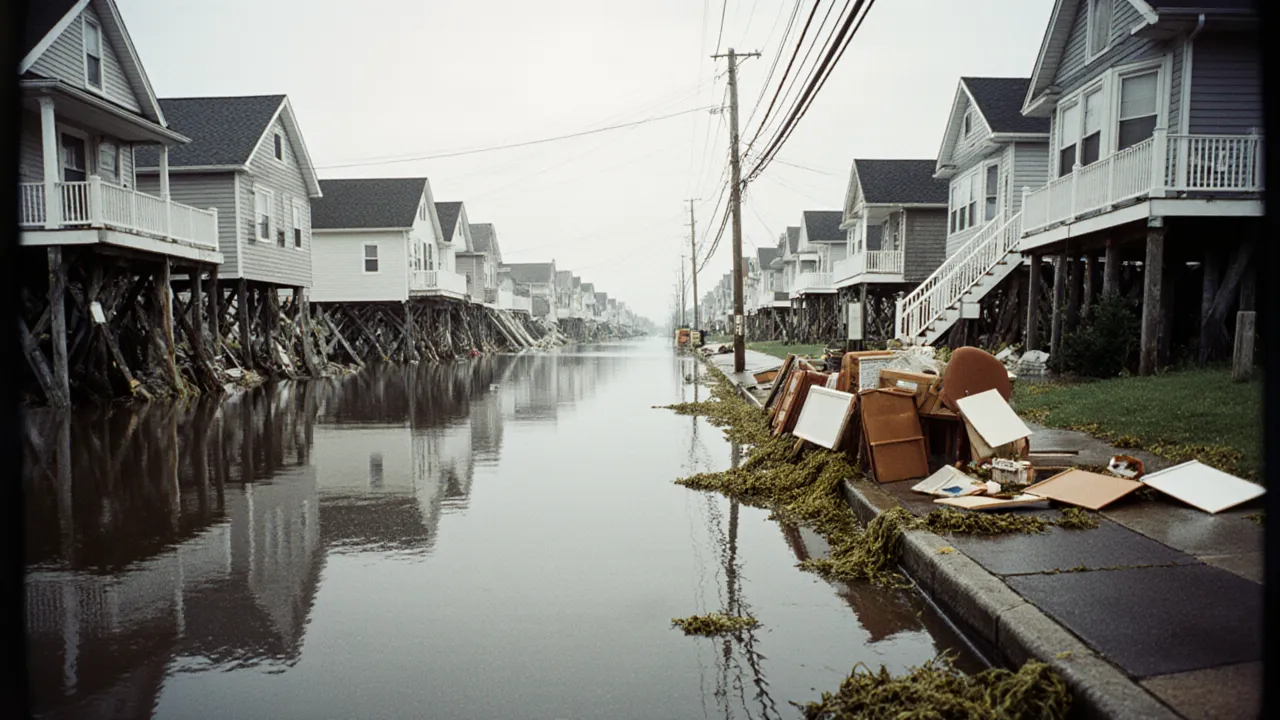
From the barrier islands to the bayfront towns, the New Jersey shore lives with coastal flooding: nor’easters, tropical remnants, and tidal surges that push water into homes, a reality Superstorm Sandy made unforgettable. When the water recedes, what you do next determines how much of your home you save. From Toms River and Brick to Atlantic City, here is a clear coastal flood cleanup checklist.
Why the Jersey Shore Floods
Coastal New Jersey faces water from several directions. Nor’easters stack days of wind-driven tidal flooding against the coast, often causing more cumulative damage than a single hurricane. Tropical systems and their remnants bring surge and heavy rain. Bayside and back-bay flooding inundates low-lying neighborhoods even without a direct ocean hit, and a high water table keeps ground floors and crawlspaces vulnerable. Barrier-island towns like Toms River, Brick, and Atlantic City sit only feet above sea level, so tidal flooding is a recurring, not rare, event.
Your First Hour: Emergency Checklist
The first sixty minutes decide whether you face a quick dry-out or a multi-room rebuild. Move fast, but safely:
- Stop the source: shut the main water valve for a burst pipe, or tarp roof and storm damage once it is safe.
- Cut power to wet areas at the breaker before stepping into standing water.
- Move furniture, electronics, and valuables to a dry area, and lift what you can off the floor.
- Photograph and video everything before you touch it; your claim depends on that documentation.
- Start extraction and drying immediately rather than waiting for an adjuster.
- Call a 24/7 IICRC-certified crew the same hour the loss is discovered.
Insurance & Coverage in New Jersey
Coastal claims hinge on one distinction: wind-driven rain through a storm-damaged roof or window is generally covered by your New Jersey homeowners policy, but storm surge, tidal flooding, and rising water are excluded and require separate flood insurance. After a major storm the cause of each area of damage must be documented precisely, because the wrong classification can mean a denied claim. We separate wind from flood causation carefully and bill carriers directly.
What Professional Restoration Actually Involves
A professional response is methodical, not improvised. Crews first locate and stop the source, then extract standing water with truck-mounted or portable equipment. They use moisture meters and sometimes thermal cameras to map the true footprint of the water, because the visible wet area is almost never the full extent. Unsalvageable saturated materials are removed, antimicrobial treatment is applied where contamination is involved, and commercial air movers and dehumidifiers run until the structure reaches a documented dry standard, usually over three to five days. Only then does the rebuild phase begin. Throughout, a reputable crew documents the loss and works directly with your insurance carrier so the claim moves quickly.
Choosing the Right Crew Fast
When you are choosing under pressure, four things matter most: genuine 24/7 availability with a live person who answers, IICRC certification proving the crew follows the S500 standard, direct insurance billing so you are not fronting thousands of dollars, and a real response time you can verify. Be wary of anyone who pressures you to sign over your insurance claim before inspecting the damage, and remember that the lowest bid often skips proper structural drying and moisture monitoring, which is exactly what prevents hidden mold and a second, larger claim months later.
Frequently Asked Questions
Does New Jersey homeowners insurance cover coastal flooding?
No. Tidal and coastal floodwater is excluded and requires separate NFIP or private flood insurance. Wind-driven rain through storm damage is typically covered by a homeowners policy.
Need help right now?
Live dispatcher 24/7. IICRC-certified crews. Direct insurance billing.
Call (888) 502-0998What should I do first after a coastal flood at the shore?
Follow evacuation orders first; once authorities clear your return, cut power before entering, document everything with photos, and call a 24/7 crew. Treat floodwater as contaminated.
Is nor easter flooding as damaging as a hurricane?
It can be worse. Nor easters stall for days, stacking repeated high-tide flooding against the coast, so cumulative water intrusion and erosion often exceed a fast-moving hurricane.
Can flood-soaked drywall and flooring be saved?
Saltwater and back-bay floodwater is contaminated, so porous materials that absorbed it are generally removed under IICRC protocols. Hard surfaces are cleaned, decontaminated, and dried.
How quickly can a crew reach the Jersey Shore after a storm?
Our dispatcher runs 24/7. After widespread coastal storms the shore runs at capacity, so early callers are prioritized once it is safe to work.
Local Help Across New Jersey
Our IICRC-certified crews serve communities across New Jersey, including Toms River Brick Atlantic City . For an active emergency, see our same-day flood cleanup response.
Related services: flood damage restoration emergency water removal . See all New Jersey cities we serve.
Water damage in New Jersey will not wait. Call our 24/7 line at (888) 502-0998 for immediate dispatch and direct insurance coordination.
Leave a Reply