Two terms get used interchangeably across the restoration industry, and the difference matters when you are filing an insurance claim or comparing quotes from different crews.
Water removal is one step. Water damage restoration is the full cycle. Here is the practical breakdown.
What water removal actually is
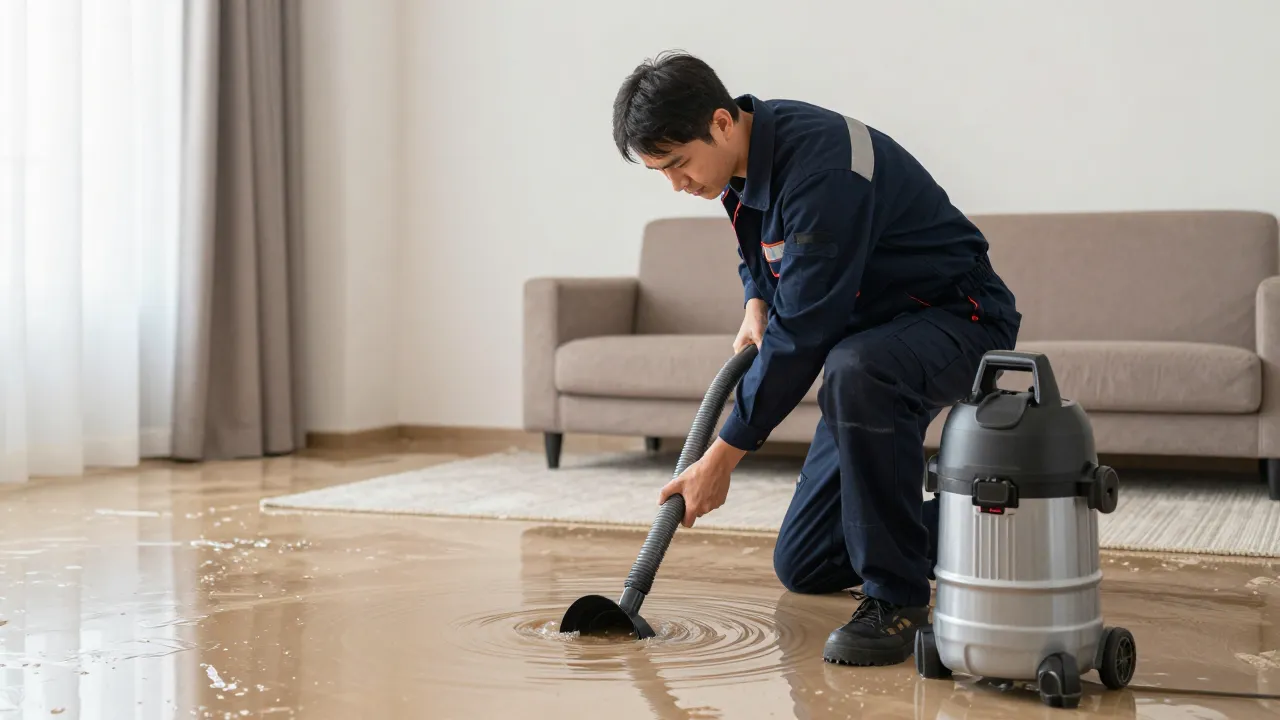
Water removal — sometimes called water extraction — is the physical act of pulling standing water out of a property. Truck-mounted extractors, submersible pumps, and wet/dry vacuums get water off floors, out of wall cavities, off carpets, and out of subfloors. On a typical residential loss with one or two inches of water across a few rooms, water removal takes 1–3 hours.
If your loss is small — a clean overflow that you caught fast, no soaked materials, no migration into walls or subfloors — water removal alone might be the only service you need. The materials dry out naturally, no mold risk emerges, and you are done.
What water damage restoration covers
Water damage restoration is the full IICRC S500 process. It includes water removal as Step 1, then continues:
- Moisture mapping and documentation — pin and pinless meter readings on every affected surface, photographs, written scope
- Removal of unsalvageable materials — wet drywall, wet insulation, wet carpet pad, wet subfloor (often) per S500 categories
- Structural drying — air movers and dehumidifiers sized to the cubic footage, monitored daily, run until moisture content drops to dry standard
- Sanitization — antimicrobial application on affected materials, with EPA-registered products if the water was Category 2 or 3
- Reconstruction — rebuilding what was removed: drywall, insulation, paint, flooring, cabinetry, finish carpentry
A typical residential restoration job runs 5–10 days for drying plus another 2–6 weeks for reconstruction depending on scope.
How to know which you need
Use this quick decision tree:
Need help right now?
Live dispatcher 24/7. IICRC-certified crews. Direct insurance billing.
Call (888) 502-0998- Clean water, caught within hours, no migration, no soaked porous materials → water removal might be enough. Verify with a moisture meter reading; if everything reads below 16% moisture content within 24 hours of extraction, you are done.
- Water sat for 12+ hours, or reached drywall/subfloor, or you can see staining → full restoration scope. The damage extends beyond what you can see.
- Gray or black water (washer, dishwasher, toilet overflow, sewage, storm) → full restoration with mold protocols. Contaminated water is Cat 2 or Cat 3 by definition.
- Any musty smell, discolored drywall, or visible mold → full restoration plus possible mold remediation. The loss is older or more extensive than you realized.
Why insurance carriers care about the distinction
Your homeowners policy covers water damage restoration when triggered by a covered peril. Carriers pay against an Xactimate-compatible scope of work that breaks out each phase. If your crew bills only for water extraction and stops there, the carrier pays only for that. If the property needed full drying and reconstruction and the documentation supports it, the carrier pays the full scope.
This is why proper documentation matters. A crew that arrives, runs an extractor for two hours, and leaves often misses 40–60% of the covered scope — meaning you the homeowner pay for what should have been claimable. We document to IICRC S500 standards on every job specifically to keep the carrier conversation clean.
Regional considerations
Climate changes the math on whether removal alone is enough. In Dallas and Atlanta, summer heat and humidity make mold growth more likely after even a small loss, so we err toward the full restoration scope. In drier Denver and the desert Southwest, removal-only is more often appropriate. Our dispatcher asks climate-specific questions when assessing your loss.
FAQ
Can I do water removal myself with a wet/dry vacuum?
For a small clean-water spill (a single overflow caught immediately), yes. For anything larger, household equipment lacks the extraction power to pull water out of carpet pad, subfloor, or wall cavities. The visible water comes up; the hidden water stays and turns into mold.
Why do crews sometimes remove drywall that does not look that wet?
Drywall wicks water up from saturated bottom plates. Visible damage stops at the water line; structural damage continues 12–24 inches higher. Removing the wet portion now prevents mold growth and a much larger demolition later.
How long does the full restoration process take?
Mitigation and drying: 3–7 days. Reconstruction: 2–6 weeks depending on scope. Most jobs are fully closed within 6–10 weeks of the initial loss.
Call (888) 502-0998 for a free assessment 24/7.
People also ask
How fast can a crew reach my address?
Typical metro dispatch is 30 to 75 minutes off-peak. Severe-weather events extend windows; we pre-stage crews when major storms are forecast.
Do you bill insurance directly?
Yes. We bill homeowners and commercial property carriers directly using Xactimate-compatible scopes plus moisture maps, photos, and IICRC S500/S520 documentation.
Will my homeowners policy cover this?
Sudden-and-accidental water damage from covered perils is usually covered. Rising-water flooding requires a separate flood policy. Long-term seepage is typically excluded as maintenance.
What is a Category 3 water loss?
Cat 3 is contaminated water (sewage backups, storm surge, combined sewer overflow). It requires containment, EPA-registered antimicrobials, and verified clearance before reconstruction.