24/7 Emergency Water Damage Response
Need help now? (888) 502-0998

Tag: Flash Flooding

  • Sinkhole Flooding and Water Damage in Bowling Green, KY
    Storm Damage

    Sinkhole Flooding and Water Damage in Bowling Green, KY

    Bowling Green drains storm water into sinkholes. When the karst backs up basements flood from below, and three separate insurance gaps apply.

    Read more →

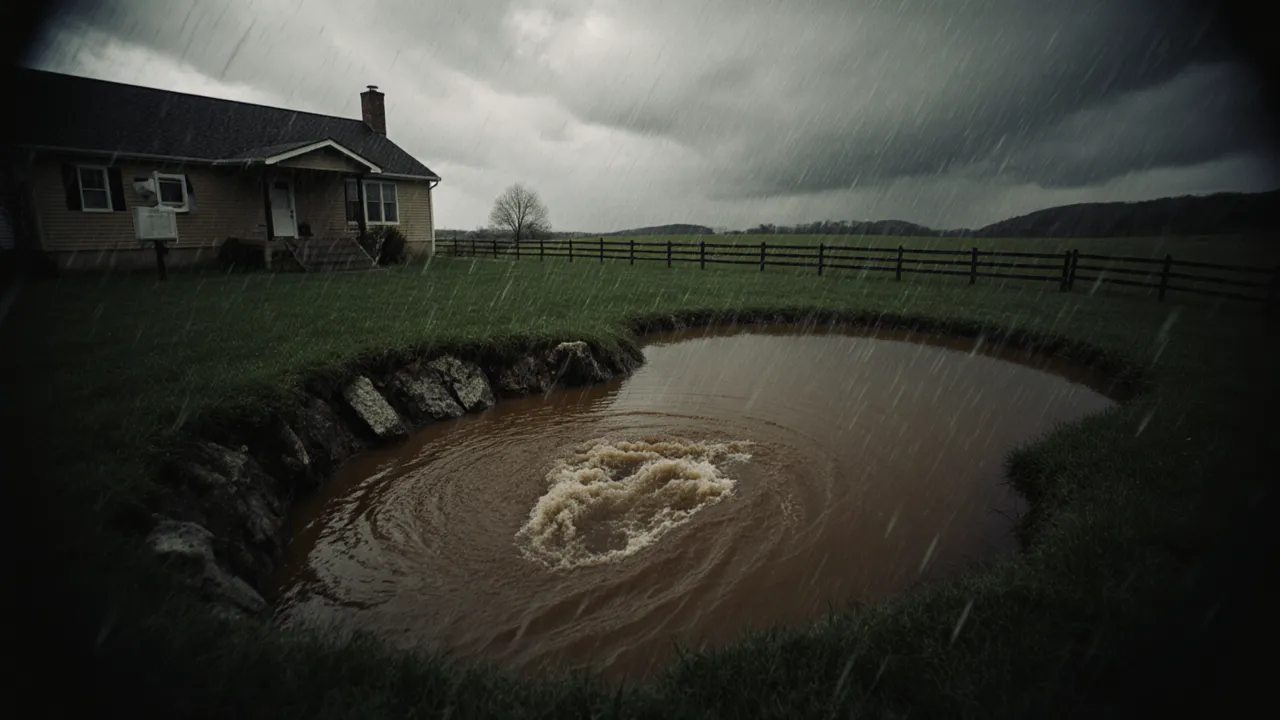
    Storm runoff swirling into a sinkhole depression in a Bowling Green yard beside a ranch house

    Most American cities drain their storm water to a river. Bowling Green largely drains it into the ground. The city sits in one of the most intensely developed karst landscapes in the country, on the northern edge of the Mammoth Cave region, and a great deal of its runoff goes down into sinkholes, swallets and karst windows and travels through cave conduits, including the underground course of the Lost River, before it surfaces again.

    That system works remarkably well until it does not. When the conduits fill faster than they can carry water away, the flow reverses. Sinkholes that normally swallow water start to fill and become ponds, streets pond in the low spots, and basements take on water from beneath. This guide covers how sinkhole flooding damages Bowling Green property, what to do about it, and what insurance will and will not pay for.

    How a City Drained by Sinkholes Floods

    In a normal rain, water enters the karst system through thousands of surface openings and moves underground. The system has a finite capacity, set by the size of the conduits, and that capacity is fixed regardless of how hard it rains.

    When a heavy or prolonged rain exceeds it, the underground conduits surcharge. Because everything is connected, the effects show up in places with no obvious relationship to one another. A sinkhole that has been a dry grassy depression for years fills within an hour and becomes a temporary lake. Water backs up through the same openings it usually drains through. And a house sitting over one of these pathways gets pressurized groundwater arriving under its slab, coming up through the basement floor, the wall-floor joint and floor drains.

    Two consequences matter for homeowners. First, the response time is fast: karst flooding follows the rain by hours, not days. Second, the flooding is highly localized and does not follow surface topography. Your neighbor may be dry while you are pumping, because the two of you sit over different parts of the same underground network. Development compounds this, since every new roof and parking lot sends more water into a system whose underground capacity has not changed.

    The Sinkhole Collapse Question

    Alongside flooding, Warren County property owners face the collapse risk that comes with the same geology. Cover-collapse sinkholes form when soil gradually washes down into a void in the limestone until the remaining soil bridge fails, sometimes suddenly. The region has produced dramatic examples of it.

    Most residential collapses are far less spectacular and are triggered or accelerated by water. A broken water line, a leaking sewer lateral or a downspout dumping concentrated flow in one spot can wash soil into a void for months, which is why what looks like a plumbing problem can become a structural one. Warning signs worth taking seriously include a new or deepening depression in the yard, a section of ground that stays soggy, doors and windows that suddenly stick, fresh stair-step cracking in foundation walls, and a pattern of unexplained water loss on your bill.

    The right response is investigation rather than fill dirt. Filling a depression without understanding what is draining beneath it hides the symptom and can make the eventual failure larger.

    Your First 60 Minutes

    • Cut power to the basement at the breaker before entering standing water.
    • Assume karst floodwater is contaminated. It has moved through soil, agricultural ground and, in older areas, past septic and sewer infrastructure. If a floor drain is backing up at the same time, treat it as Category 3 and keep people and pets out.
    • Photograph and video before moving anything, including the entry point, the high-water line and the condition of the yard.
    • Get contents off the floor and out of the basement.
    • Do not run HVAC if basement ductwork or the return took on water.
    • Call for extraction even if the water is already receding. Karst floods drain themselves, which fools people into thinking the problem resolved. The structure is still saturated and the clock on mold has already started.

    Drying and Mold in a Karst Basement

    Because this flooding recurs with each significant rain, the same materials get wet repeatedly. That repetition is what turns an annual nuisance into an established mold problem behind finished walls, and it is why proper drying after each event matters more here than in a place where flooding is a once-a-decade event.

    A crew working to the IICRC S500 standard extracts standing water, then maps the true moisture footprint with meters rather than by eye, because water that arrives under a slab spreads outward beneath flooring and wicks up into drywall and framing well past the visible line. Carpet pad is removed, drywall is typically cut above the wick line so cavities can be cleaned and dried, and saturated insulation comes out. Contaminated water means containment, HEPA filtration and antimicrobial treatment before drying begins. Air movers and low-grain refrigerant dehumidifiers then run continuously with logged daily readings until documented dry standards are met.

    Mold can begin within 24 to 48 hours. Where growth is established, mold remediation under IICRC S520 means containment, HEPA filtration, removal of affected porous materials, and correcting the moisture source, which in Bowling Green means the drainage system rather than the drywall.

    Prevention That Matches the Geology

    • Install an interior perimeter drain and a properly sized sump with battery backup. This addresses water arriving from below, which exterior wall sealing cannot.
    • Carry water away from the house. Extend downspouts well clear of the foundation, but do not discharge concentrated flow into one spot where it can wash soil into a void.
    • Fix plumbing and sewer leaks promptly. In karst country a leaking line is a soil-removal machine.
    • Keep floor drains clear and consider a backwater valve if you have had backups.
    • Have new or deepening yard depressions investigated rather than filled.
    • Finish basements defensively: inorganic or removable flooring, framing held off the slab, storage on shelving rather than cardboard on the floor.
    • Know your local drainage. Understand which sinkhole your street drains into and how it behaves in a hard rain.

    Insurance in Kentucky: Three Separate Gaps

    Bowling Green sits at the intersection of three coverage gaps, and it is worth checking all of them rather than assuming any one policy handles it.

    Groundwater is not covered by homeowners. Water pushed up through a slab by hydrostatic pressure is excluded from a standard policy, which covers sudden and accidental discharge from inside the home and wind-driven rain through a storm-created opening.

    Surface flooding needs flood insurance. A sinkhole that fills and ponds across a yard is rising surface water and requires separate NFIP or private flood coverage. Because karst flooding is localized rather than riverine, plenty of affected property sits outside mapped high-risk zones, where flood insurance is still available and often inexpensive.

    Earth movement is generally excluded. Standard homeowners policies typically exclude sinkhole collapse and earth movement. Some carriers offer sinkhole or catastrophic ground collapse coverage as an endorsement, and in Warren County it is worth asking your agent about directly rather than discovering the exclusion afterward.

    The two endorsements most likely to actually pay for a Bowling Green basement loss are water and sewer backup and sump pump failure. Our insurance guide and our post on what homeowners insurance covers explain how the cause of loss determines which policy responds.

    Documenting a Karst Loss for Your Claim

    With three separate coverage gaps in play, what you record in the first hour often decides which policy responds and whether it responds at all.

    • Note the timeline precisely. When the rain started, when water appeared, how fast it rose and when it receded. Karst flooding is fast, and a tight timeline supports a sudden event rather than long-term seepage.
    • Photograph the entry point specifically. Water rising through a floor crack, at the wall-floor joint or out of a floor drain reads very differently to an adjuster than water running down a wall.
    • Document the yard as well as the house, including any sinkhole that filled, new depressions and where surface water ponded. This matters for both the flood question and the earth-movement question.
    • Capture the high-water line on the drywall, mechanical equipment and stored contents before anything is moved.
    • Inventory discarded items with photos, approximate age and replacement cost as you remove them.
    • Keep sump service records. Evidence the pump was maintained and working supports a sump failure claim and weakens a neglect argument.
    • Save the drying log, since daily moisture readings are what prove the structure was dried if a mold claim arises later.

    We provide adjuster-grade documentation as standard, including moisture maps and daily readings, and bill carriers directly.

    Frequently Asked Questions

    Why did the sinkhole in my yard fill up with water?

    Because the underground conduits it drains into reached capacity. When a heavy rain delivers more water than the karst system can carry, flow backs up and the sinkhole temporarily becomes a pond instead of a drain. It usually empties within a day or two as the system catches up.

    Does insurance cover sinkhole flooding in Bowling Green?

    Rarely under a standard homeowners policy. Surface ponding needs flood insurance, groundwater coming up through a slab is excluded, and sinkhole collapse falls under earth movement, which is typically excluded unless you add a specific endorsement. Water backup and sump failure endorsements cover the most common basement scenarios.

    Should I fill in a new depression in my yard?

    Not before it is investigated. A new or deepening depression can indicate soil washing into a void beneath, often driven by a leaking water or sewer line. Filling it conceals the process without stopping it, and the eventual failure can be larger.

    Is basement water from karst flooding contaminated?

    Treat it as contaminated. It has traveled through soil and rock in a region with agriculture and older septic systems. If a floor drain is backing up at the same time, it should be handled as Category 3 with containment and protective equipment.

    How fast can a crew reach my Bowling Green home?

    We dispatch 24 hours a day and crews serve Bowling Green and Warren County. Arrival depends on your location and current demand, which rises across the region during a heavy rain event affecting many properties at once.

    Get Help Now in Bowling Green

    Water damage in Bowling Green does not pause overnight or wait for business hours. Call our 24/7 dispatch line at (888) 502-0998 and we will get an IICRC-certified crew moving toward your property and coordinate directly with your insurance carrier.
    Related Resources

  • Monsoon Flash Flooding and Water Damage in Las Cruces
    Storm Damage

    Monsoon Flash Flooding and Water Damage in Las Cruces

    How monsoon runoff, arroyo flooding, flat roofs and evaporative coolers cause water damage in Las Cruces, and why desert homes still grow…

    Read more →

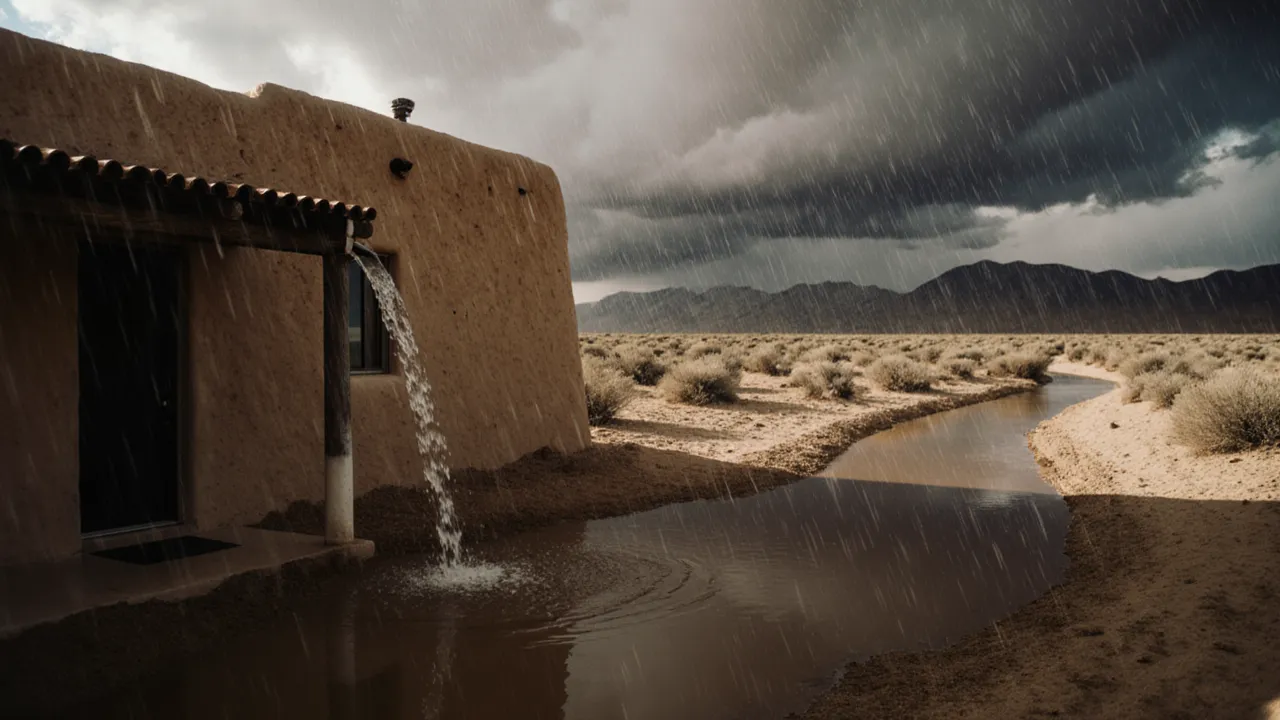
    Monsoon rain pouring from an adobe home canale spout beside a running desert arroyo near Las Cruces

    Las Cruces gets around nine inches of rain in a typical year, and a good share of it can arrive in a handful of July and August afternoons. That is the whole problem in one sentence. The North American Monsoon does not deliver water gently; it delivers it in short, violent bursts onto ground that has been baked hard for months, in a valley shaped by arroyos that exist specifically to carry that water somewhere else in a hurry.

    Homeowners here are often surprised that water damage is a serious local risk at all. It is, and it does not look like water damage in a wet climate. This guide covers how monsoon flash flooding, flat roofs and evaporative coolers cause losses in Las Cruces, what to do first, and how New Mexico insurance treats each cause.

    Why the Desert Floods

    Dry ground does not absorb a downpour; it sheds it. Caliche layers and sun-hardened desert soils across the Mesilla Valley have very low infiltration rates, so an inch of rain in thirty minutes runs off almost entirely. That runoff concentrates in arroyos draining the Organ Mountains and the West Mesa, and an arroyo that has been a dusty walking path all year can carry a fast, debris-laden flow within minutes of a storm that is still miles away.

    Several things make Las Cruces losses worse than the rainfall totals imply:

    • The rain often falls somewhere else. A storm over the Organs can send water down an arroyo into a neighborhood in bright sunshine. People are caught unprepared because it is not raining where they are.
    • Burn scars amplify runoff. After a wildfire in the mountains, the burned ground repels water for years, multiplying both the volume and the sediment load that reaches the valley.
    • Development changes the paths. New streets, pads and walls in a growing city redirect historic drainage, and water finds the low spot regardless of where the lot line is.
    • Deferred maintenance goes unnoticed. In a climate this dry, a cracked parapet or a failed roof seam can sit unnoticed for years, because nothing tests it until the monsoon does.

    Flat Roofs, Parapets and Canales

    Southwestern construction is built for sun, not for standing water. Flat and low-slope roofs drain through canales or scuppers cut through a parapet wall, and every one of those is a potential entry point. The common failure modes are specific and worth checking before monsoon season:

    • A canale that is blocked or too short, so water sheets down the stucco wall instead of clearing it, saturating the wall assembly and the foundation below.
    • Cracked or failed roof coating and seams, which in dry heat degrade steadily and invisibly.
    • Parapet cap flashing that has opened at the joints, letting water into the top of the wall where it travels down inside the assembly.
    • Ponding on a low-slope roof after a hard rain, which pushes water uphill under laps.
    • Stucco cracks at corners and window returns that wick water into the sheathing.

    Roof-driven water in a Las Cruces home usually appears as a stain on a ceiling or the top of a wall days after the storm, once the assembly has held enough water to show it. By then the insulation above is wet and the drying job is much larger than the stain suggests.

    The Evaporative Cooler Problem

    Swamp coolers are efficient in this climate and they are also one of the most common causes of interior water damage in southern New Mexico. Most are mounted on the roof or at a window, they are connected to a water supply line, and they run for months without anyone looking at them.

    The failure modes are a stuck float valve overflowing the pan, a corroded pan that rusts through, a supply line that splits, or a unit that was never properly drained and winterized. Because the unit sits above the ceiling, the water goes into the ceiling cavity, the insulation and the wall below it, often overnight, and often while the family is asleep or away. Inspect the pan and float at the start of cooling season, replace the supply line on a schedule, and shut off and drain the unit properly in fall.

    Your First 60 Minutes

    • Stay out of moving water, in the street or the arroyo. Flash flood flow in this region carries rock and debris and is far stronger than it looks.
    • Shut off the water source if it is a cooler or a supply line, and cut power to wet areas at the breaker.
    • Treat arroyo water as contaminated. It carries sediment, animal waste and whatever the wash collected.
    • Photograph everything before moving it, including exterior mud lines showing how high the water rose.
    • Relieve trapped water in a bulging ceiling carefully from a safe position, or wait for the crew; a sagging saturated ceiling can come down all at once.
    • Call for extraction the same day. Low humidity outside does not dry a wet wall cavity from the inside.

    Drying and the Hidden Mold Risk

    The most misleading thing about water damage in a desert climate is that surfaces dry quickly while the assembly behind them does not. Stucco, adobe, plaster and masonry hold moisture for a long time, and a wall that feels dry on both faces can be saturated in the middle. That is why professional work here relies on meters and, where useful, thermal imaging rather than appearance.

    A crew working to the IICRC S500 standard extracts standing water, removes saturated insulation and unsalvageable porous materials, opens assemblies where needed so cavities can be dried and inspected, and runs air movers and dehumidifiers with logged daily readings until documented dry standards are met. Flood and arroyo water is handled as contaminated, with containment and antimicrobial treatment.

    Mold absolutely occurs in New Mexico. It grows in the wet cavity, not in the dry room air, and it can begin within 24 to 48 hours of the material getting wet. Because homeowners here reasonably assume the desert will dry things out, hidden growth in a ceiling or wall assembly is often found months later during a remodel. Mold remediation under IICRC S520 means containment, HEPA filtration, removal of affected porous materials and fixing the moisture source.

    Prevention Before Monsoon Season

    • Inspect and recoat the roof on a schedule, and check every seam, parapet cap and penetration in June.
    • Clear and extend canales and scuppers so discharge lands clear of the wall and foundation.
    • Grade the lot away from the house and keep gravel and landscape berms from channeling water toward the slab.
    • Know your arroyo. Understand where water goes on your street during a hard rain, and keep the path clear rather than walled off.
    • Service the evaporative cooler at startup and shutdown, and replace aging supply lines.
    • Seal stucco cracks at corners and window returns before the rains.
    • Consider flood insurance even outside a mapped zone; arroyo flooding routinely affects property that is not in a high-risk area.

    Insurance in New Mexico

    A standard New Mexico homeowners policy generally covers sudden and accidental discharge from inside the home, which includes a failed evaporative cooler supply line or an overflowing pan, and wind-driven rain entering through a storm-created opening. It does not cover rising surface water. Arroyo and flash flooding, mud and debris flow, and water sheeting across the property are excluded and require separate NFIP or private flood insurance.

    Two local nuances matter. Gradual leakage from a long-neglected roof is commonly denied as a maintenance issue rather than a sudden loss, which makes documented roof maintenance genuinely valuable. And after a wildfire, burn-scar flooding and debris flow are treated as flood rather than fire, so the fire claim and the water claim are not the same claim. We document the source and category of the water precisely so the right policy responds, and bill carriers directly. See our insurance guide for detail.

    What Drives the Cost of a Las Cruces Restoration

    Homeowners usually want a number before they want a process, and the honest answer is that the scope, not the square footage, sets the cost. A few factors move it more than anything else.

    Water category is the largest single driver. Clean water from a supply line can often be dried in place. Arroyo and monsoon runoff is contaminated, which means containment, protective equipment, removal of porous materials and antimicrobial treatment rather than drying alone.

    Time to response is the second. The same loss caught in two hours and caught in two days are different jobs, because the water keeps moving into materials the entire time. This is why we do not ask people to wait for an adjuster before drying starts.

    Construction type matters in the Southwest more than most places. Stucco, plaster, adobe and masonry hold water far longer than frame and drywall, so drying takes longer and requires more monitoring.

    Concealed spread is the wildcard. Water that entered at the roof and traveled inside a wall assembly can affect several rooms while showing a single stain, and the true scope is only known after a proper moisture map.

    What you control is the response time and the documentation. Both reduce the final number, and both are free.

    Frequently Asked Questions

    Does homeowners insurance cover monsoon flash flooding in Las Cruces?

    No. Runoff and arroyo flooding is rising surface water, which standard homeowners policies exclude. It requires separate NFIP or private flood insurance. Roof leaks from a storm-created opening and sudden internal leaks are generally covered.

    Can mold really grow in a climate this dry?

    Yes. Mold grows where the material is wet, and a wall or ceiling cavity that took on water stays wet long after the room air feels dry. Growth can begin within 24 to 48 hours. Low outdoor humidity does not dry an enclosed assembly.

    My swamp cooler leaked into the ceiling. Is that covered?

    A sudden failure such as a split supply line or an overflowing pan is typically treated as sudden accidental discharge and covered. A unit that has been slowly leaking for months is more likely to be denied as gradual damage, which is why the date of discovery and documentation matter.

    The stain is small. Do I really need a crew?

    Usually yes. In stucco, plaster and masonry construction the visible stain is a small fraction of the wet area, and insulation above a ceiling holds water for a long time. A moisture reading takes minutes and tells you whether it is a paint problem or a drying job.

    How fast can a crew reach my Las Cruces home?

    We dispatch 24 hours a day and crews serve Las Cruces and the Mesilla Valley. Arrival depends on your location and current demand, which climbs sharply during a monsoon event affecting many properties at once.

    Get Help Now in Las Cruces

    Water damage in Las Cruces does not pause overnight or wait for business hours. Call our 24/7 dispatch line at (888) 502-0998 and we will get an IICRC-certified crew moving toward your property and coordinate directly with your insurance carrier.
    Related Resources

  • Why Lexington Basements Flood: Karst Groundwater Explained
    Water Damage

    Why Lexington Basements Flood: Karst Groundwater Explained

    Lexington basements flood from below, not through the walls. How Bluegrass karst pushes groundwater up through the slab, and what actually fixes…

    Read more →

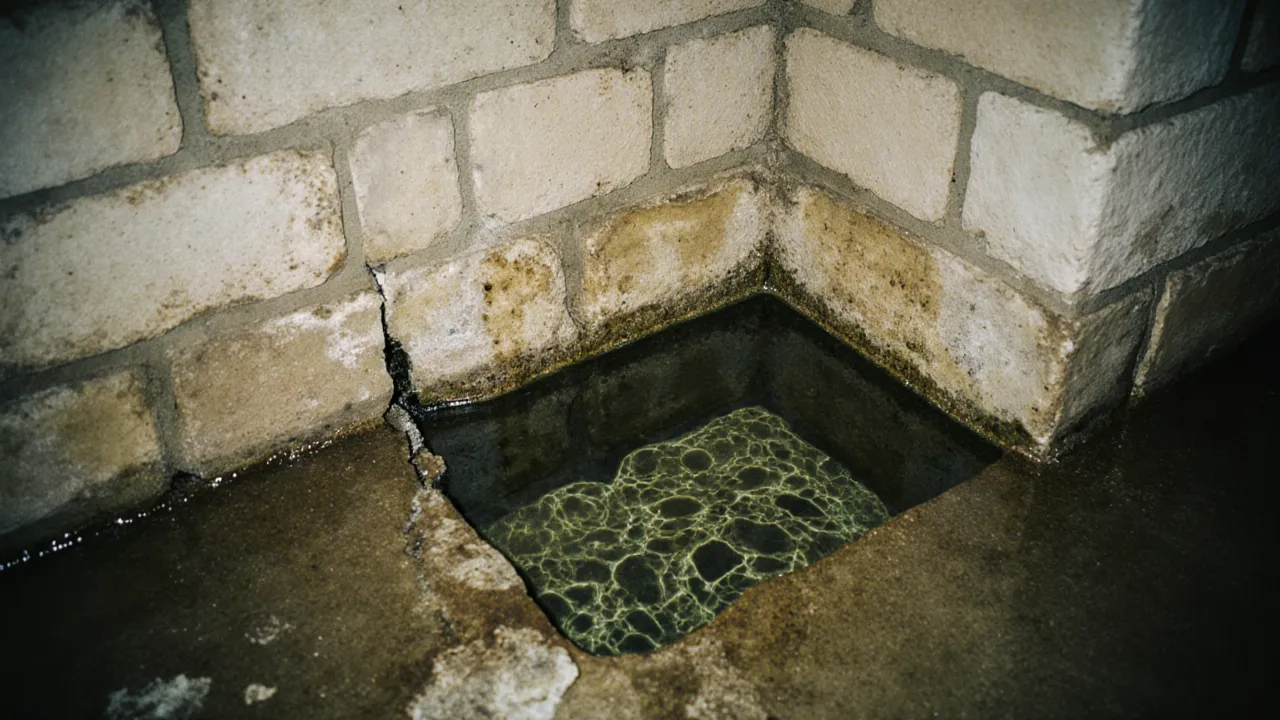
    Groundwater seeping through a cracked floor into a limestone-walled Lexington basement sump pit

    Lexington homeowners often describe the same confusing experience: water appears in the basement during a heavy rain, but it is not coming from a window well, a downspout or a crack in the wall. It is coming up through the floor. That is not a plumbing failure and it is usually not a foundation defect. It is the Inner Bluegrass doing what karst limestone does.

    This guide explains how karst geology drives basement water damage in Lexington, why sump systems here fail differently than elsewhere, what to do first, how professional drying works on a stone or block foundation, and what Kentucky insurance actually covers.

    What Karst Means for Your Basement

    Fayette County sits on a thick shelf of Ordovician limestone. Over a very long time, slightly acidic rainwater has dissolved that limestone along its joints and bedding planes, opening a network of fractures, conduits and voids beneath the surface. In much of the Bluegrass there is very little soil over that rock, sometimes only a few feet.

    In dry weather this system drains beautifully; that is why the region has so few surface streams relative to its rainfall. The problem arrives when a heavy or prolonged rain delivers more water than the underground conduits can carry. The system surcharges, pressure builds, and water backs up through the same fractures it normally drains through. If your foundation happens to sit above one of those pathways, that pressurized water arrives at the underside of your basement slab and comes up through the floor, the wall-floor joint, floor drains and utility penetrations.

    Practical consequences follow from that. Waterproofing the outside of the wall does not stop water arriving from underneath. A sump pit that is not tied into a proper under-slab drainage system will be overwhelmed, because water is entering across the whole floor rather than draining to one low point. And the flooding can be startlingly fast: karst systems respond within hours of the rain, not days.

    The Other Local Water Risks

    • Flash flooding on the small urban creeks. Wolf Run and Cane Run, and the historically buried Town Branch beneath downtown, respond very quickly to intense rain. Property in and near those corridors can take surface water with little warning.
    • Sinkhole activity. Kentucky karst produces both natural sinkholes and collapses triggered by broken water or sewer lines washing soil into a void. A new depression in a yard near the house is worth investigating rather than filling.
    • Older foundations. Lexington has a large stock of pre-war homes in neighborhoods like Ashland Park and Chevy Chase with stone or early block foundations. These were never intended to be dry finished space, and they wick moisture readily.
    • Winter freezes. Kentucky gets hard cold snaps. Burst supply lines in unheated basements, crawl spaces and exterior walls are a steady part of the local loss mix.

    Your First 60 Minutes

    • Cut power to the basement at the breaker before entering standing water.
    • Determine whether it is clean or contaminated. Karst groundwater has traveled through soil and rock and may carry agricultural and septic contamination; if a floor drain is also backing up, treat it as Category 3 and stay out.
    • Photograph and video before moving anything, including where the water is entering and how high it rose on the wall and on stored items.
    • Get contents off the floor. Lift furniture, pull rugs, move boxes upstairs.
    • Do not run HVAC that has wet ductwork or a wet return in the basement.
    • Call for extraction immediately. In karst events the water often recedes on its own as the system drains, which fools people into thinking the problem solved itself. The structure is still saturated.

    Drying a Lexington Basement Properly

    The recession of visible water is the least important part of the job. Extraction comes first, then a moisture map made with meters rather than eyes, because water that came up through a slab moves outward under flooring and up into drywall and framing well past where it looks wet.

    Carpet pad is removed. Drywall is typically cut above the wick line so the stud cavity can be dried and inspected, and saturated insulation is taken out. On stone and older block foundations, crews pay particular attention to the wall base and the mortar joints, which hold water far longer than poured concrete. Where the water was contaminated, containment and antimicrobial treatment come before drying. Air movers and low-grain refrigerant dehumidifiers then run continuously with daily logged readings until documented dry standards are met, typically three to five days and sometimes longer for masonry.

    The lasting fix in karst country is usually an interior perimeter drain tied to a properly sized sump with a battery backup, plus a vapor barrier and correction of surface drainage. That manages water that arrives from below, which exterior sealing cannot. Our process page and our guide on why fast structural drying matters explain the standards involved.

    Mold in a Bluegrass Basement

    Kentucky summers are humid and basements are cool, which is the classic condensation combination. Mold can begin on wet organic materials within 24 to 48 hours, and a basement that flooded and was simply pumped out will usually declare itself with a musty smell within a couple of weeks. Because karst flooding tends to recur with each big rain, the same materials get wet repeatedly, which is how a minor annual nuisance turns into an established growth problem behind finished walls. Mold remediation under IICRC S520 means containment, HEPA filtration, removal of affected porous materials and correcting the moisture source, which in Lexington means the drainage system rather than the drywall.

    Prevention That Fits the Geology

    • Install or upgrade an interior perimeter drain and sump with a battery backup. This is the intervention that matches how water actually arrives here.
    • Do not rely on exterior sealing alone if your water comes up through the floor.
    • Extend downspouts well away from the foundation and keep grade sloping away, so you are not adding to the local load.
    • Keep floor drains clear and consider a backwater valve if you have had backups.
    • Investigate new yard depressions near the house rather than filling them; they can indicate a void or a leaking line washing soil away.
    • Finish basements defensively in this area: inorganic or removable flooring, framing held off the slab, and no cardboard storage on the floor.
    • Insulate exposed plumbing before winter cold snaps.

    Insurance in Kentucky: Which Policy Responds

    A standard Kentucky homeowners policy generally covers sudden and accidental discharge from inside the home, such as a burst pipe or failed appliance, and wind-driven rain through a storm-created opening. It does not cover groundwater seepage or hydrostatic pressure pushing water through a slab, which is what most karst basement flooding is. It also does not cover surface flooding, which requires separate NFIP or private flood insurance.

    Two endorsements matter here: water and sewer backup coverage, and sump pump failure coverage. Neither is standard. Kentucky is also one of the states where sinkhole and earth movement questions come up, and standard policies typically exclude earth movement, so it is worth asking your agent directly rather than assuming. Because the cause determines coverage, careful documentation of the source and category of water is the single most valuable thing done in the first hour. Our insurance guide and our post on what homeowners insurance covers break this down.

    Documenting a Groundwater Loss for Your Claim

    Because karst flooding sits in the awkward space between covered and excluded, documentation does more work here than almost anywhere. What you capture in the first hour frequently determines whether an endorsement responds.

    • Record the date, time and weather. Note when the rain started, when water appeared and how fast it rose. A tight timeline supports a sudden event rather than chronic seepage.
    • Photograph the entry points specifically. Water coming up at the wall-floor joint, through a floor crack or out of a floor drain tells a very different coverage story than water running down a wall, and adjusters read those photos closely.
    • Capture the high-water line on the drywall, on the furnace and water heater, and on stored contents before anything is moved.
    • Inventory what is discarded, with photographs, approximate age and replacement cost, rather than throwing things out and reconstructing the list later.
    • Keep sump and drainage records. Proof that the pump was serviced and working supports a sump failure claim and undercuts a neglect argument.
    • Save the drying log. Daily moisture readings from the restoration crew are the evidence that the structure was actually dried, which matters if a mold claim follows later.

    We provide adjuster-grade documentation as a standard part of the job, including moisture maps, equipment placement records and daily readings, and we bill carriers directly.

    Frequently Asked Questions

    Why does water come up through my basement floor in Lexington?

    Because the Inner Bluegrass sits on karst limestone. During heavy rain the underground conduits that normally drain the region surcharge, and pressurized groundwater backs up through fractures beneath your slab, entering through the floor, the wall-floor joint and floor drains rather than through the walls.

    Will exterior waterproofing fix it?

    Usually not on its own. Exterior sealing addresses water moving laterally against the wall. It does nothing about water arriving under the slab from below, which needs an interior perimeter drain and a properly sized sump with backup power.

    Is karst groundwater in my basement contaminated?

    Treat it as potentially contaminated. It has traveled through soil and rock and, in a region with agriculture and older septic systems, can carry bacteria. If a floor drain is backing up at the same time, treat it as Category 3 and keep people and pets out until it has been assessed.

    Does insurance cover karst basement flooding?

    Generally not under a standard homeowners policy, because it is groundwater rather than a sudden internal discharge. Sump pump failure and water backup endorsements are the coverages that most often apply, and they must be added before the loss.

    How fast can a crew reach my Lexington home?

    We dispatch 24 hours a day and crews serve Lexington and the surrounding Bluegrass. Arrival depends on your location and current demand, which rises across the region during a widespread rain event, so calling early is worthwhile.

    Get Help Now in Lexington

    Water damage in Lexington does not pause overnight or wait for business hours. Call our 24/7 dispatch line at (888) 502-0998 and we will get an IICRC-certified crew moving toward your property and coordinate directly with your insurance carrier.

    Related Resources

  • Storm and Flash Flood Water Damage in Fayetteville, Arkansas
    Storm Damage

    Storm and Flash Flood Water Damage in Fayetteville, Arkansas

    How Ozark terrain and severe storms drive flash flooding and hidden roof leaks in Fayetteville homes, plus first-hour steps and Arkansas insurance…

    Read more →

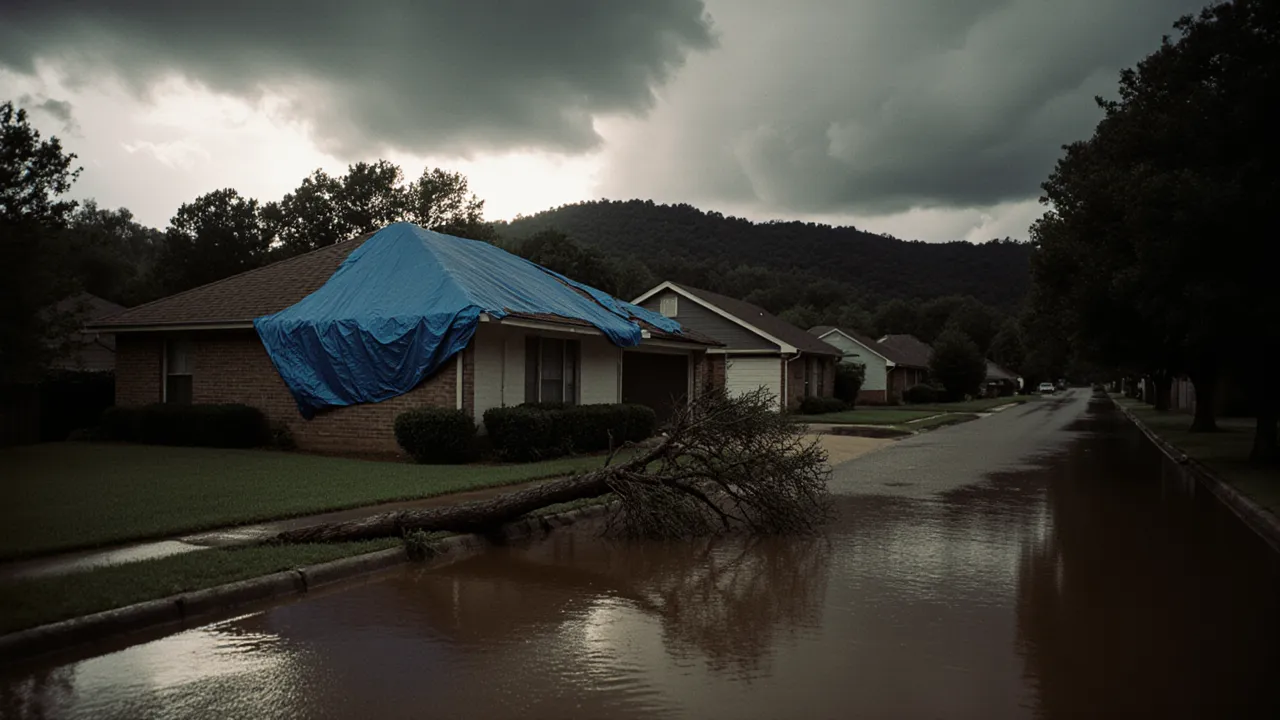
    Tarped storm-damaged roof and a downed limb across a flooded Fayetteville street below the Ozark hills

    Fayetteville sits in a landscape that is beautiful to live in and unforgiving when it rains hard. The city is built across the folded hills and hollows of the Ozark Plateau, where thin soils sit over fractured limestone and shale, and where a storm that stalls for two hours can turn a dry draw into a running creek. Add a spring severe-weather season that regularly produces damaging straight-line winds, hail and the occasional tornado, and you get a place where water damage arrives from several directions at once: through a compromised roof, up from an overwhelmed drainage swale, and sideways through a wall the wind just opened.

    This guide covers how storm and flash flood water damage actually happens in Fayetteville homes, what to do in the first hour, how professional drying works, what Arkansas insurance policies typically cover, and how to reduce your exposure before the next line of storms comes through.

    Why Fayetteville Terrain Turns Storms Into Water Damage

    Northwest Arkansas drains fast and unevenly. Neighborhoods around Mount Sequoyah, Mount Kessler and the ridges east of College Avenue shed runoff downhill in sheets, while homes in the low ground along Mud Creek, Clabber Creek, Town Branch and the West Fork of the White River take that water on. The result is a familiar local pattern: the house on the slope gets water pushed against its uphill foundation wall, and the house at the bottom of the hollow gets water rising at the door.

    Three things make it worse than the rainfall totals suggest. First, the region is heavily built out compared to a generation ago, and every new roof, driveway and parking lot in the Fayetteville and Springdale corridor sends water somewhere instead of absorbing it. Second, the shallow soil over bedrock has limited storage; once it saturates in a wet spring, additional rain runs off almost immediately. Third, many Fayetteville homes sit on crawl spaces rather than basements, and a crawl space is an efficient collector of water that nobody looks at until the smell reaches the living room.

    Storm damage compounds the problem. A hail-bruised or wind-lifted shingle does not leak the day it is damaged. It leaks three weeks later during the next heavy rain, into an attic nobody has opened since, and the first visible sign is a stain on a bedroom ceiling that is already well past its beginning.

    The Local Storm Patterns That Drive Losses

    Water damage calls in Washington County cluster around a handful of recognizable events:

    • Spring severe weather, roughly March through June. Supercells crossing the region bring hail, damaging winds and short bursts of very heavy rain. Roof and window envelope damage from this season produces leaks for months afterward.
    • Training thunderstorms. When storms repeatedly cross the same ground, three to five inches can fall in a few hours. Creeks in the hollows come up quickly, low-water crossings go under, and yards that have never flooded do.
    • Remnant tropical moisture in late summer and fall. The decayed remains of Gulf systems can park over the Ozarks and produce prolonged, soaking rain that saturates the ground and finds every drainage weakness.
    • Winter freeze events. Arkansas winters are milder than the Midwest but not mild. Hard freezes reach exposed crawl space plumbing, hose bibs and pipes in unheated garages and attics, and burst supply lines are a real part of the local loss mix.

    Your First 60 Minutes After Water Enters the House

    What you do in the first hour has more effect on the final cost than almost anything that follows. Move quickly, but do not take risks with electricity or contaminated water.

    • Stop the source if you safely can. For a burst supply line, shut the main valve and open a low faucet to relieve pressure. For storm water entering through the roof, do not climb up during or immediately after a storm; contain what you can indoors instead.
    • Cut power to affected areas at the breaker before stepping into standing water.
    • Treat floodwater as contaminated. Water that has crossed yards, streets or a crawl space carries soil bacteria, fertilizer and whatever the storm sewer was holding. Wear boots and gloves, and keep children and pets out.
    • Photograph and video everything before you move it. Wide shots of each room, then close-ups of damaged materials and the water line on the walls. Your claim depends on this documentation.
    • Lift and move what you can. Get furniture legs onto blocks, pull rugs off wood floors, and move boxes and electronics to a dry level.
    • Start extraction and drying now, not after the adjuster visits. Waiting for an inspection does not strengthen your claim; it just gives the water more time to spread.

    What Professional Water Damage Restoration Actually Involves

    Restoration is a documented process, not a cleanup crew with fans. A crew working to the IICRC S500 standard will locate and stop the source, then extract standing water with truck-mounted or portable equipment before it wicks further into building materials. Moisture meters and, where useful, thermal imaging are used to map how far the water actually traveled, because the visible wet area is almost never the full footprint. Water routinely runs under baseboards, along the underside of subfloor, into wall cavities and down into a crawl space where nothing looks wrong from above.

    Materials that cannot be dried in place are removed. Saturated carpet pad, wet insulation and drywall that has been soaked with contaminated water generally come out. Where contamination is involved, an antimicrobial is applied. Then commercial air movers and low-grain refrigerant dehumidifiers run continuously, with daily moisture readings logged, until the structure reaches a documented dry standard. That normally takes three to five days, occasionally longer for dense materials or a wet crawl space. Only after the structure is verifiably dry does reconstruction begin.

    You can read a fuller walkthrough of each phase on our process page and in our guide to how professional water damage restoration works.

    Mold and the 24-to-48-Hour Clock

    Arkansas summers are humid, and that humidity is the reason speed matters so much here. Given wet organic material and warm still air, mold can begin colonizing within 24 to 48 hours. A crawl space that took two inches of storm water and was never properly dried will produce a musty smell in the house above within a week or two, and visible growth on joists and subfloor not long after.

    The defense is not spraying something on the surface. It is removing the water fast, pulling the moisture out of the air and the materials, and correcting whatever let the water in. Where growth is already established, mold remediation under the IICRC S520 standard means containment, HEPA filtration, removal of affected porous materials and correction of the moisture source, not fogging and hoping. Our article on how fast mold grows after water damage covers the timeline in more detail.

    Preventing Storm Water Damage in a Fayetteville Home

    Most of what protects an Ozark house is drainage and envelope maintenance, done before the season rather than during it.

    • Get the roof inspected after any hail or high-wind event, even if nothing is leaking. Damage found in June is a repair; damage found in November is a claim.
    • Keep gutters and downspouts clear and extended. Oak and hickory litter fills gutters fast here. Discharge water at least six feet from the foundation, further on a slope.
    • Grade soil away from the house. Settled backfill against a foundation is one of the most common causes of chronic wet crawl spaces in the area.
    • Encapsulate or at least vapor-barrier the crawl space, and add a properly discharged sump if water collects there. Check it before storm season, not after.
    • Clear the swale. Many Fayetteville subdivisions rely on drainage easements between lots. A fence, a shed or a few years of landscaping fill can redirect that water straight into a neighbor structure.
    • Insulate vulnerable plumbing in crawl spaces, garages and exterior walls before the first hard freeze.
    • Install water alarms near the water heater, washing machine and any crawl space access. They are inexpensive and they buy hours.

    Insurance in Arkansas: What Is Usually Covered

    The distinction that decides most Arkansas claims is sudden internal water versus rising surface water. A standard homeowners policy generally covers sudden, accidental discharge from inside the home, such as a burst supply line, a failed water heater or an appliance hose letting go. It also generally covers wind-driven rain that enters through an opening the storm created, which is why documenting storm damage to the roof or windows matters so much.

    What a standard policy does not cover is rising surface water. Creek and flash flooding, water that sheets across the yard and comes in at the door, and water backing up from an overwhelmed storm drain are excluded and require separate NFIP or private flood insurance. A meaningful share of flood losses nationally occur outside mapped high-risk zones, and in a flash-flood landscape like Northwest Arkansas that gap catches people every year. Sewer and sump-pump backup usually requires its own endorsement as well.

    Because the cause of loss determines which policy responds, precise documentation is not paperwork; it is the claim. We document the source and category of the water, log daily moisture readings, and provide adjuster-grade photo and equipment records, then bill carriers directly. Our insurance guide and our post on what homeowners insurance covers go deeper.

    Frequently Asked Questions

    Does homeowners insurance cover flash flooding in Fayetteville?

    No. Rising surface water from creeks, hollows or overwhelmed drainage is excluded from standard homeowners policies and requires separate flood insurance. Sudden internal leaks and wind-driven rain through storm-created openings are generally covered. Many Fayetteville flash flood losses happen outside mapped high-risk flood zones.

    How quickly do I need to act after storm water gets into my house?

    Immediately. Extraction and drying should begin within hours. Mold can start on wet organic materials within 24 to 48 hours, and in Arkansas humidity that window is not generous. Waiting for an adjuster before drying begins usually increases the loss rather than protecting the claim.

    My crawl space took on water. Is that actually a problem?

    Yes, and it is the most commonly underestimated loss in this area. Standing water in a crawl space keeps the joists, subfloor and insulation above it damp, drives humidity up into the living space, and produces mold growth and eventually structural decay. It needs extraction, removal of saturated insulation and documented drying.

    Can wet drywall and flooring be saved?

    It depends on the water category and how long the material stayed wet. Clean water caught quickly can sometimes be dried in place. Materials soaked by flood or storm runoff are treated as contaminated and porous materials are removed under IICRC protocols rather than dried and reused.

    How fast can a crew get to my property?

    We dispatch 24 hours a day, every day, and crews serve the Fayetteville and Northwest Arkansas area. Actual arrival time depends on your location and current demand, which rises sharply during a widespread storm event, so calling early in an event matters.

    Get Help Now in Fayetteville

    Water damage in Fayetteville does not pause overnight or wait for business hours. Call our 24/7 dispatch line at (888) 502-0998 and we will get an IICRC-certified crew moving toward your property and coordinate directly with your insurance carrier.

    Related Resources

☎ Call (888) 502-0998 — 24/7