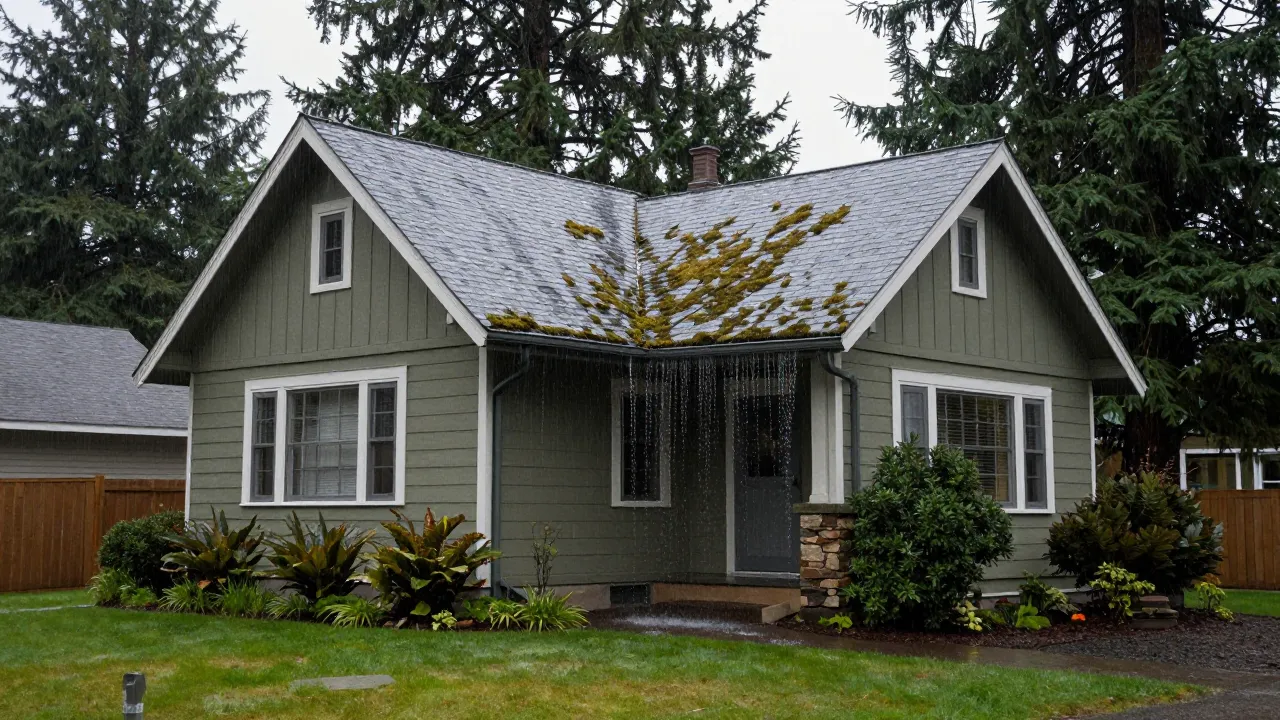
Vancouver does not get dramatic floods as often as it gets months of steady rain, and that is exactly what makes its water damage so insidious. The Pacific Northwest wet season saturates the ground, overwhelms gutters, and keeps everything damp for so long that small leaks never get a chance to dry. The result is slow, hidden damage and mold that takes hold before anyone notices.
Here is what Vancouver homeowners should watch for and how to stay ahead of it.
How the Wet Season Damages Vancouver Homes
Months of rain raise the water table and push groundwater through foundation cracks into basements and crawlspaces. Overwhelmed gutters and downspouts let water pool against the foundation. Roof and skylight leaks that would dry out elsewhere stay wet here. And because the climate is cool and damp year-round, materials rarely dry on their own, so a minor leak in a neighborhood like Felida or Cascade Park can quietly feed mold for weeks.
Your First 60 Minutes
- Stop the source if it is safe, or shut the main valve for a burst pipe.
- Cut power to wet areas at the breaker before entering standing water.
- Move belongings off wet floors and document everything with photos and video.
- Begin extraction and drying right away, then call our 24/7 line.
How Professional Water Damage Restoration Works
Whatever the source, recovery follows the same IICRC S500 sequence, and the first hours decide how much can be saved:
- Emergency assessment. A certified technician traces the source, maps hidden moisture with meters and thermal imaging, and classifies the water so the plan matches the risk.
- Extraction. Truck-mounted and portable units pull out standing water fast.
- Structural drying. Air movers and commercial dehumidifiers dry framing, subfloor, and wall cavities to documented dry standards, not just to the touch.
- Cleaning and sanitizing. Surfaces are cleaned and antimicrobial-treated; contaminated porous materials are removed where required.
- Restoration. Drywall, flooring, and finishes are rebuilt, with every step photographed and logged to adjuster standards.
Insurance and the Wet Season
Washington homeowners policies cover sudden internal leaks and wind-driven rain, but rising river and surface flooding is excluded and needs separate flood insurance, and sewer or sump backup requires an endorsement. Mold that results from a covered sudden loss is often covered, while mold from a long-ignored leak usually is not, which is why prompt, documented drying protects both your home and your claim.
Frequently Asked Questions
Why is mold such a problem after water damage in Vancouver?
The cool, damp Northwest climate rarely dries materials on its own, so trapped moisture lingers and feeds mold. Commercial dehumidification to documented dry standards is the fix.
Need help right now?
Live dispatcher 24/7. IICRC-certified crews. Direct insurance billing.
Call (888) 502-0998Is groundwater seepage covered by insurance?
No. Rising surface and groundwater is excluded from homeowners policies and needs separate flood insurance. Sudden internal leaks are typically covered.
How do I know if I have hidden water damage?
Musty odors, warped or discolored flooring, peeling paint, and a persistent damp feeling are common signs. A moisture-meter inspection confirms it.
Can I just run a fan to dry a damp basement?
Household fans move air but do not remove humidity. Commercial dehumidifiers are needed to pull moisture to safe levels in the Northwest climate.
How fast can a crew reach my Vancouver home?
Typically within the hour across Clark County, outside of widespread storm events.
Get Help Now in Vancouver
Water damage only gets worse and more expensive the longer it sits. Our IICRC-certified crews answer 24/7 and work directly with your insurer. See our Vancouver water damage restoration page, or call now.
24/7 emergency dispatch: (888) 502-0998
This guide is part of our coverage for Vancouver. For the seasonal risk that matters most here, see our basement flooding guide.
Leave a Reply