24/7 Emergency Water Damage Response
Need help now? (888) 508-0998

Category: Uncategorized

  • When to Call a Water Damage Restoration Company
    Water Damage

    When to Call a Water Damage Restoration Company

    Not every water event needs a restoration crew. Here are the practical signs that mean you should pick up the phone.

    Read more →

    Restoration crews exist to handle the water events you cannot handle yourself. The judgment call is which is which. Here are the practical thresholds we use when customers ask whether they need to dispatch a crew.

    Call us immediately if any of these apply

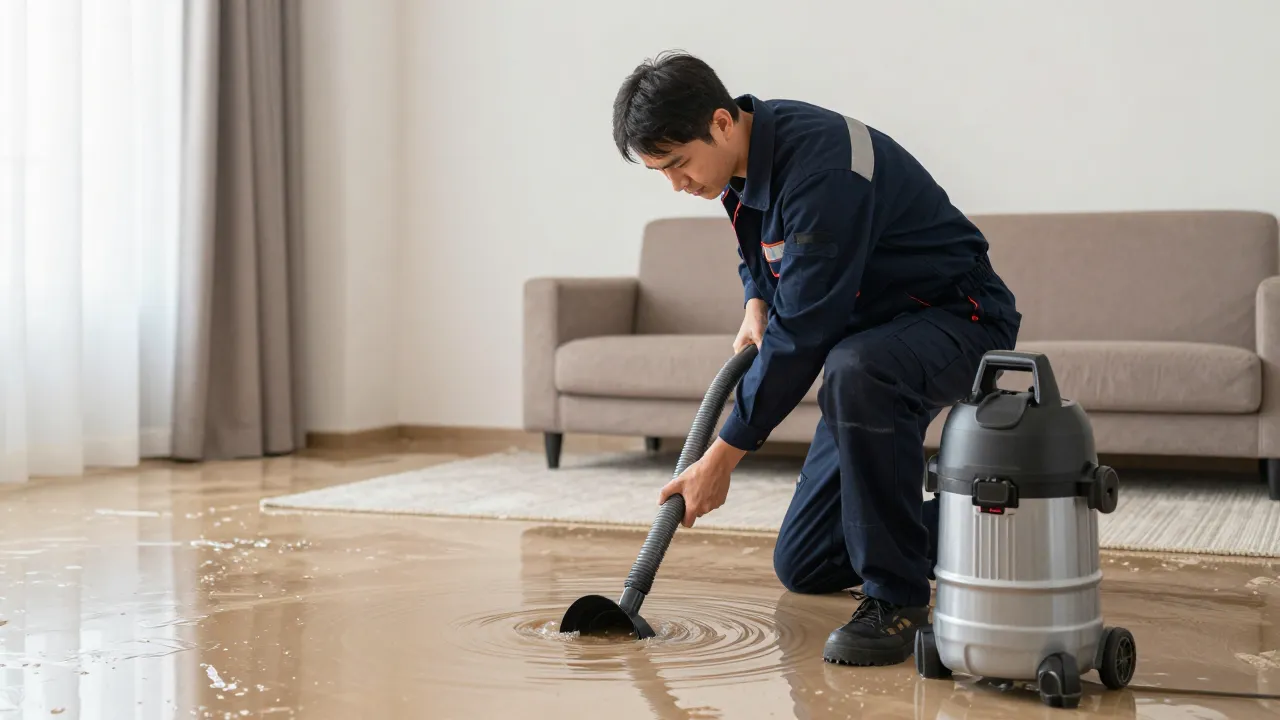
    Standing water more than half an inch deep across any room. Household equipment cannot extract this volume quickly enough to prevent migration into subfloor and wall cavities. By the time you finish vacuuming, the structural damage is set.

    The water has been sitting more than 12 hours. Mold growth window is 24–48 hours. Crews on site in the first day prevent it. Crews on site after the second day are remediating, not preventing.

    The water is Category 2 (gray) or Category 3 (black). Washer overflow, dishwasher backup, toilet overflow with sewage, basement sewage backup, storm or flood water from outside — all require containment, antimicrobial treatment, and PPE that homeowners do not have. Sewage cleanup is dangerous without proper equipment.

    The damage involves more than one room or migrated between floors. Multi-room or multi-floor losses require systematic moisture mapping and drying capacity that exceeds residential equipment. The math compounds: each affected room adds drying time, and missing a hidden moisture pocket causes the whole job to fail.

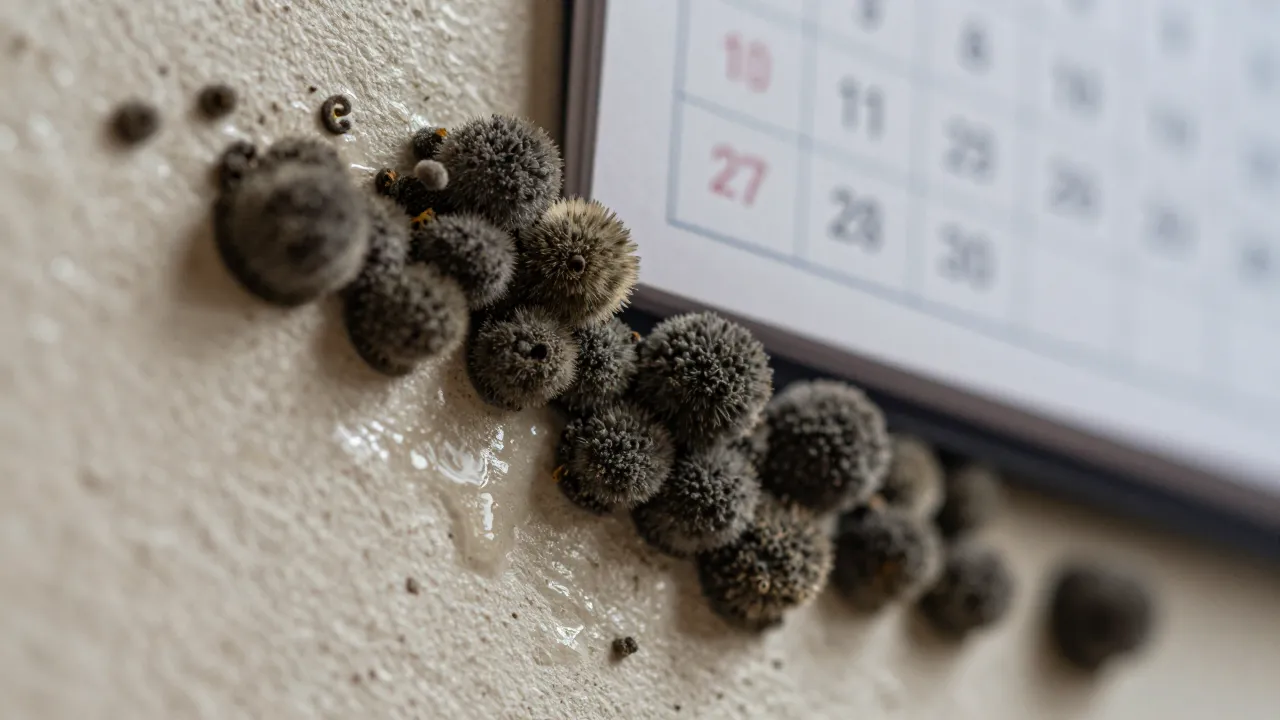
    You see visible mold or smell a musty odor. By the time you can see or smell mold, the colony is established and remediation (not just drying) is required.

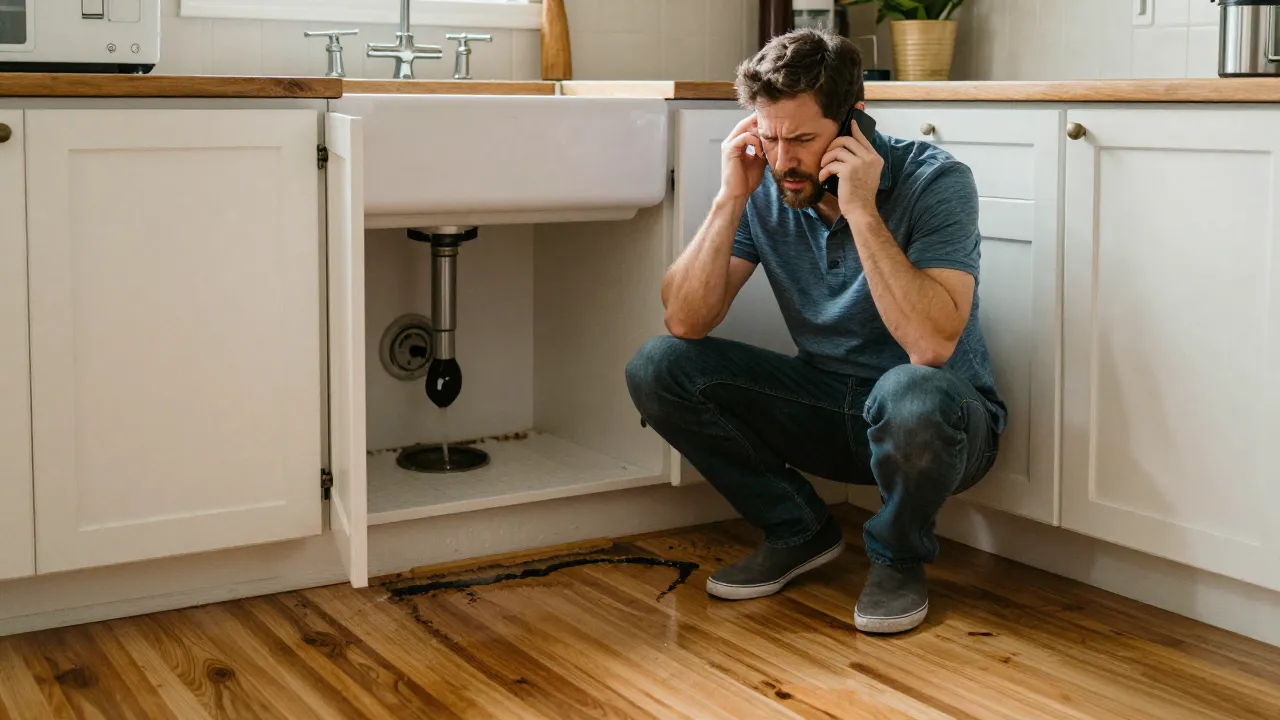
    The loss involves a slab leak or hidden source. Finding the leak inside concrete, behind walls, or under cabinetry requires leak-detection equipment most plumbers do not carry. Professional leak detection targets the failure precisely so repair scope stays minimal.

    The loss happened in a commercial property. Commercial restoration involves business-interruption documentation, faster timelines, and coordination with property management or risk managers. The complexity scales differently.

    You want the insurance claim filed correctly. Carriers expect Xactimate-compatible documentation, moisture maps, photographs, and a written scope-of-work narrative. Crews that skip this leave you negotiating with the adjuster without the documentation that proves the scope.

    You can probably handle these yourself

    A drinking glass spill caught immediately. Surface water on hard flooring, dried with towels within minutes, no migration into seams or subfloor. No documentation needed because there is no scope to document.

    A bathroom sink overflow caught in the first 10 minutes. Standing water in one small area, mopped up, towels on the floor, fans for a day or two. If the water did not reach baseboards or migrate under cabinetry, you are done.

    A washing machine overflow caught in the first 5 minutes with clean rinse water. Quick extraction with a wet/dry vac, towels, fans. Verify with a moisture meter on adjacent walls; if readings are normal within 24 hours, you are done.

    Condensation on windows. Not a water damage event. Usually a humidity-control issue. Improve ventilation, check insulation.

    The gray-area cases

    These are the situations where homeowners often hesitate, and where calling for a free assessment is usually the right move:

    • Water heater leaked overnight; you found a puddle in the morning but the room looks fine
    • Refrigerator water line was dripping for an unknown period; floor under the fridge feels soft
    • Ceiling stain that grew over a few days then stopped — no current visible water
    • Roof leak during a recent storm; attic looks dry but you are not sure
    • Toilet overflow caught quickly but water reached the bathroom subfloor

    In all of these, hidden moisture in subfloor or wall cavities is likely. A free assessment with a moisture meter takes 30 minutes and tells you whether the damage is contained or has migrated. Catching it early keeps the scope small.

    What a free assessment includes

    Our dispatcher sends a technician with: pinless and pin moisture meters, thermal imaging camera (sees temperature differences that often indicate hidden moisture), basic borescope for visual inspection inside wall cavities. The assessment takes 30–60 minutes. You get a verbal scope on site plus a written estimate within 24 hours.

    If the assessment shows no significant moisture, you owe nothing. If it shows damage requiring mitigation, the scope and cost are documented before any work starts. You decide whether to proceed.

    Regional considerations

    Some climates make borderline cases worse. Phoenix, Las Vegas, and Denver have dry ambient that helps small spills dry naturally, so DIY is more often appropriate. Tampa, Houston, and the Gulf coast humidity make even small losses risky — mold growth is faster, drying is slower.

    Older housing stock in cities like Boston, Philadelphia, and Pittsburgh has more cellulose-rich materials and tighter envelope construction, so moisture lingers longer than in newer construction. Borderline cases tilt toward calling for assessment.

    FAQ

    Is there a charge for the assessment if I do not hire you?

    The initial dispatched assessment is free if mitigation work follows. Standalone assessments where no work follows are typically $150–$350 depending on scope.

    What does it cost if I do hire you?

    Cost depends entirely on scope: rooms affected, materials saturated, Category 1/2/3 classification, drying timeline, reconstruction needed. A small Cat 1 mitigation might be $1,500–$3,500. A whole-house Cat 3 with reconstruction can be $30,000–$80,000+. We document everything for your insurance carrier and bill them directly.

    Can fire damage and water damage be handled together?

    Yes. Fire damage restoration and water damage restoration go together because firefighting water always causes secondary water damage. We document both scopes on a single Xactimate estimate.

    What if I am calling about a property in a city you do not list?

    Our dispatch network covers 500+ U.S. cities. If your city is not on our specific page list, we still likely have crews in your county. Call (888) 508-0998 and the dispatcher will confirm coverage.

    Call (888) 508-0998 for free dispatch and assessment, 24/7.

  • Does Homeowners Insurance Cover Water Damage? A Plain-English Guide
    Water Damage

    Does Homeowners Insurance Cover Water Damage? A Plain-English Guide

    The short answer is "it depends on what caused the damage." Here is the longer answer in plain English.

    Read more →

    Insurance carriers do not pay for water damage as a single line item. They pay against specific named perils, with exclusions that vary by state and policy. Whether your loss is covered depends entirely on what caused it.

    Here is the practical breakdown, in the order the question actually comes up.

    Usually covered: sudden and accidental

    Sudden-and-accidental water damage from a covered peril is what standard homeowners policies are built to handle. These are typically covered:

    • Burst supply lines (plumbing failure inside the wall, behind a fixture, under a slab)
    • Appliance failures (washer hose, dishwasher supply line, refrigerator water line, water heater rupture)
    • Toilet overflow (clean water, not sewage)
    • Wind-driven rain through a storm-damaged roof or window (the storm damage to the building envelope is what triggers coverage; the water that enters is the consequential loss)
    • Frozen pipe bursts if the heating system was operating at the time of loss
    • Tree-caused damage that allows water entry

    For these losses, your water damage restoration scope is billed to the carrier directly. You pay your deductible; the carrier pays the rest up to your dwelling limit.

    Usually NOT covered: flooding, seepage, maintenance

    The major exclusions cause most coverage disputes:

    • Rising surface water flooding — river overflow, creek flooding, storm surge, street flooding from heavy rain. This requires a separate flood insurance policy, typically through NFIP or a private flood carrier. It is not in your homeowners policy.
    • Long-term seepage — chronic basement leaks, slow plumbing drips over months, foundation moisture. These are treated as maintenance issues.
    • Sewer or drain backup — usually requires a specific endorsement. Without it, carriers deny.
    • Mold growth without a triggering water event — ambient humidity-driven mold is excluded. Mold that follows a covered water loss is generally covered.
    • Damage from lack of maintenance — if your carrier can document that the failure was preventable (e.g., a known supply-line problem you did not address), coverage may be reduced or denied.

    Coverage that varies by region

    Some perils carry separate deductibles or rules in particular states:

    • Hurricane / named-storm deductibles — Florida, Texas Gulf Coast, the Carolinas, and the mid-Atlantic typically have a separate, higher deductible (2–10% of dwelling value) for losses during a named storm. Our Miami, New York, and Newark customers see this most often.
    • Wind/hail deductibles — common in Tornado Alley (Oklahoma City, Wichita, north Texas). Damage from hail-breached roofs that lets water in falls under wind/hail, not the standard deductible.
    • Earthquake-related water damage — broken supply lines from earth movement require an earthquake endorsement (common in California).

    How we keep your claim clean

    Every job we run produces the documentation carriers expect:

    • Xactimate-compatible line-item scope
    • Dated photographs of all affected areas
    • Moisture readings with location maps
    • Written scope-of-work narrative explaining each IICRC S500 step
    • Verified drying logs showing materials reached dry standard
    • Cause-of-loss documentation distinguishing covered triggers from excluded ones

    This is what speeds approval and minimizes carrier pushback. Crews that skip this documentation end up in adjuster disputes that delay payment for months.

    What to do if the carrier denies

    Coverage denials happen. Common scenarios: carrier classifies the loss as long-term seepage instead of sudden-and-accidental; carrier argues maintenance issue; carrier excludes mold remediation as not consequential.

    If a denial happens, ask for it in writing with the specific policy language cited. Then file an internal appeal. Our documentation supports an appeal even if we are no longer involved in the job — the moisture log and photos are objective. State insurance commissioners also accept consumer complaints, and a credible appeal often results in coverage being restored.

    FAQ

    Should I call my insurance company before calling a restoration crew?

    No. Mitigation is time-critical. Carriers expect homeowners to mitigate before they arrive. Call (888) 508-0998 first; open the claim after dispatch.

    What is my deductible going to be?

    Standard homeowners deductibles run $500–$2,500 for most policies. Hurricane and wind/hail deductibles can be higher. Check your declarations page.

    Does flood insurance cover everything that water flooding would?

    NFIP flood policies cover building (separately purchased) and contents (separately purchased). Coverage limits and exclusions are different from homeowners. Read your specific NFIP declarations.

    What if I caused the damage?

    Negligence (leaving a faucet on, ignoring a known leak) can reduce coverage. Sudden accidents (a hose failure, a child overflowing a tub) are generally covered. Carriers ask cause-of-loss questions to make this distinction.

    Call (888) 508-0998 for dispatch and Xactimate-ready documentation.

  • How Fast Mold Grows After Water Damage (The 24-48 Hour Window)
    Water Damage

    How Fast Mold Grows After Water Damage (The 24-48 Hour Window)

    Mold growth begins inside 24-48 hours of saturation. The science of why, and what it means for your insurance claim.

    Read more →

    The single most-asked question after a water loss: how fast does mold grow? The honest answer is faster than most people expect, and the timeline is the reason restoration crews rush.

    Mold spores exist everywhere — in your house right now, in normal concentrations they are harmless. They become a problem only when they find sustained moisture and food (drywall paper, wood, cardboard, insulation, fabric, dust). After a water loss, both conditions become abundant. Growth follows.

    The 24–48 hour window

    The CDC and EPA both put the window for mold growth on wet building materials at 24 to 48 hours after sustained wetting. IICRC S500 (the water damage standard) uses the same window. ANSI/IICRC S520 (the mold remediation standard) defines a Condition 2 (settled spores) or Condition 3 (active growth) within that window if drying does not begin.

    What this means in practice: a wall cavity that gets saturated Monday morning and stays wet until Wednesday afternoon will likely have visible mold colonies starting on Tuesday night or Wednesday morning. By the time you smell musty odor, the colony has been growing for days.

    The species we see most often

    Three genera account for the majority of post-water-damage mold our mold remediation crews encounter:

    • Cladosporium — olive-green to brown colonies on drywall, wood, and fabric. Common, generally less hazardous than Stachybotrys but still requires removal.
    • Penicillium / Aspergillus — the most-frequently-identified group on water-damaged materials. Blue-green or yellow colonies. Some species produce mycotoxins.
    • Stachybotrys chartarum (black mold) — the species most people fear. Requires sustained wetness (typically 7+ days) and high cellulose content (paper-faced drywall, wood). Less common than Penicillium/Aspergillus but more health-impacting.

    Identifying the species matters for the remediation protocol, not for the urgency. Any colony triggers the same response: containment, HEPA filtration, removal, antimicrobial application, verified clearance.

    Why drying speed matters more than anything else

    If a crew is on site within the first 24 hours and gets drying equipment running, mold growth is usually prevented entirely. The materials dry below 16% moisture content within 3–5 days, the spores never find sustained moisture, and the loss closes without a mold remediation phase.

    If 48–72 hours pass before drying begins, mold growth is likely. The remediation scope expands by 30–60% in cost and timeline because affected materials must now be contained, removed, and replaced rather than dried in place. Water damage restoration jobs that catch the loss quickly close in 2–3 weeks; jobs that delay turn into 6–10 week projects.

    Climate amplifies the timeline

    Ambient humidity changes the math. In humid climates like Tampa, Miami, and Houston, mold growth runs faster — we treat the window as 18–36 hours rather than 24–48. In drier climates like Phoenix, Denver, and the high desert, the window stretches to 36–60 hours because ambient air pulls moisture out of materials naturally.

    This is why our dispatcher asks climate-specific questions during the call. The same loss in Tampa and in Phoenix calls for different drying capacity and different urgency.

    What insurance carriers expect

    Carriers know the 24–48 hour window. They expect homeowners to mitigate within it. Documentation that shows you called for dispatch within hours of discovering the loss strengthens your claim significantly. Documentation that shows the loss sat for a week before anyone responded weakens it — carriers can argue that mold-related expansion of the scope is attributable to delay, not the original loss.

    This is one of the strongest practical reasons to call (888) 508-0998 the moment you notice damage, even before opening the claim. Time-stamped photos and a logged dispatch request establish the timeline that protects coverage.

    Hidden mold — what you cannot see

    Most post-water-loss mold growth happens inside wall cavities, under floors, behind baseboards, and inside HVAC ducts — places that stay damp longest and that you cannot inspect without removal. Surface mold on visible drywall is often the smaller portion of total growth.

    This is why moisture mapping with pin and pinless meters is part of every IICRC S500 scope. Dry standards are verified at the materials level, not by visual inspection.

    FAQ

    Can mold grow in drywall after just one day?

    Yes. Drywall paper is paper, and paper that has been wet for 24 hours under normal indoor conditions is at the front end of the mold growth window. Visible colonies usually appear at 48–72 hours.

    Does running a fan prevent mold?

    Air movement alone does not dry materials enough fast enough. You need dehumidification combined with air movement, sized to the affected cubic footage. A household fan moves humid air around the room without removing the moisture.

    How do I know if I have hidden mold?

    Persistent musty odor, discolored drywall, soft or warped flooring, respiratory symptoms that improve when you leave the house. A moisture meter reading on a suspect wall will tell you if elevated moisture is still present. Visible mold is confirmation.

    Is bleach a substitute for professional remediation?

    For surface mold on a non-porous material (tile, glass, sealed concrete), bleach can be effective. For mold on porous materials (drywall, wood, fabric), bleach kills surface mold but cannot reach the colony rooted inside the material. The affected portion must be removed and replaced.

    Call (888) 508-0998 if you suspect post-water-damage mold growth.

  • Flood Cleanup Checklist After Heavy Rain
    Water Damage

    Flood Cleanup Checklist After Heavy Rain

    A clear sequence for handling flood cleanup after a heavy-rain event. Print it, follow it, call us when you reach Step 5.

    Read more →

    After a flood event — whether from a creek overflow, sustained rainfall, or storm surge — the first 12 hours determine the size of the cleanup. Here is the checklist crews use on every flood call, adapted for homeowners to follow before crews arrive.

    Step 1 — Confirm safety before re-entering (immediate)

    • Electrical: Do not enter standing water until the main electrical breaker is off. If the panel is in the affected area, call your utility company to shut off service at the meter.
    • Gas: If you smell gas, leave immediately and call the gas company from outside. Do not flip switches.
    • Structural: Look for sagging ceilings, cracked walls, or shifted foundations. If anything looks compromised, do not enter until a contractor or building inspector clears it.
    • Water classification: Flood water from outside is Category 3 by definition. Assume it carries sewage, chemicals, and contaminants. Wear rubber boots, gloves, and a P100 respirator if you must enter.

    Step 2 — Document before you touch anything

    • Photograph every affected room from multiple angles before moving items
    • Photograph water lines on walls and exterior siding
    • Photograph damaged contents in place
    • Note the time water entered and how high it reached in each room
    • Save weather alerts and news coverage showing the storm event — useful for the insurance claim

    This documentation is what your adjuster will rely on. Photos taken after cleanup are worth a fraction of photos taken at peak damage.

    Step 3 — Get standing water out

    If standing water is more than a couple inches deep or has been sitting for hours, household equipment will not be effective. Truck-mounted extractors pull water out of carpet pad, subfloor, and wall cavities at a rate household equipment cannot match.

    For surface water, sump pumps, wet/dry vacuums, and squeegees can move water toward floor drains or outside. Do not pour contaminated flood water down sinks or toilets if you suspect the municipal sewer is overwhelmed (common during regional flood events in Houston, Memphis, St. Louis, and Kansas City).

    Step 4 — Triage contents

    Decide what to discard, what to try to clean, and what to set aside for professional cleaning:

    • Discard: upholstered furniture, mattresses, pillows, stuffed animals, paper documents, food (including sealed containers in the affected area), wet drywall, wet insulation, particle-board furniture
    • Clean and salvage if possible: sealed wood furniture, glass, ceramic, metal, hardwood floors if the finish is intact, sealed concrete
    • Set aside for assessment: photographs, artwork, electronics (do not power on), heirlooms — specialists can sometimes restore these

    For sealed cardboard boxes of paper documents, the contents are usually salvageable if they can be dried within 48 hours. Spread papers single-layer in a dry area; do not heat them.

    Step 5 — Call for professional dispatch

    For any flood event that reached more than one room or sat for more than a few hours, professional flood damage restoration is appropriate. Crews arrive with truck-mounted extractors, structural drying equipment sized to the affected cubic footage, antimicrobial products specifically registered for Cat 3 water, and the IICRC S500 documentation needed for your insurance claim.

    Call (888) 508-0998. Typical dispatch in flood-impacted areas runs 60–120 minutes during regional events because call volume spikes; we pre-stage crews when major rain is forecast in metros like Sacramento and the Mississippi River corridor.

    Step 6 — Open your flood insurance claim

    Flood from rising surface water is not covered by standard homeowners insurance. You need a separate flood policy through NFIP or a private flood carrier. If you have one:

    • Call your flood policy administrator (not your homeowners carrier — they are usually different)
    • Open the claim with the loss date and rough scope
    • Take notes on what your adjuster says about documentation requirements
    • Keep all receipts for emergency supplies, temporary housing, and discarded items

    Wind-driven rain through storm-damaged roof or windows is usually covered under homeowners (not flood). If you have both flood and homeowners losses from the same storm, you may need to file with both carriers.

    Step 7 — What the cleanup process looks like

    Once crews arrive: containment is set up to isolate the affected area; standing water is extracted; porous materials contacted by Cat 3 water are removed (drywall, insulation, carpet pad, often subfloor); antimicrobial application; air movers and dehumidifiers run continuously for 5–10 days; daily moisture readings verify drying; verified clearance before reconstruction begins.

    Total timeline: 5–14 days mitigation, 3–8 weeks reconstruction depending on scope.

    What to avoid

    • Do not run forced-air HVAC over Cat 3 water — it spreads contaminants
    • Do not save soaked porous materials — they cannot be effectively decontaminated
    • Do not delay calling for dispatch hoping the damage will dry on its own
    • Do not throw out documentation or photographs before insurance assessment
    • Do not pay deductible to a crew before the adjuster has reviewed the scope

    FAQ

    How long do I have to start cleanup?

    Mold growth begins at 24–48 hours. Drying should begin as soon as standing water is out, ideally within 12 hours of the event. Delayed mitigation can void coverage if the carrier can show the homeowner failed to mitigate.

    Can I use household bleach for flood cleanup?

    Household bleach is not appropriate for Cat 3 flood water. EPA-registered antimicrobials specifically designed for sewage and flood contamination are required. Bleach also fails to penetrate porous materials and damages many surfaces.

    Will FEMA help me?

    Federal assistance programs activate after major declared disasters. If your county is included in a federal disaster declaration, FEMA Individual Assistance can provide grants for uninsured losses. Apply at disasterassistance.gov.

    Do you handle flood cleanup in cities along the Mississippi?

    Yes. Memphis, St. Louis, and the broader Mississippi River corridor are part of our regular service area. We pre-stage crews when river-flood watches are active.

    Call (888) 508-0998 for flood emergency dispatch.

  • What to Do in the First 24 Hours After Water Damage
    Water Damage

    What to Do in the First 24 Hours After Water Damage

    The first 24 hours after a water loss is the difference between a mitigation job and a structural rebuild. Here is exactly…

    Read more →

    The first 24 hours after a water loss is the difference between a mitigation job and a structural rebuild. Mold growth starts inside 24–48 hours. Drywall and subfloor begin permanent damage within 8–12 hours of saturation. Your insurance carrier expects documented action from the moment you notice the damage.

    Here is the action list we walk customers through when they call our dispatcher, in priority order.

    Step 1 — Stop the source (0–15 minutes)

    If a supply line is the cause, shut off the main water valve to the building. It is usually in the basement, garage, utility closet, or near the water meter. For a fixture failure (toilet, sink, washer hose), close the local angle stop under the fixture. For roof leaks during active rain there is no shutoff — move to step 2 immediately.

    If the loss involves sewage or storm water, do not enter standing water until you confirm the electrical panel is off. Sewage-contaminated water is Category 3 and carries serious health risks.

    Step 2 — Document everything (15–45 minutes)

    Take photos of every affected room from multiple angles before you move anything. Photograph water lines on walls, soaked materials, damaged contents, and the source of the leak if visible. Your adjuster will require this documentation. Photos taken after cleanup are worth a fraction of photos taken at peak damage.

    Note the time water started entering, the suspected source, and any safety hazards. If sewage or contaminated water is involved, mark which rooms it reached — that drives the scope-of-work documentation later.

    Step 3 — Call for dispatch (45–60 minutes)

    Call (888) 508-0998 and give the dispatcher: your address, the loss type (clean water from supply line, gray water from washer, black water from sewage, storm/flood), affected rooms, and any safety concerns (active leak, electrical risk, sewage). A crew is dispatched immediately — typical arrival is 30–75 minutes depending on city. LA, Houston, and Miami all have inside-the-loop response under an hour.

    Step 4 — Notify your insurance carrier (1–3 hours)

    Open the claim with your insurance carrier as soon as it is safe to do so. You can call us first — mitigation is time-critical and most carriers expect the homeowner to mitigate before they arrive on site. We bill the carrier directly using Xactimate-compatible documentation, but you still need to open the claim under your name.

    Have your policy number, the loss type, and the rough time the damage started. If sewage or flooding is involved, ask whether you have the relevant endorsement; a separate flood insurance policy is required for rising-water losses.

    Step 5 — Begin safe self-mitigation (1–6 hours)

    While waiting for crews, you can safely: lift area rugs and small furniture off wet flooring; place aluminum foil or plastic under furniture legs to prevent staining; open windows if humidity is lower outside; turn off the HVAC system if water reached supply or return registers (running it spreads moisture and contaminants).

    Do not: turn on ceiling fans or HVAC over a Cat 2 or 3 loss; vacuum standing water with a household vacuum; lift wet drywall without containment; enter standing water with shoes you plan to keep wearing.

    Step 6 — What happens when crews arrive (4–8 hours)

    The dispatched water damage restoration crew arrives with truck-mounted extractors, moisture meters, and IICRC S500 documentation tools. They will: scope the loss with moisture readings, photograph everything, set up containment if Cat 2 or 3, extract standing water with truck-mounted equipment, remove unsalvageable materials per S500 categories, and set initial air movers and dehumidifiers. This is the most time-critical phase — every hour matters before mold growth begins.

    What you should NOT do

    Do not wait for insurance approval to start mitigation. Carriers expect homeowners to mitigate; failing to mitigate can reduce or void coverage. Do not throw away damaged materials before documentation. Do not run dehumidifiers in a Cat 2 or 3 zone without containment — you spread contaminants. Do not delay the call because you think it is small. Hidden water behind walls or under floors is often worse than what is visible.

    FAQ

    How fast does mold grow after water damage?

    Mold can begin growing on saturated organic materials (drywall paper, wood, cardboard, fabric) within 24–48 hours of the initial wetting. That is why drying must begin in the first 24 hours.

    Should I turn off electricity?

    If water reached outlets, the electrical panel, or you can see water near energized fixtures, yes — shut off power at the main breaker before entering the room. If the loss is contained to a small area away from electrical, leave power on.

    Will my insurance cover this?

    Sudden-and-accidental water damage from a burst pipe, appliance failure, or storm-damaged roof is usually covered. Rising-water flooding from a river, creek, or storm surge is excluded under standard homeowners and requires a separate flood policy. Long-term seepage from poor maintenance is typically excluded.

    How quickly can a crew arrive?

    Typical dispatch is 30–75 minutes in most metro areas. Outer suburbs and rural addresses can be 60–90 minutes. We pre-stage crews when major storms are forecast.

    Call (888) 508-0998 24/7 for emergency dispatch.

☎ Call (888) 508-0998 — 24/7